
What Are The Quietest Portable Air Conditioners

Tired of battling summer's heat with noisy, rattling portable air conditioners? You're not alone! It's like trying to enjoy a relaxing movie night with a monster truck rally happening in the same room. Let's find some peace and quiet, shall we?
The Quest for Silent Cool: Possible?
Is a truly silent portable AC even possible? Well, "silent" might be a bit of a stretch. But, technology has come a long way! We're talking whispers, not roars. Think gentle breezes, not jet engines.
The goal is to find the portable AC units that won't make you want to tear your hair out. Nobody wants to choose between comfort and sanity. Let's investigate how they achieve this magical near-silence.
Must Read
Decibel Decoded: Understanding the Buzz
Okay, let's talk numbers! Noise is measured in decibels (dB). A normal conversation is around 60 dB. A quiet library hovers around 40 dB. Our quest focuses on portable ACs below 50 dB. Imagine, cool air with barely a peep!
Keep an eye on the manufacturer's specs. Remember, lower dB is better! It's the difference between sleeping soundly and counting sheep with earplugs.
The Secret Sauce: What Makes Them Quiet?
So, what's the secret? How do these ACs manage to keep the noise down? A few key factors play a role.
First, insulation. Good insulation absorbs sound. Think of it like a cozy blanket wrapped around the noisy parts. It muffles the vibrations and keeps things quiet.
Next up, fan design. Well-designed fans are balanced and efficient. They move air effectively without creating excessive turbulence. Less turbulence means less noise!

Then there is the compressor technology. Compressors are the heart of the AC. Newer models often use inverter technology, which runs more smoothly and quietly. Inverter compressors are also usually more energy-efficient!
Spotlight on Whisper-Quiet Contenders
Alright, let's dive into some actual units that are known for their quiet operation. Keep in mind that "quiet" is subjective, but these are generally regarded as some of the best.
Whynter Elite ARC-122DS often gets rave reviews for its low noise levels. People seem to love its dual-hose design for efficient cooling. It’s like having two scoops of ice cream instead of one!
Honeywell HL Series is another popular choice. They balance cooling power with a focus on quiet operation. Plus, the brand name is instantly recognizable.
The Black+Decker BPACT08WT can also be a decent option. These are often budget-friendly while still offering decent noise levels. It's like finding a hidden gem at a garage sale!

Important Features to Consider
Beyond just the noise level, what else should you look for? Think about your specific needs and what features will make your life easier.
First, cooling power. Measured in BTUs (British Thermal Units). The higher the BTU, the more powerful the cooling. Choose a BTU rating appropriate for the size of your room.
Then you should check for Energy Efficiency. Look for a high Energy Efficiency Ratio (EER). A higher EER means the AC uses less energy to cool. Save money and the planet, all at once!
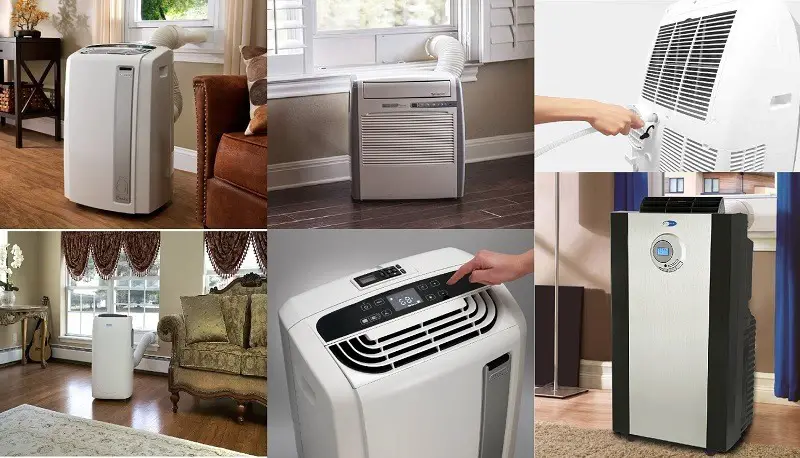
Also, what about size and portability? Consider the size and weight of the unit. Can you easily move it from room to room? Portability is key when you need cooling in various spots. It should be a breeze to roll from one room to another.
Think about the hose design. Single-hose vs. dual-hose? Dual-hose systems are generally more efficient. But they can also be bulkier. Single-hose systems are often easier to set up.
Do you prefer smart features? Some ACs can be controlled with your smartphone. Adjust the temperature from your couch! Set schedules and timers. It's all about convenience.
DIY Noise Reduction: Tips and Tricks
Already have a portable AC that's a bit on the loud side? Don't despair! There are a few things you can try to reduce the noise. Think of it as giving your AC a little spa treatment.
Try using sound dampening mats. Place them under the unit to absorb vibrations. It's like giving your AC a comfy cushion to sit on.
Make sure to seal the window kit properly. Gaps can let in noise. Caulk or weather stripping can help seal things up.
Consider external insulation. Adding extra insulation around the unit can help muffle the sound. Be careful not to block any vents, though.
Regular maintenance is crucial. Clean the filters regularly. This will help the unit run more efficiently and quietly. Plus, it's good for the air quality!
Setting Expectations: Reality vs. Hype
It's important to have realistic expectations. No portable AC is truly silent. There will always be some level of noise.
Focus on finding a unit that's quiet enough for your needs. What's acceptable for one person might not be for another. It's all about personal preference.
Read reviews carefully. See what other users are saying about the noise levels. Take everything with a grain of salt, but look for patterns.
The Verdict: Cool Comfort Without the Chaos
Finding a quiet portable AC is definitely achievable. It just takes a little research and effort. Weigh your priorities: cooling power, energy efficiency, portability, and, of course, noise level.
Don't let a noisy AC ruin your summer! Embrace the quest for silent cool. Find the perfect unit that lets you enjoy cool comfort without the chaos. It's time to reclaim your peace and quiet. Happy cooling!
Remember that the best portable air conditioner is one that meets your specific needs and preferences. There is no one-size-fits-all solution. So, do your homework and choose wisely!