
What Are The Pros And Cons Of Hydroelectric Power

Ever driven past a massive dam, seen that shimmering lake behind it, and wondered what's really going on? Chances are, you've stumbled upon a hydroelectric powerhouse! These giants harness the power of water to make electricity.
The Wonderful World of Water Power: The Upsides
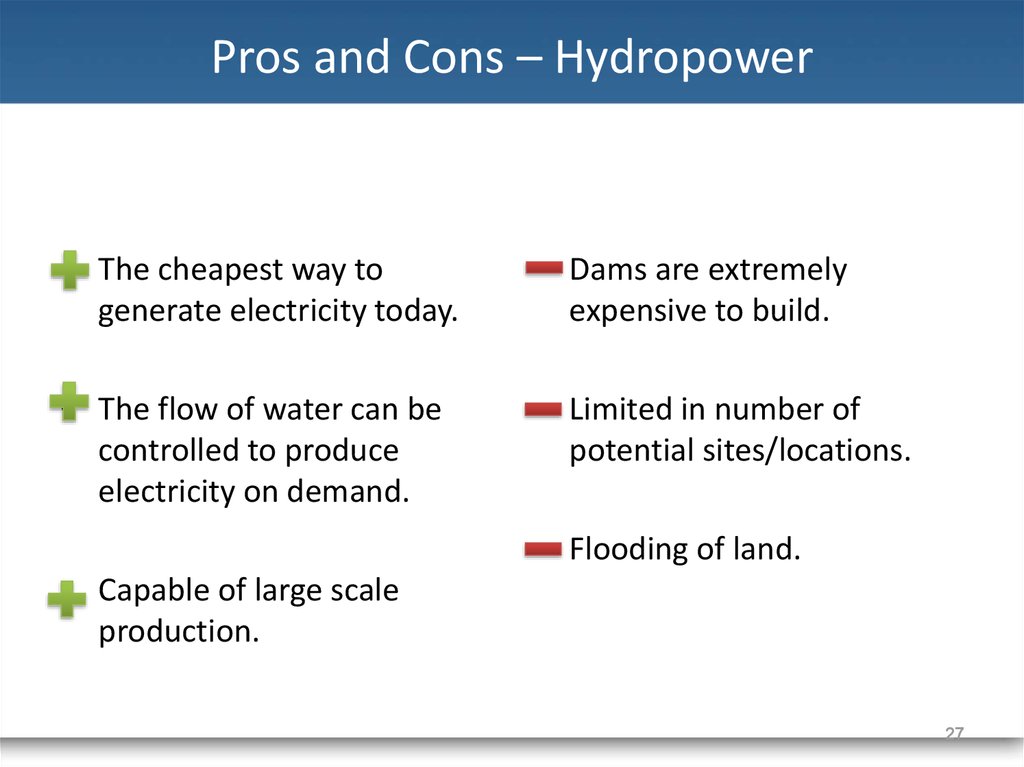
Clean Energy Champion
Let's start with the good stuff. Hydroelectric power is a renewable energy source, meaning we're not burning fossil fuels to make it. No smoky chimneys, no grumpy polar bears losing their homes (well, fewer grumpy bears, anyway)!
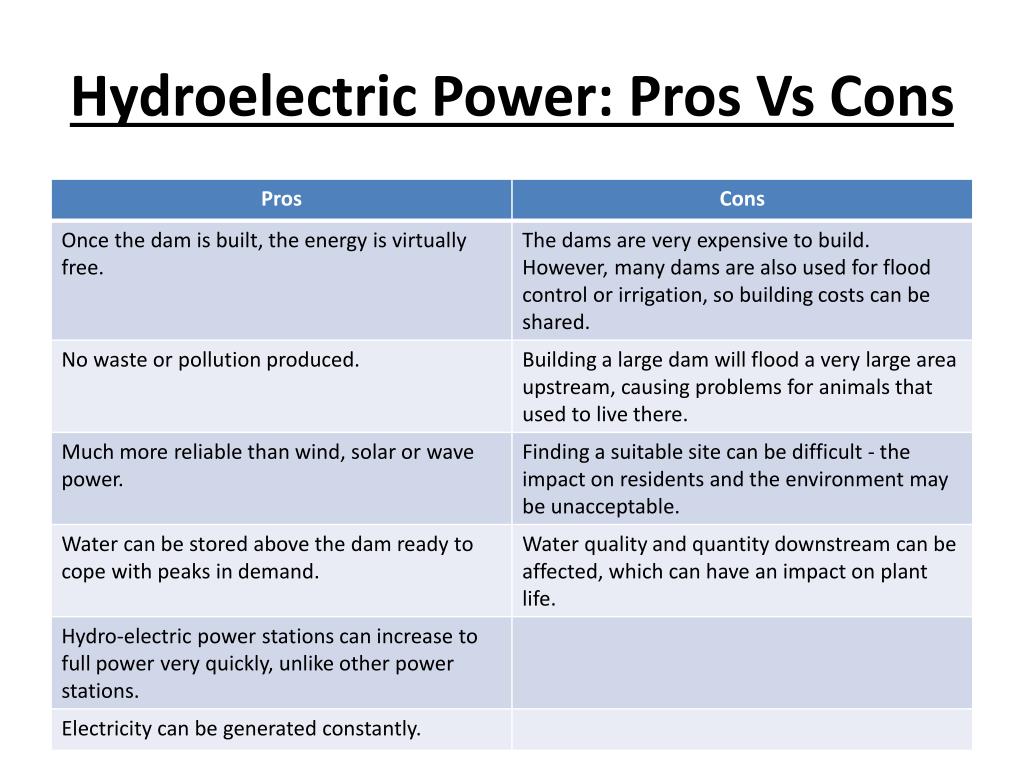
Once the dam is built, the water does the work, and sunlight will keep replenishing it.
Must Read
A Reliable Energy Source
Unlike solar or wind power, which depend on sunshine and breezes, hydroelectric power is pretty dependable.
As long as there's water flowing (and usually, well-managed dams ensure a consistent flow), the electricity keeps coming.
Lake Life!
Okay, this might not be a direct energy benefit, but dams create reservoirs – big lakes!
These lakes become hubs for recreation: boating, fishing, swimming. Imagine turning on your lights and knowing you're also powering someone's awesome waterskiing adventure! That’s a beautiful thought!
Flood Control: Super-Hero Dams
Dams aren't just about making electricity; they can also help control floods. By holding back water during heavy rains, they protect downstream communities.
Think of them as the superheroes of river management, swooping in to save the day (and your basement)!
Water Storage
Some dams play a role in providing water for agriculture and even drinking water. Imagine the arid land turning green with the help of the water held by the dam.
This dual-purpose functionality is a huge advantage, especially in drier regions.
The Not-So-Wonderful Side of Water Power: The Downsides
Dam, That's Expensive!
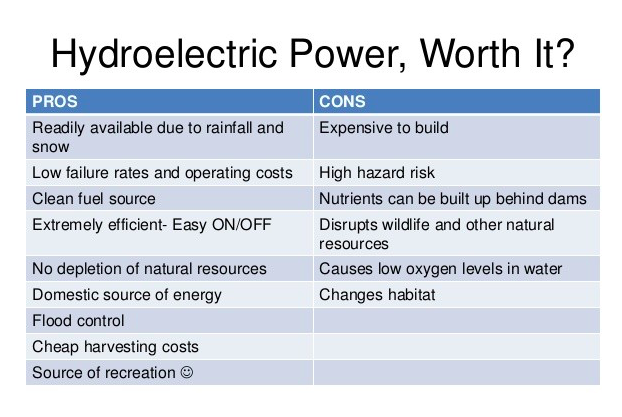
Building a dam is no small feat. It's a massive construction project that requires a lot of money, time, and resources.
Think of it like building a giant, concrete Lego castle – except way more complicated and expensive.
Disrupting River Ecosystems
This is a big one. Dams change the natural flow of rivers, which can seriously mess with the lives of fish and other aquatic creatures.
Salmon, for example, struggle to swim upstream to spawn, and entire ecosystems can be disrupted. It’s like rearranging the furniture in their house without asking!
Sediment Trapping: The Muddy Truth
Rivers carry sediment (sand, silt, and clay) downstream, which is essential for nourishing deltas and coastal areas.
Dams trap this sediment, which can lead to erosion downstream and harm coastal ecosystems. It's like the dam is hoarding all the river's vitamins!
Relocating Communities
Sometimes, building a dam means flooding land that people live on. Entire communities may have to be relocated, which is incredibly disruptive and emotionally challenging.
Imagine having to pack up your whole life and move because of a giant concrete wall – not exactly a picnic.
Methane Emissions: The Bubbling Problem
Here's a surprising one: reservoirs can release methane, a potent greenhouse gas. As organic matter decomposes underwater, it releases methane bubbles into the atmosphere.
It's like the lake is burping out greenhouse gases! Although the extent is debated, methane emissions are a potential concern with some hydroelectric projects.
Finding the Balance: The Future of Hydroelectric Power
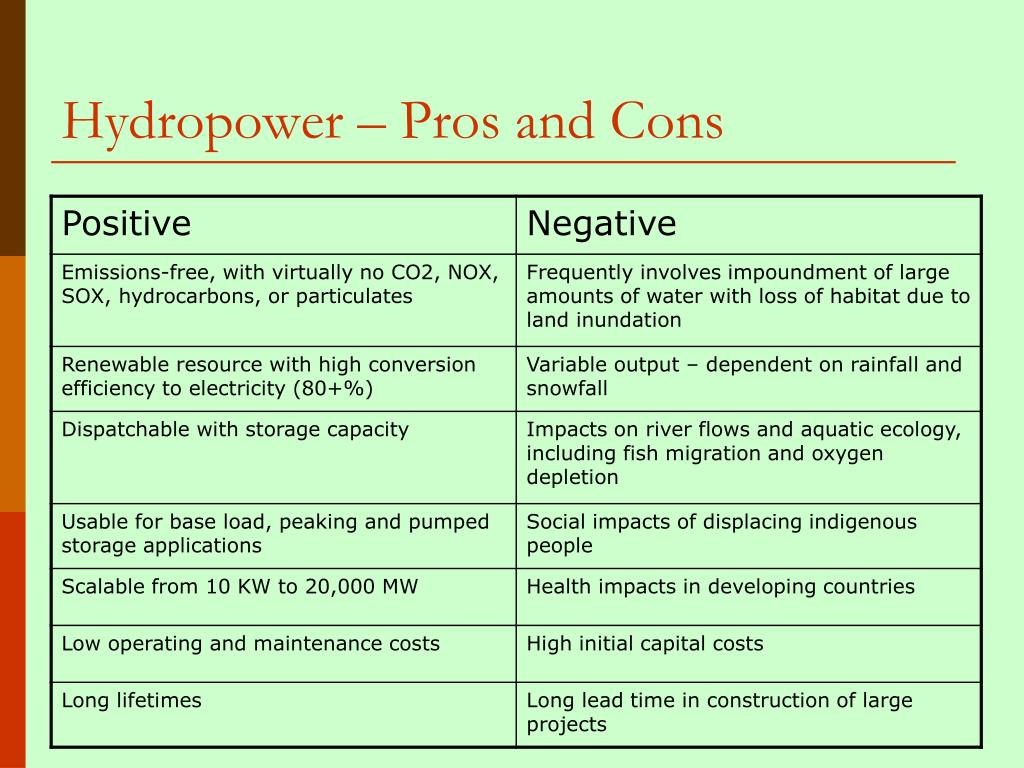
So, is hydroelectric power good or bad? The answer, as usual, is "it depends." There are undeniable benefits – clean energy, flood control, recreation.
However, there are also significant environmental and social costs. It's all about finding the right balance.
For example, smaller, run-of-river hydroelectric projects, which don't involve large reservoirs, can have a smaller environmental impact.
Modern dam designs are also incorporating fish ladders and other features to help fish migrate upstream. This can help to mitigate some of the environmental damage.
Ultimately, the future of hydroelectric power depends on careful planning, responsible management, and a willingness to consider the needs of both people and the environment.
Think of it as a giant, watery jigsaw puzzle – finding the right pieces to fit together for a sustainable energy future. And maybe, just maybe, helping those salmon find their way home too.
New Technology
New development on pumped storage hydroelectricity (PSH) has been improving a lot. It acts as a battery for the power grid, storing energy when supply is high and releasing it when demand is.
Another technology is the use of existing dams for hydroelectric power production. These projects are less disruptive than building new dams, as they utilize existing infrastructure.
The Human Element
Hydroelectric projects often create jobs in rural areas, providing economic opportunities for local communities.
It is also heartwarming to see communities come together to protect their rivers and advocate for responsible dam management.
The story of hydroelectric power is still being written. With careful consideration and innovative solutions, we can hopefully harness the power of water in a way that benefits everyone – including the fish.
Because, let's be honest, nobody wants to be known as the ones who messed up the river for the sake of a lightbulb. That’s a story nobody wants to tell!