
What Are The Properties Of Transition Metals
Ever heard of transition metals? They're like the rockstars of the periodic table!
These elements aren't just sitting around looking pretty. They're busy doing all sorts of cool stuff.
Get ready to explore their amazing abilities and find out what makes them so special.
Must Read
Color Crazy!
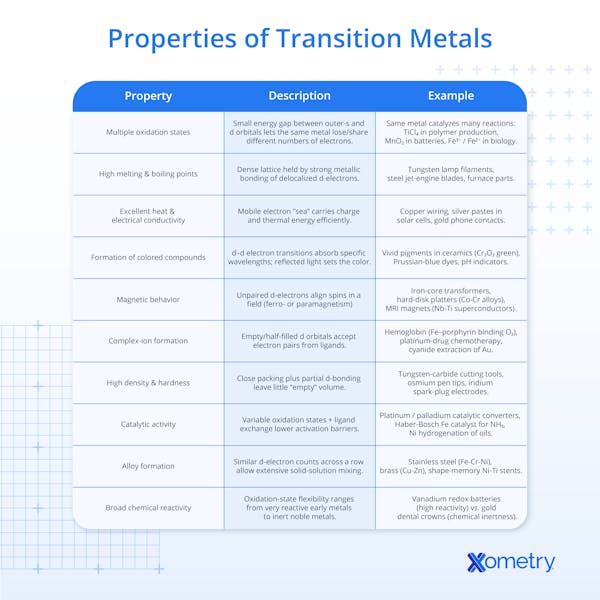
One of the coolest things about transition metals is their vibrant colors.
Think of the dazzling blues of copper compounds or the deep greens of nickel solutions.
It's like having a rainbow in your chemistry lab! Why so colorful?
It all comes down to how their electrons jump around. They absorb certain wavelengths of light.
The colors we see are the light they don't absorb. Pretty neat, huh?
Magnetic Personalities
Some transition metals are seriously magnetic.
Iron, cobalt, and nickel are the big names here. They're the elements that make magnets work!
This magnetism comes from unpaired electrons spinning around.
These spinning electrons create tiny magnetic fields. When these fields line up, you get a strong magnet.
Imagine your fridge magnets without iron. No more sticking those important reminders!
Multiple Personalities (Oxidation States)
Transition metals love to play dress-up. Or, more scientifically, they have multiple oxidation states.
This means they can lose different numbers of electrons when they form compounds.

Iron, for example, can be found as Fe2+ or Fe3+. It changes its electrical "dress" according to need.
This flexibility is what makes them so versatile in chemical reactions.
Catalytic Converters: The Ultimate Matchmakers
Transition metals are fantastic catalysts.
Catalysts are substances that speed up chemical reactions without being used up themselves. They're like the ultimate matchmakers.
Think about the catalytic converter in your car. It uses platinum, palladium, and rhodium.
These metals help convert harmful pollutants into less harmful substances like carbon dioxide and water.
Without them, our air would be much dirtier!
Strong and Stable
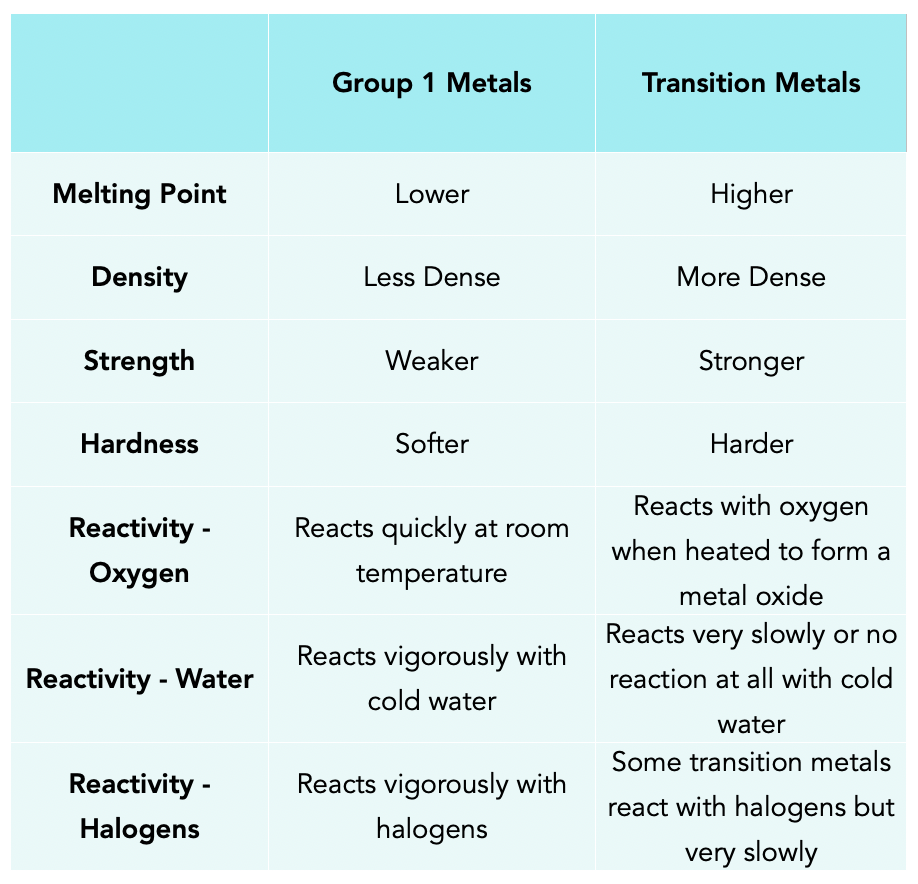
Transition metals are generally strong and have high melting points.
This is because they form strong metallic bonds. These bonds involve all the electrons, adding strength.
Think of tungsten, used in light bulb filaments. It can withstand incredibly high temperatures without melting.
Try that with a plastic light bulb! It doesn't work.
Complex Characters: Complex Ions
Transition metals often form complex ions.
These are ions where a central metal atom is surrounded by other molecules or ions called ligands.
These ligands can be anything from water molecules to chloride ions.
The shape and properties of these complex ions can be quite fascinating.
They are often responsible for the vibrant colors we see in transition metal compounds.
Essential Elements for Life
Believe it or not, transition metals are essential for life!
Iron is a key component of hemoglobin, the protein in red blood cells that carries oxygen.
Zinc is important for enzyme function and immune system health.
Even tiny amounts of copper are needed for various biological processes.
So, next time you're eating your vegetables, remember you're also getting your daily dose of transition metals!
Where to Find Them
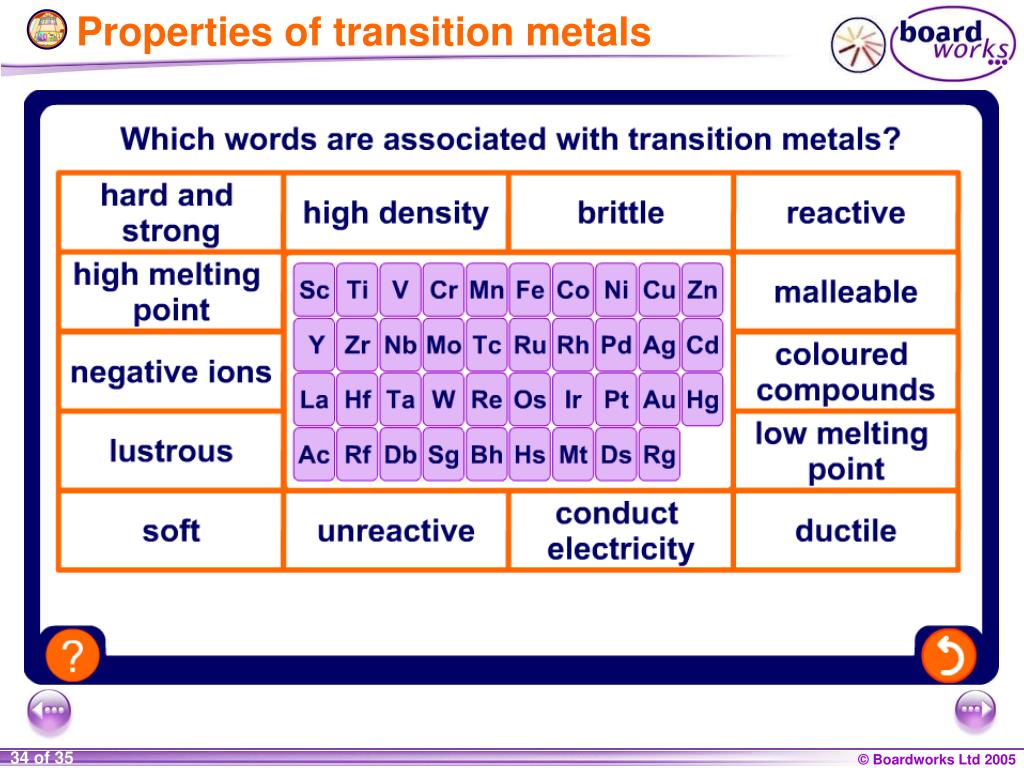
Transition metals are all around us!
They're found in everything from jewelry (gold, silver, platinum) to construction materials (iron, titanium).
They are in electronics (copper, gold) to pigments in paints (chromium, cobalt).
Even the batteries in your phone rely on transition metals like lithium and cobalt.
Take a look around. You'll be surprised how many transition metals you can spot!
Some Famous Examples
Iron (Fe)
The backbone of the modern world. It's used in steel, buildings, and bridges.
Without iron, we'd be living in a very different world. No tall buildings!
Titanium (Ti)
Strong, lightweight, and corrosion-resistant. It's used in aircraft, medical implants, and sports equipment.
This material is essential in the aerospace industry.
Copper (Cu)
An excellent conductor of electricity. It's used in wiring, plumbing, and electronics.
Imagine a world without copper wiring, pretty difficult!
Gold (Au)
Precious and beautiful. It's used in jewelry, electronics, and dentistry.
It's a sign of wealth and beauty throughout human history.
Silver (Ag)
Another precious metal with antibacterial properties. It's used in jewelry, silverware, and photography.
Silverware gets its name for a reason!
Platinum (Pt)
A rare and valuable metal. It's used in catalytic converters, jewelry, and laboratory equipment.
This metal is vital for environmental protection.
So, What's the Big Deal?
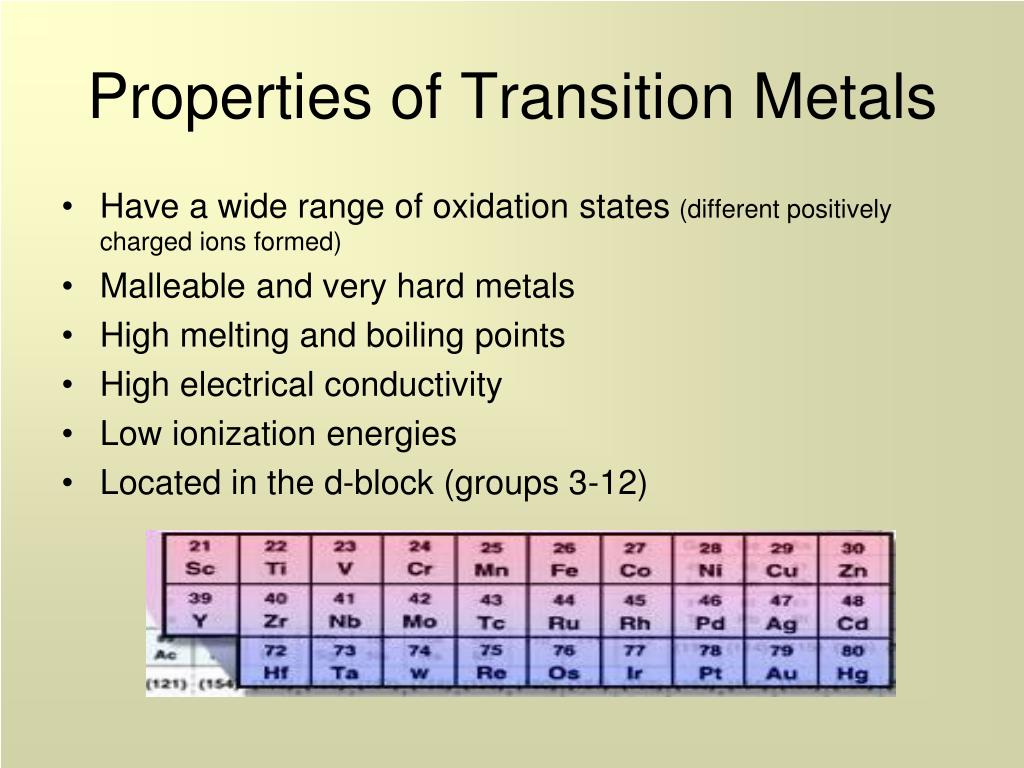
Transition metals are incredibly versatile and important elements.
Their unique properties make them essential for a wide range of applications.
From the vibrant colors in our artwork to the essential elements in our bodies, they're all around us.
They truly are the unsung heroes of the periodic table.
The next time you hear about transition metals, you'll know just how amazing they are!
Further Exploration
Want to learn more about these fascinating elements?
Check out your local library or search online for resources about transition metal chemistry.
You might even consider taking a chemistry class to delve deeper into the subject.
Who knows, you might just discover your own passion for the transition metals!
A Parting Thought
The world of chemistry is full of surprises.
Transition metals are just one example of the amazing things that happen when elements combine.
So keep exploring, keep learning, and keep asking questions. Your chemical journey awaits!
Maybe you will be the next Marie Curie or Linus Pauling!