What Are The Metalloids On The Periodic Table Of Elements

Okay, so picture this: I'm in my kitchen, trying (and failing) to bake the perfect soufflé. The recipe calls for "a touch" of something called Boron. A touch! Like I know what Boron even is beyond some vaguely scientific-sounding thing. Turns out, Boron is a metalloid. And that, my friends, got me thinking... what exactly are these elusive metalloids anyway? Because, let's be honest, who actually remembers high school chemistry?
Well, fear not fellow knowledge seekers (and soufflé-challenged individuals)! Let's dive into the wonderfully weird world of metalloids – the awkward middle children of the periodic table.
What is a Metalloid?
The periodic table is, as you (hopefully) know, organized into metals and nonmetals. But nature rarely fits neatly into boxes. That's where metalloids come in. They're elements that possess properties of both metals and nonmetals. Think of them as the chameleons of chemistry, able to adapt their behavior depending on the circumstances. They're sort of...fluid. A little bit metal, a little bit nonmetal. Just like some of us, actually!
Must Read
Now, I know what you might be thinking: "So, they're just kinda...meh?" But hold on! It’s this very "meh-ness" that makes them incredibly useful.
Meet the Metalloid Crew
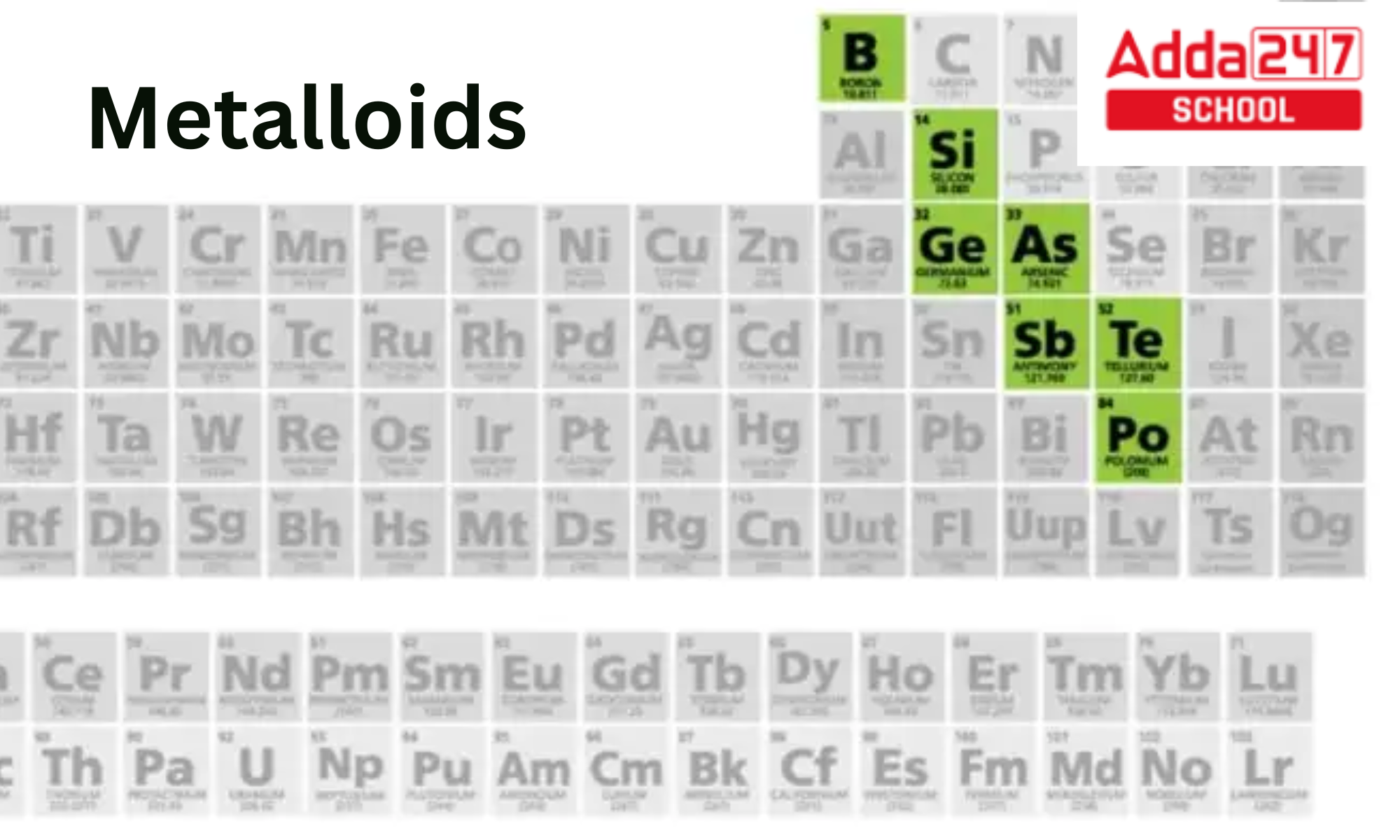
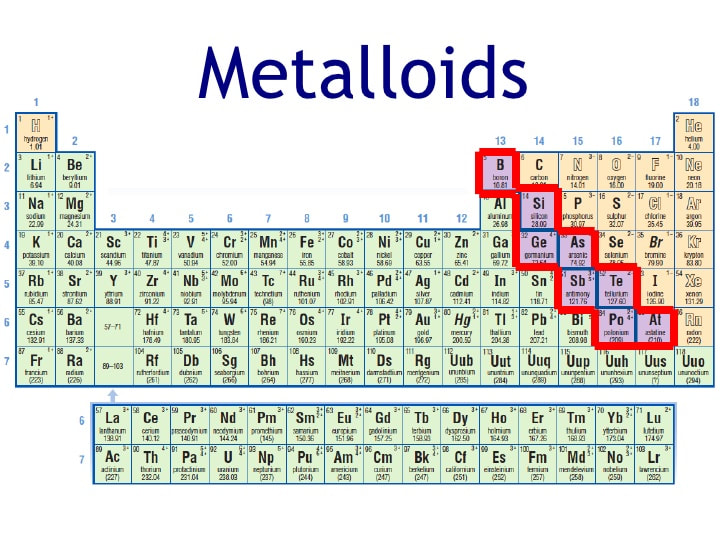
So, who are these ambiguous characters? The commonly recognized metalloids are:

- Boron (B): Ah, yes! The soufflé ingredient that started this whole adventure!
- Silicon (Si): This one's a big deal. Think computers.
- Germanium (Ge): Another tech giant.
- Arsenic (As): Don't drink it...seriously.
- Antimony (Sb): Used in flame retardants and some alloys. Fun fact, it's symbol "Sb" comes from the Latin word "stibium."
- Tellurium (Te): Plays a role in solar panels, because, you know, we’re trying to save the planet.
- Polonium (Po): Famously radioactive, and...maybe not the best element to invite to a party.
There’s some debate over whether elements like Astatine (At) are truly metalloids, but those listed above are the usual suspects. Important note: Chemistry can be a bit subjective sometimes! What one scientist classifies as a metalloid, another might argue is more one way than the other. It's like arguing about the color of the dress all over again!
Why Are Metalloids So Important?
Okay, here's where things get interesting. Remember how I said metalloids are like chameleons? That's because their conductivity (how well they conduct electricity) can be tweaked. Unlike metals, which are always good conductors, and nonmetals, which are generally poor conductors, metalloids can be semiconductors. What does that mean? It means that under certain conditions, they conduct electricity, and under others, they don't. It is as if they have superpowers.
This “sometimes-yes-sometimes-no” behavior is critical for creating the tiny little transistors that power everything from your phone to your car to your smart toaster. In fact, the entire field of modern electronics would be utterly impossible without metalloids, especially Silicon and Germanium. So, basically, you can thank these ambiguous elements for the fact that you are even reading this article right now.
Think about it: without the controlled conductivity of metalloids, our computers would be as big as rooms! And who wants that? Certainly not me! I barely have space for my (failed) soufflé attempts.

Metalloids: The Unsung Heroes
So, the next time you're scrolling through Instagram on your phone, remember to give a little nod to the humble metalloids. They might not be the flashiest elements on the periodic table, but they're absolutely essential to the modern world. From semiconductors to solar panels to (yes, even) fancy desserts, these elements quietly make our lives better. They may be in between, but they are definitely important.
And hey, maybe I’ll even try that soufflé recipe again. This time, with a newfound appreciation for the chemistry involved. Wish me luck!