
What Are The Effects Of Coal On The Environment

Okay, picture this: you're camping, right? Roasting marshmallows, telling spooky stories… classic. But then, the wind shifts and WHAM! You're hit with this nasty, sulfur-y smell. Not so classic. Probably not the campfire, is it? More likely something...industrial. Like a distant coal plant reminding you that progress (supposedly) comes at a price.
That whiff of something unpleasant? That’s a tiny hint of the gigantic environmental hangover coal leaves behind. And trust me, it’s a lot bigger than a headache after too many s'mores. Today we're diving deep into the seriously not-fun effects of coal on our planet. Buckle up!
Air Pollution: Breathing Isn't Supposed to Be This Hard
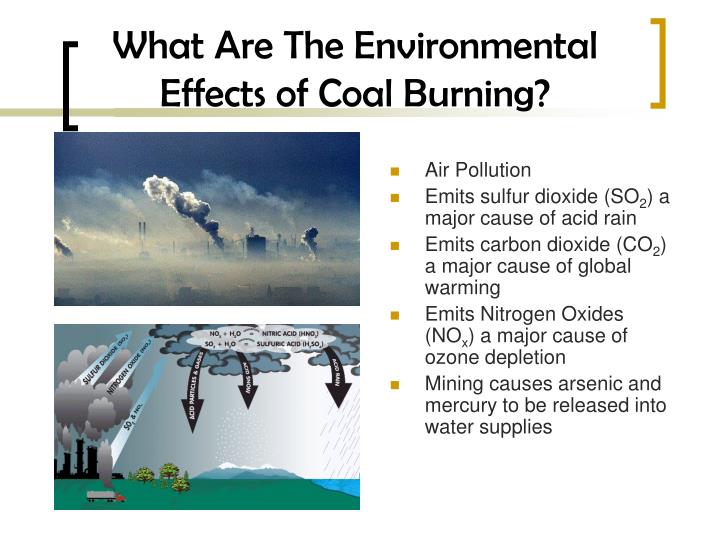
Let's start with the obvious: burning coal releases a whole cocktail of nasty stuff into the air. We’re talking sulfur dioxide (that culprit behind the smell!), nitrogen oxides, particulate matter (tiny little bits of soot and ash), and good ol' carbon dioxide. (You've heard of that, right?) These are what are known as greenhouse gases. Think of them as an invisible blanket trapping heat around the Earth.
Must Read
So, what's the big deal? Well, sulfur dioxide and nitrogen oxides contribute to acid rain. Remember that from science class? Yeah, the stuff that eats away at buildings and kills forests. Not ideal. And particulate matter? That stuff gets lodged deep in your lungs, leading to respiratory problems, heart disease, and generally making life unpleasant. Fun fact: Areas with coal plants tend to have higher rates of respiratory illnesses. Coincidence? I think not!
And CO2? That's the granddaddy of global warming. Coal is a major contributor to CO2 emissions, which, as you probably know, are driving climate change. So, yeah... pretty huge deal.

Water Pollution: Coal's Dirty Little Secret
It's not just the air! Coal mining and processing can also wreak havoc on our water resources. One of the biggest culprits is acid mine drainage. Basically, when rainwater flows through abandoned coal mines, it picks up sulfur-bearing minerals, creating sulfuric acid. This acid then leaches into streams and rivers, contaminating them with heavy metals and making them uninhabitable for aquatic life.
Imagine a river turning orange. Not a cool, sunset orange. A rusty, toxic orange. That’s acid mine drainage in action. Pretty, right? (Spoiler alert: It's not.)
And don't even get me started on coal ash. The stuff left over after burning coal? It's often stored in massive landfills or ponds, and these can leak, contaminating groundwater with arsenic, mercury, and other nasty toxins. Drinking water? Yeah, you want to avoid that.
Land Degradation: Turning Green into Gray
Coal mining, especially mountaintop removal mining, is incredibly destructive to the landscape. Think of it as taking a chainsaw to a mountain. Entire mountains are literally blown apart to access the coal seams beneath. The resulting debris is dumped into valleys and streams, burying them and destroying entire ecosystems. Seriously, entire ecosystems vanish.
Then, there's the issue of soil erosion and landslides. Once the vegetation is gone, the soil is exposed to the elements, leading to massive erosion. And all that loose soil can trigger landslides, further damaging the environment.
Plus, all that disturbed land takes decades, if not centuries, to recover (if it ever does). It's not exactly a quick fix, you know?
Climate Change: The Big Kahuna
Okay, so we’ve touched on this already, but it bears repeating: coal is a HUGE contributor to climate change. Burning coal releases massive amounts of carbon dioxide, the primary greenhouse gas driving global warming. This leads to rising temperatures, more frequent and intense extreme weather events, sea level rise, and a whole host of other problems.
Basically, burning coal today is mortgaging our future. And the interest rates are pretty high, if you catch my drift.
What Can We Do? (Besides Panic)
Okay, so it's not exactly sunshine and rainbows, is it? But don't despair! There are things we can do. Supporting renewable energy sources (solar, wind, hydro, etc.) is a big one. Advocating for policies that reduce coal consumption and promote cleaner energy is another. And even small changes in our own lives – reducing our energy consumption, supporting companies committed to sustainability – can make a difference.
Remember, the future isn’t set in stone (or coal!). We have the power to create a cleaner, healthier planet. One less whiff of sulfur at a time. 😉