
What Are The Disadvantages Of Using Nuclear Power
Nuclear power! It's like the superhero of electricity, promising loads of energy. But even superheroes have their kryptonite, right? Let’s peek behind the shiny curtain and see what downsides nuclear power brings to the party.
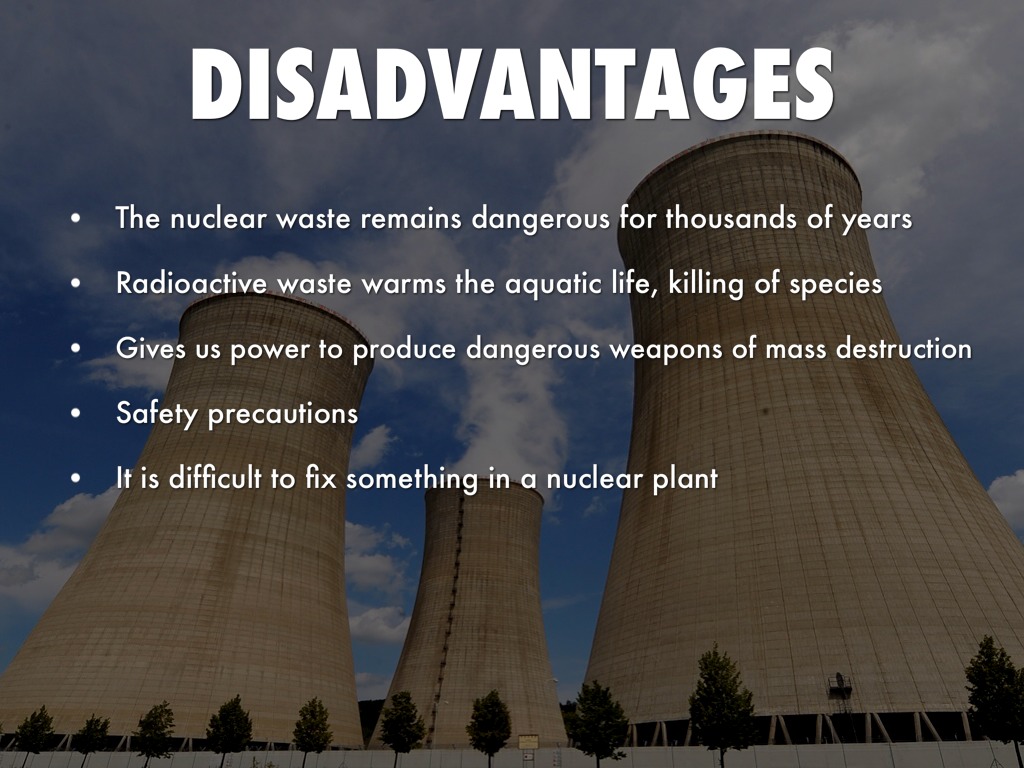
The Waste Dilemma: Radioactive Leftovers
Imagine making a delicious cake, but the crumbs are radioactive. That's basically what nuclear waste is. It sticks around for ages, thousands of years even!
Finding a safe place to store this glowing garbage is a major headache. No one wants a nuclear waste dump in their backyard, for perfectly understandable reasons.
Must Read
Storage Solutions (or Lack Thereof)
Think of storing nuclear waste as the world's longest game of hide-and-seek. Scientists are trying to find the perfect hiding spot deep underground.
But Mother Nature is a tricky player. Earthquakes, groundwater, and other geological events could potentially mess up our hiding spot and release radioactive stuff. Yikes!
There are some innovative solutions being developed, for instance new types of reactors that can use some of the waste as fuel, but these are still in development.
Accidents Happen: When Things Go Wrong
We’ve all seen disaster movies, and unfortunately, nuclear power plants aren't immune to real-life drama. Accidents can and do happen.
Remember Chernobyl or Fukushima? These events were not exactly a walk in the park. They showed the potential for widespread contamination and long-term health effects.
The Domino Effect of Disaster
When a nuclear accident occurs, the impact ripples far and wide. Evacuations, health scares, and environmental damage become part of the picture.
It's a sobering reminder that while nuclear power can be amazing, it also demands respect. There's an important human factor to consider when managing such a technology.
Learning from these past incidents is crucial. Constant improvement and vigilance are the name of the game when it comes to nuclear safety.
The Cost Factor: A Pricey Power Source
Building and maintaining a nuclear power plant is not cheap. Think of it as building a super-fancy, super-secure fortress. All those layers of protection come at a cost.
The initial investment is huge, and then there are the ongoing expenses of security, fuel, and waste disposal. These costs can impact the price of electricity.
Beyond the Construction Bill
It's not just about the upfront cost of building the plant. Decommissioning, or dismantling, a nuclear plant at the end of its life is also a major expense.
Plus, the long lead times for building nuclear plants can be a disadvantage. Other energy sources, like solar and wind, can be deployed much faster.
Finding financing for these large, long-term projects can also be tricky. Investors need to be confident that the plant will be profitable over its lifetime.
Security Concerns: A Target for Trouble
Nuclear power plants are high-profile targets. They need to be protected from potential terrorist attacks or other forms of sabotage.
Imagine the consequences if someone were to breach security and cause a meltdown. It's a scary thought, and security measures need to be incredibly robust.
The Human Element of Security
Security isn't just about fences and cameras. It's also about the people who work at the plant. Background checks, training, and vigilance are essential.
The security protocols at nuclear facilities are usually confidential for obvious reasons. What's more, international cooperation is vital.
This global effort is to ensure that nuclear materials don't fall into the wrong hands. It's a constant effort to stay one step ahead.
Proliferation Risks: Nuclear Tech in the Wrong Hands
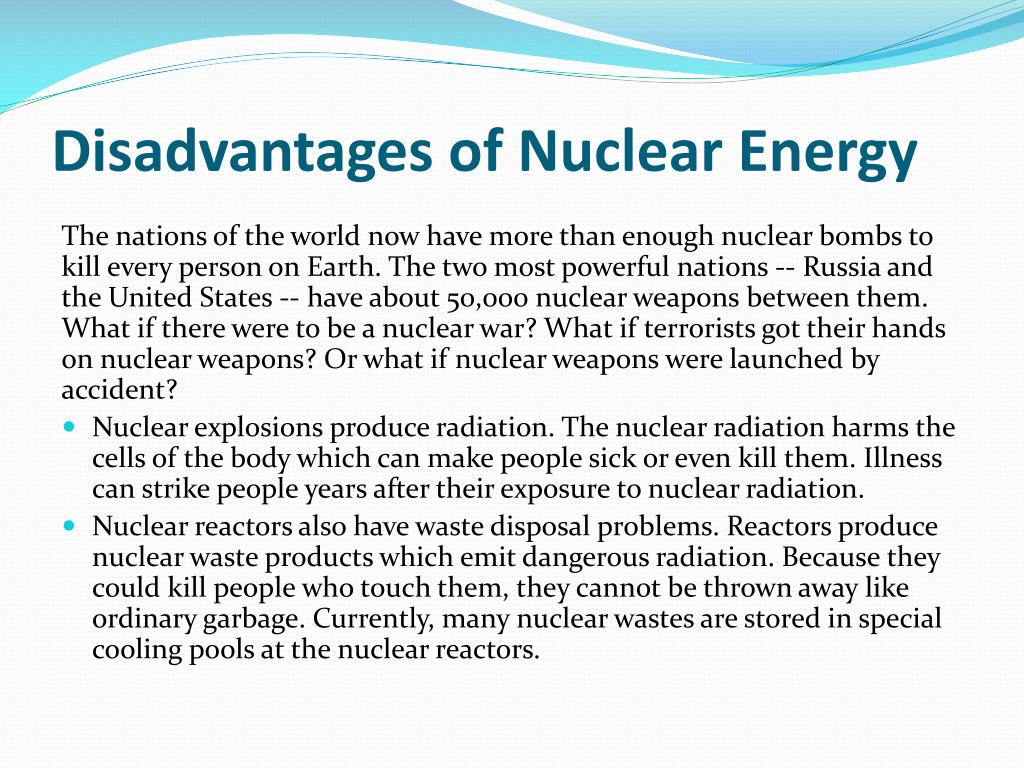
The technology used to create nuclear power can also be used to create nuclear weapons. It is essential to have safeguards in place, for this reason.
The spread of nuclear technology raises concerns about nuclear proliferation. It's a delicate balancing act between peaceful uses and potential misuse.
International Monitoring and Control
Organizations like the International Atomic Energy Agency (IAEA) play a crucial role. They monitor nuclear facilities around the world and ensure compliance with international agreements.
The IAEA aims to prevent the diversion of nuclear materials for weapons purposes. It is responsible for inspecting nuclear facilities worldwide.
Diplomacy and international cooperation are key to managing this risk. Transparency and trust are essential for a safe and secure world.
Public Perception: The Fear Factor
For many, the word "nuclear" conjures up images of mushroom clouds and radioactive fallout. There is a valid public perception problem.
This fear, often fueled by media portrayals, can make it difficult to gain public acceptance for nuclear power. Overcoming these perceptions requires open communication.
Addressing Concerns with Facts
Providing accurate information about nuclear safety and waste disposal is key. Transparent communication is essential.
Demonstrating the benefits of nuclear power, such as its low carbon emissions, can also help. Public education is always important.

Building trust through community engagement and open dialogue can help to address concerns. A honest conversation with the public is required.
The Alternatives: Competing Energy Sources
Nuclear power isn't the only game in town. Renewable energy sources like solar, wind, and hydro are becoming increasingly popular.
These alternatives offer their own advantages, such as lower operating costs and reduced environmental impact. It is essential to consider these alongside nuclear.
Weighing the Pros and Cons
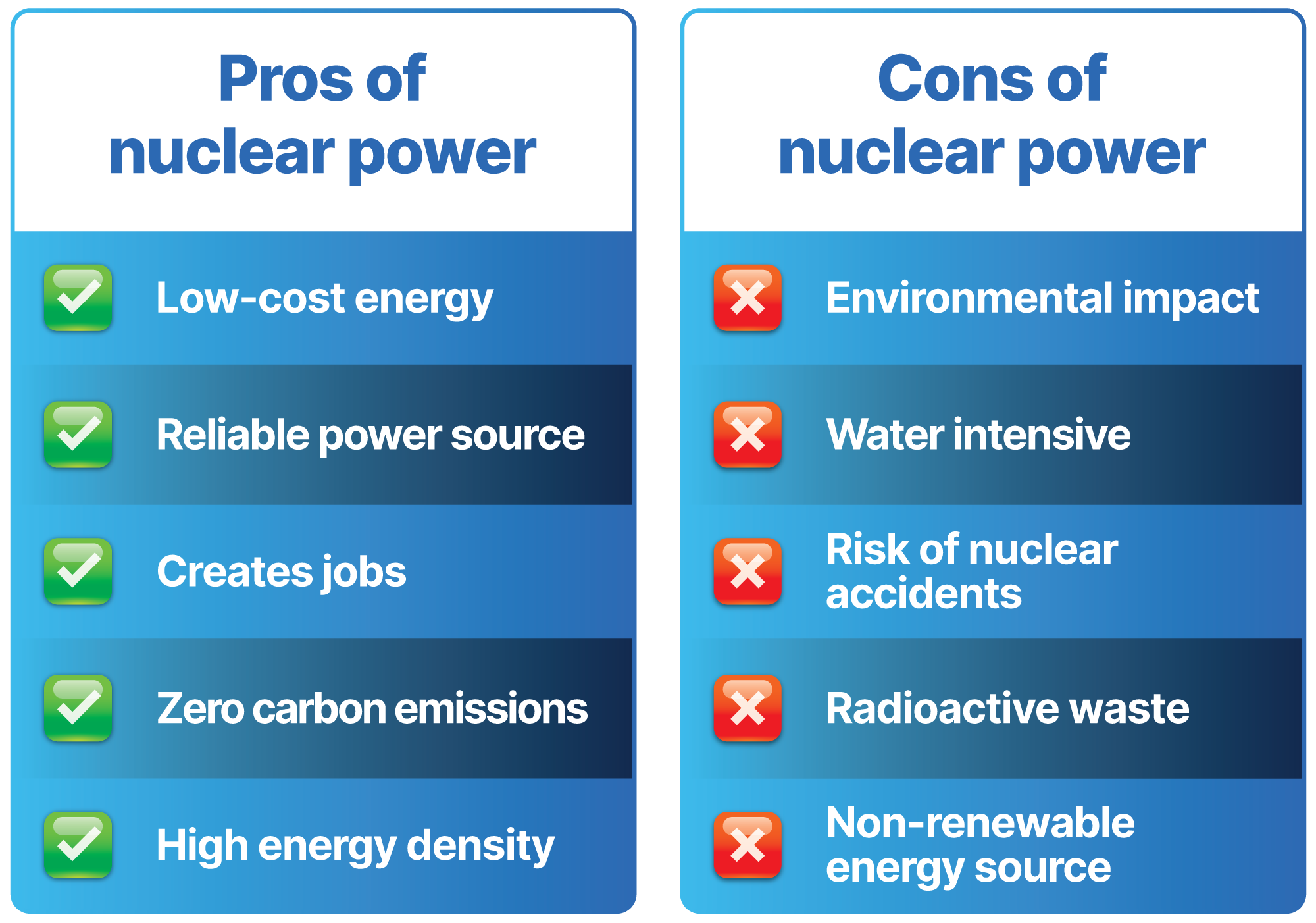
The ideal energy mix likely involves a combination of different sources. This is to ensure reliability, affordability, and sustainability.
Each energy source has its strengths and weaknesses. The best approach depends on local conditions, resources, and priorities.
Innovation and technological advancements are constantly changing the energy landscape. It is exciting to see where it goes from here.
So, there you have it! The less-sunny side of nuclear power. It's a powerful tool, but one that requires careful consideration and responsible management. Despite the challenges, continuous innovation ensures nuclear energy's future is still being written!