
What Are The Disadvantages Of Hydroelectricity

Okay, let's talk about hydroelectricity! Everyone loves the idea of clean, renewable energy. It sounds perfect, doesn't it? But before we build a hundred giant dams and turn every river into a series of connected lakes, let's pump the brakes and chat about the potential downsides of this technology.
Because, let's face it, nothing is truly perfect, not even the dream of harnessing the power of rushing water.
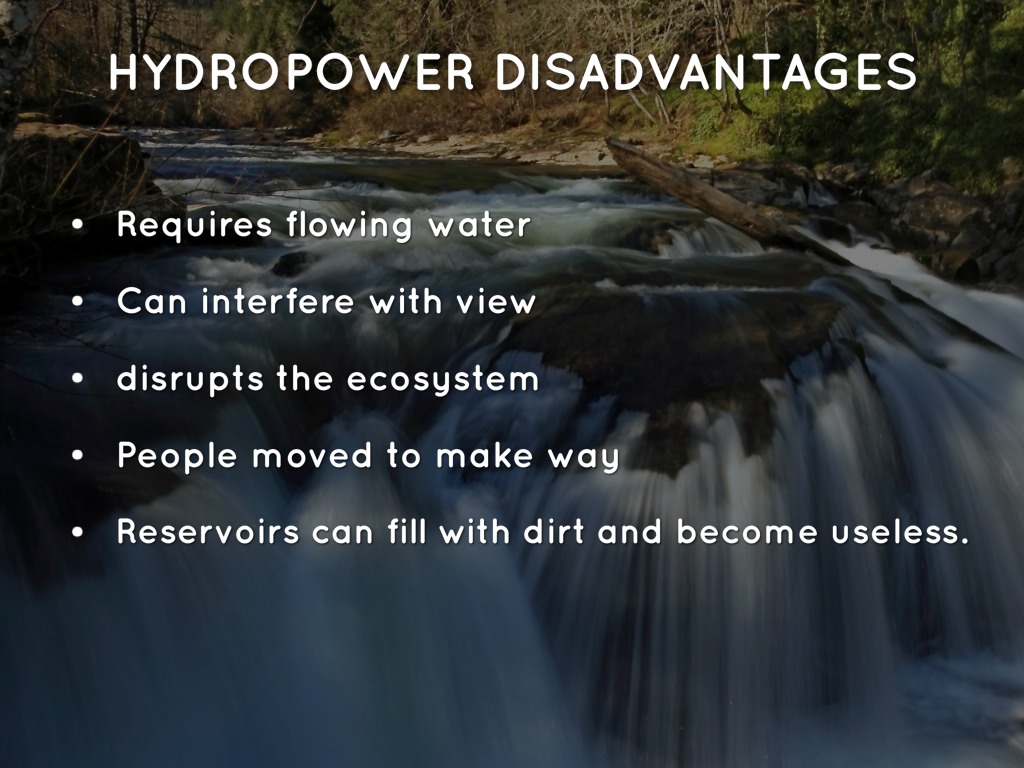
Goodbye, River (and Everything in It!)
Think about it. What happens when you build a giant wall across a river? The river behind it? Well, it stops flowing like a river and turns into a reservoir, an artificial lake. It's like turning your local swimming pool into the Great Lakes; the local environment won't thank you for it.
Must Read
And that's where the first big disadvantage swims into view. The natural river ecosystem gets completely transformed. That ecosystem is home to a lot of creatures.
Fishy Business (Literally)
Imagine being a salmon. You've spent your whole life swimming upstream to your ancestral spawning grounds. It's practically your salmon birthright! But BAM! There's a massive concrete wall in your way. Good luck with that.
Dams are major obstacles for migratory fish like salmon and trout. They can't swim through concrete, and even if you build a "fish ladder" (basically a watery staircase), it's not always effective.
Some fish might get through but, many end up as casualties. The dam can disrupt the entire life cycle of the fish.
Not Just Fish We’re Talking About.
It's not just the fish that suffer. The altered water flow affects plants, insects, birds, and all the other creatures that depend on the river ecosystem. You're essentially changing the rules of the game for everyone!
Imagine building a shopping mall on your local park. Would the squirrels, birds, and picnicking families be thrilled? Probably not. The same applies to building dams in nature.

Land Under Water? Not Ideal.
Building a reservoir means flooding a whole lot of land. We’re talking houses, farms, forests, and anything else that happens to be in the valley behind the dam.
Imagine your entire town is suddenly slated to become an underwater attraction. It’s not just an inconvenience; it's the displacement of entire communities.
That’s not to mention the loss of valuable farmland or important historical sites. The history of the landscape vanishes under the rising water.
Greenhouse Gasses? From a Dam?
Wait a minute... Aren't dams supposed to be clean energy? Well, they don't burn fossil fuels to generate electricity, which is a plus. But that giant reservoir can release greenhouse gasses.
When all that vegetation gets flooded, it decomposes underwater. This process releases methane, a potent greenhouse gas.
While it's not as bad as burning coal, it's still a factor to consider. It is not the total zero emission many people think.
The Big One: Dam Failures!
Dams are massive structures holding back enormous amounts of water. When they work, they're fantastic. But when they fail? Catastrophe.
Dam failures, although rare, can cause devastating floods downstream, wiping out entire towns and causing massive loss of life. They also cause ecological damages.
It's a low-probability, high-impact risk that needs careful consideration and rigorous engineering.
Silt Happens: The Sediment Problem
Rivers carry sediment (dirt, sand, and gravel) downstream. It nourishes floodplains and deltas, keeping them fertile and healthy. Guess what a dam does to sediment?
It blocks it! The sediment gets trapped behind the dam, starving the downstream areas of the nutrients they need. Farmers downstream will tell you that they need the sediment to keep the land fertile.
This can lead to coastal erosion, loss of farmland, and damage to ecosystems that depend on the sediment flow.
Location, Location, Location: Not Always Ideal.
You can't just build a dam anywhere you want. You need a suitable river with enough water flow and a narrow valley to create a reservoir. Those places are not always ideal.

The best locations for hydroelectric dams might be far from the cities that need the electricity. This means building long transmission lines, which are expensive and can cause energy losses.
It is also worth noting that building a dam requires a certain amount of cement. Cement production is one of the leading sources of carbon emission.
Upfront Costs: Ouch!
Building a dam is not cheap. We're talking billions of dollars in construction costs. That’s a lot of money!
While the long-term operating costs of a hydroelectric dam are relatively low, the initial investment is substantial. It can take decades to recoup the costs.
These upfront costs can be a barrier to entry, especially for developing countries.
Earthquakes? Oh Joy!
This one is a little scary. The weight of all that water in a reservoir can actually trigger earthquakes in some areas. It's called Reservoir-Induced Seismicity (RIS).
The added pressure on the earth's crust can reactivate existing faults, leading to small to moderate earthquakes.
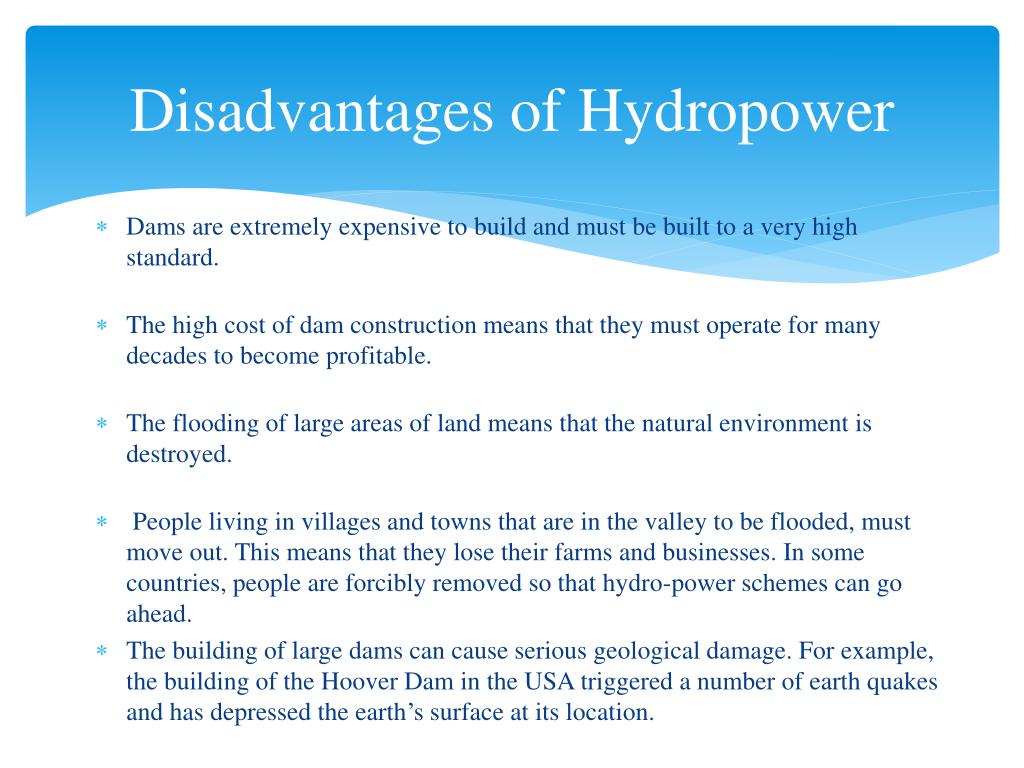
Although not every dam causes earthquakes, it's a risk that needs to be assessed in seismically active regions.
Alternatives? Always!
Hydroelectricity is a great source of energy, but it’s good to know that it is not the only option. We have solar, wind, and geothermal. Each one has its pros and cons.
Diversifying our energy sources can make our energy system more resilient and less vulnerable to disruptions.
We should also consider energy efficiency measures, like using less electricity. The cheapest energy is the energy we don't use in the first place!
The Verdict? It's Complicated.
So, is hydroelectricity good or bad? It's not a simple yes or no answer. It has many disadvantages. As we've seen, there are significant downsides.
The key is to carefully weigh the benefits and the risks, and to consider the specific environmental and social context of each project. It is not as “clean” as it seems.
And maybe, just maybe, we can find ways to minimize the negative impacts and maximize the benefits of this powerful source of energy.