
What Are The Different Types Of Light Bulbs
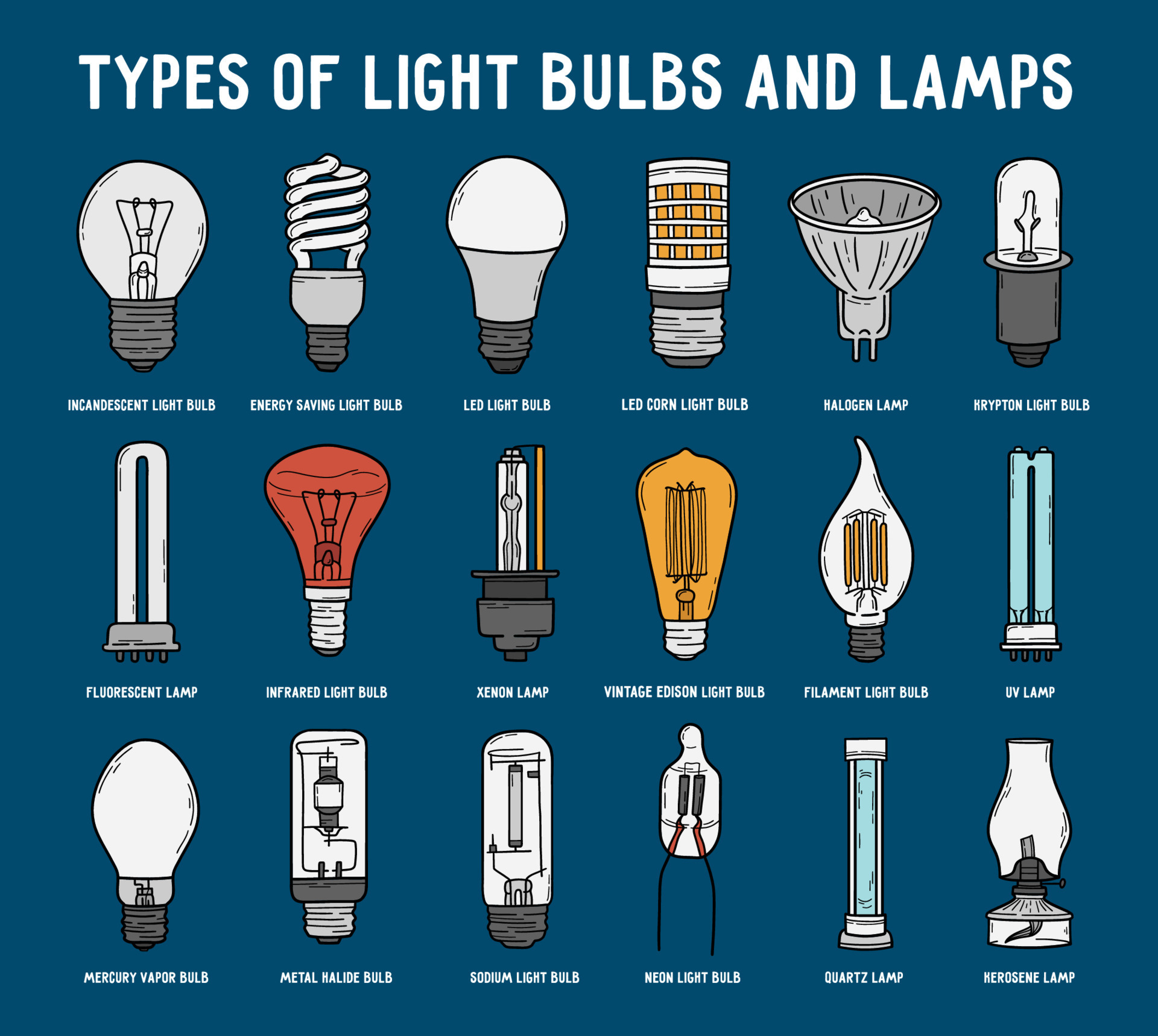
Alright, let's talk light bulbs. Not exactly the most glamorous topic, I know. But think about it – light bulbs are the unsung heroes of our homes. They banish the darkness, let us binge-watch questionable TV shows at 2 AM, and stop us from stubbing our toes on furniture we swear wasn’t there before. So, let’s give them their due, shall we?
Essentially, choosing a light bulb is like choosing a pet. You want one that fits your lifestyle, doesn’t cost a fortune to feed, and, ideally, doesn't spontaneously combust. So, let's break down the different breeds, er, types.
Incandescent Bulbs: The OG's
These are your classic, old-school bulbs. Think of them as the Golden Retrievers of the light bulb world: friendly, familiar, and always reliable...mostly. They work by heating a filament until it glows, which is, honestly, a pretty inefficient way to make light. It’s like using a bonfire to toast a marshmallow – effective, but maybe a little overkill.
Must Read
Pros: Cheap to buy (like, ridiculously cheap), produce a warm, cozy light that’s great for creating a relaxing atmosphere. They're also dimmable, which is a plus if you like to set the mood for, you know, reading a book. Or whatever.
Cons: They burn out faster than a reality TV star's marriage, and they're energy hogs. Think of them as the gas-guzzling SUVs of the lighting world. Also, touching them when they're on? Ouch. Like touching the sun. Don't do it.
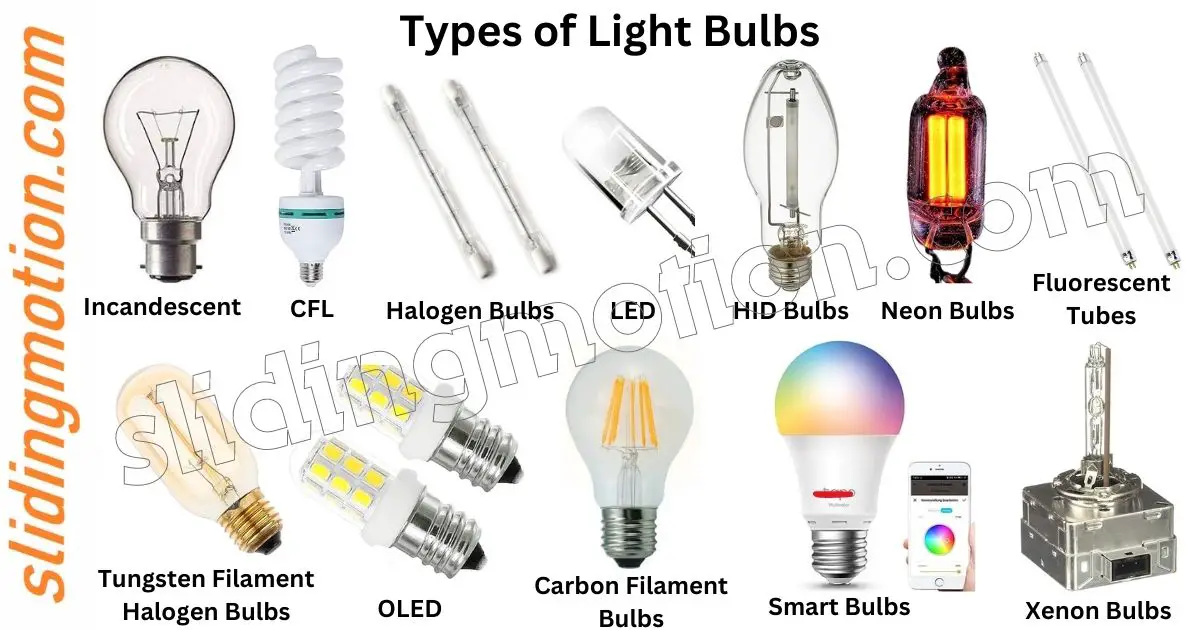
Halogen Bulbs: Incandescent's Slightly Cooler Cousin
Imagine incandescent bulbs went to college, got a slightly better haircut, and learned about energy efficiency. That's halogen bulbs. They're basically improved incandescents, using a halogen gas to make them last longer and shine brighter.
Pros: Brighter than incandescents, and they last a bit longer. They also offer good color rendering, meaning they make colors look more vibrant and true. Think of them as the Instagram filter for your living room.
Cons: Still not the most energy-efficient option, and they get hot. Like, don't-touch-them-after-they've-been-on hot. They're also being phased out in many places due to efficiency standards, so their days are numbered.

Compact Fluorescent Lamps (CFLs): The Squiggly Ones
Remember when everyone was all about CFLs? They were the darlings of the energy-saving movement! These are the squiggly or curly bulbs that kinda look like someone tried to tie a balloon animal and failed miserably. They work by passing an electric current through a gas-filled tube, which then excites a phosphor coating to produce light.
Pros: Way more energy-efficient than incandescents, and they last a lot longer. They're like the Prius of light bulbs – good for the environment, easy on the wallet, but maybe not the flashiest option.

Cons: They can take a while to warm up to full brightness (awkward silence, anyone?), and some people don't like the light quality. Plus, they contain a tiny amount of mercury, so you have to dispose of them properly. It's like owning a mildly radioactive pet that you have to treat with respect.
Light Emitting Diodes (LEDs): The Tech-Savvy Option
LEDs are the future, baby! They're the iPhones of the light bulb world – sleek, efficient, and packed with features. They work by passing an electric current through a semiconductor, which emits light. Science!
Pros: Incredibly energy-efficient, last for ages (seriously, some are rated for 20+ years!), and come in a huge range of colors and brightness levels. They're also cool to the touch, which is a nice bonus. Think of them as the Tesla of lighting – high-tech, long-lasting, and good for the planet (and your electricity bill).

Cons: They can be more expensive upfront, but the long-term savings usually make up for it. Also, some cheaper LEDs can have poor light quality, so do your research. Like buying a car, always read the reviews.
In Conclusion: Let There Be...The Right Light!
So, there you have it – a (hopefully) not-too-boring rundown of the different types of light bulbs. The best choice for you depends on your needs, your budget, and your personal preferences. Just remember to consider energy efficiency, light quality, and lifespan. And maybe avoid spontaneously combusting bulbs. That's never fun.
Now go forth and illuminate your world! And try not to trip over that coffee table in the dark.