
What Are The Different Filaments For 3d Printing

So, you've caught the 3D printing bug, huh? Welcome to the club! It's like having a tiny factory on your desk, ready to churn out everything from goofy phone stands to miniature dragons. But before you get too carried away, let's talk about the secret sauce: filament.
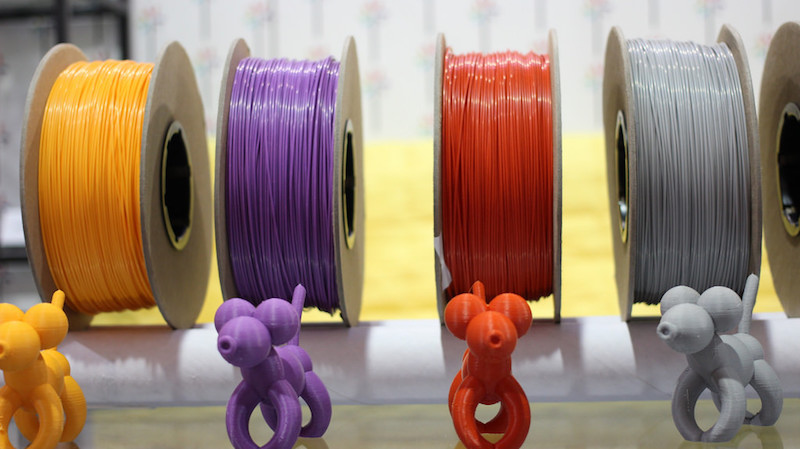
Think of filament as the ink for your 3D printer. It's the raw material, the stuff that gets melted and squirted out layer by layer to create your masterpiece. But just like there's more than one kind of ink, there's a whole rainbow of different filament types, each with its own personality and quirks.
The OG: PLA (Polylactic Acid)
First up, we have PLA. This is the friendly, easy-going filament everyone starts with. It's made from renewable resources like corn starch or sugarcane, so it's the most eco-friendly option.
Must Read
Imagine your phone stand made from corn! It's biodegradable under the right conditions. That's pretty cool, right? PLA is also relatively easy to print with, making it perfect for beginners.
PLA is great for figurines, prototypes, and anything that doesn't need to withstand extreme temperatures. Don't leave your PLA dragon in a hot car, or you might end up with a melted mess!
The Tough Guy: ABS (Acrylonitrile Butadiene Styrene)
Next, we have ABS. Think of it as PLA's older, tougher sibling. It's the stuff LEGO bricks are made of, so you know it can handle some abuse.
ABS is stronger and more heat-resistant than PLA. That means your 3D-printed car parts (okay, maybe just dashboard accessories) won't melt on a sunny day!

However, ABS can be a bit trickier to print with. It's prone to warping, which is when the corners of your print curl up. You'll probably need a heated bed and an enclosure to keep the temperature stable.
The Flexible One: TPU (Thermoplastic Polyurethane)
Now, let's get bendy! TPU is a flexible filament, like a rubber band that comes in all sorts of colors. It's the go-to choice for things that need to be squishy or resilient.
Imagine printing your own phone case that can actually absorb impacts! Or how about a custom wristband that perfectly fits your wrist? TPU makes it possible.
Printing with TPU can be a bit of a challenge, as it tends to stretch and flex in the extruder. But with the right settings, you can create some incredibly cool and functional prints.
The Fancy Pants: PETG (Polyethylene Terephthalate Glycol-modified)
Want something that's strong like ABS but easier to print like PLA? Say hello to PETG! It's the "Goldilocks" of filaments, offering a good balance of properties.

PETG is waterproof and food-safe, so you can print things like cookie cutters or even reusable water bottles (though you should still wash them thoroughly). It also has a nice, glossy finish.
PETG is a great all-around filament for a wide range of projects. It's becoming increasingly popular due to its ease of use and versatility.
The Show-Off: Specialty Filaments
Now, let's get to the really fun stuff: specialty filaments. This is where things get wild and wonderful. There are filaments that look and feel like wood, metal, or even glow in the dark!
Wood Filament
Imagine printing a tiny wooden sculpture without ever picking up a chisel! Wood filament is infused with actual wood fibers, giving your prints a realistic wood grain texture and even a slight woody smell.

You can stain and sand wood filament just like real wood, making it perfect for creating unique and rustic-looking objects. Just don't try to build a house with it!
Metal Filament
Want to print something that looks and feels like solid metal? Metal filament contains tiny metal particles, giving your prints a metallic sheen and a significant weight. It can be post-processed to achieve a more convincing metallic finish.
It is often mixed with PLA or ABS. After printing, the plastic binder can be removed through a process called sintering, leaving behind a nearly pure metal object.
Glow-in-the-Dark Filament
Because who doesn't love a little luminescence? Glow-in-the-dark filament is infused with phosphorescent materials that absorb light and then slowly release it, creating a spooky and magical glow.
Perfect for printing nightlights, Halloween decorations, or just adding a touch of whimsy to your creations. It's like having your own miniature rave cave on your desk!
Carbon Fiber Filament
Do you want an extremely strong and rigid part? Carbon Fiber Filament adds short strands of carbon fiber to the filament. It gives incredible stiffness and strength to the print. It can be used for structural components such as frames or supports.
This composite material makes the prints have high dimensional stability. It will be very resistent to warping. The additional abrasive nature of carbon fiber will wear out your nozzle faster.
The Experimental Zone: Beyond the Basics
The world of 3D printing filament is constantly evolving. New and exciting materials are being developed all the time, pushing the boundaries of what's possible. Some adventurous users are experimenting with even stranger ingredients. Some are even attempting to make filament from recycled materials!
From nylon to polycarbonate, there's a filament out there for every project and every personality. So, don't be afraid to experiment and discover your own favorite filament. You can even create your own filament from various plastic types by using a filament extruder.
So, go forth and print! Explore the wonderful world of 3D printing filaments. Just remember to have fun, be creative, and don't be afraid to make mistakes. After all, that's how we learn and grow, one layer at a time.