What Are The Characteristics Of The Metalloids

Ever heard of the Periodic Table? No worries if you haven't, or if the mere mention brings back horrifying memories of high school chemistry! Just think of it as a giant, organized cheat sheet for all the stuff that makes up… well, everything! And right smack in the middle, playing the role of the quirky neighbor who gets along with everyone, are the metalloids.
What exactly are metalloids? They're not quite metals (shiny, good conductors of electricity) and not quite non-metals (dull, poor conductors). They're somewhere in between, like that friend who's sometimes super outgoing and sometimes prefers a quiet night in with a good book. They're the chameleons of the element world!
So, what makes a metalloid a metalloid?
Think of metalloids as having a split personality, but in a cool, useful way. Here's a peek at some of their defining traits:
Must Read
1. Semiconductor Power: This is the big one! Metalloids are semiconductors, meaning they conduct electricity, but not as well as metals. Imagine water flowing through a pipe. Metals are like a wide-open pipe, letting water (electricity) gush through easily. Non-metals are like a completely blocked pipe. Metalloids? They're like a pipe with a valve that you can partially open or close to control the flow.
Why is this awesome? Because it's the key to all our fancy electronics! Think about your smartphone, your laptop, your TV. All those tiny chips inside rely on semiconductors, and guess what? Metalloids like silicon and germanium are the rock stars of the semiconductor world!
.PNG)
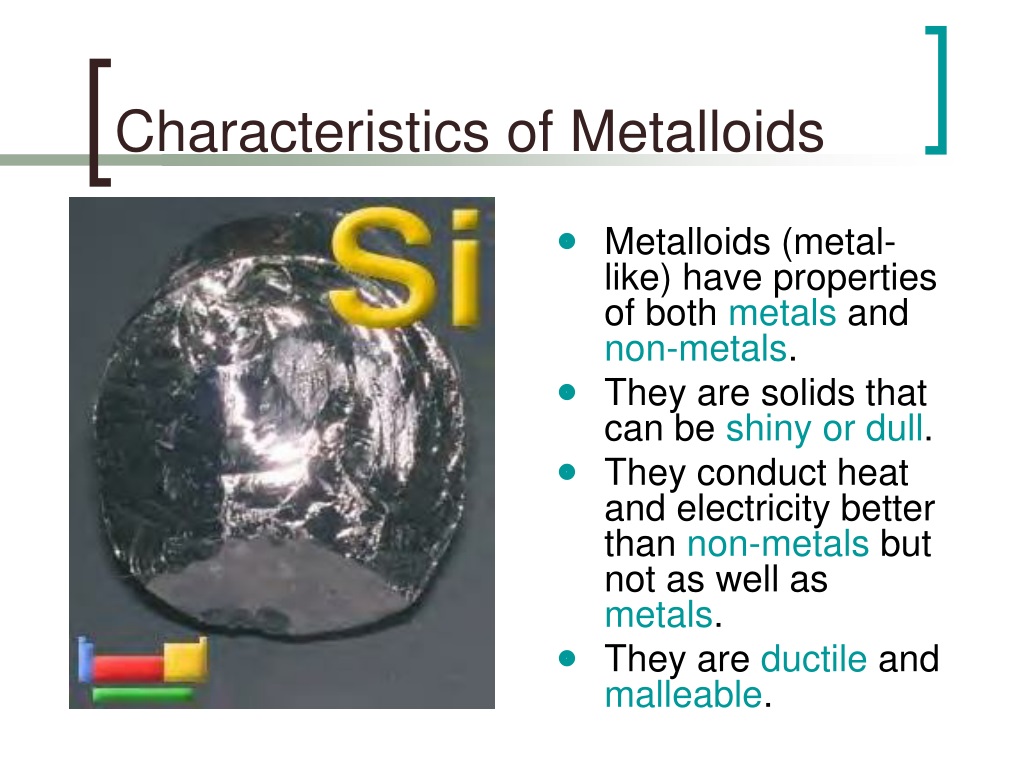
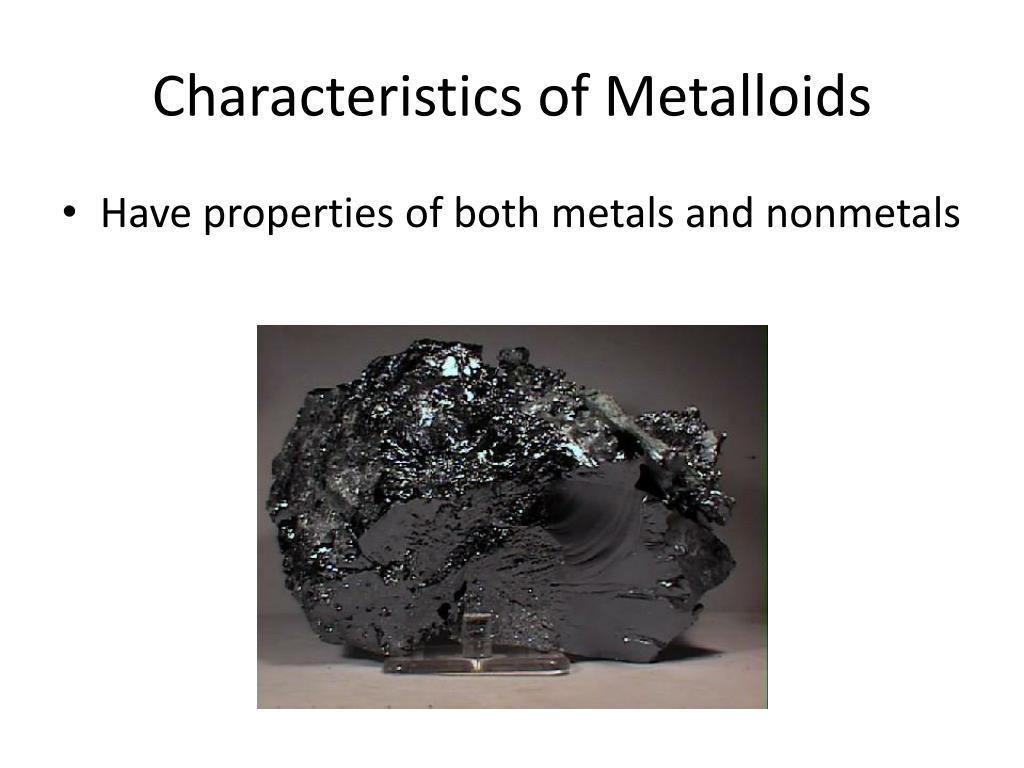
2. A Metallic Sheen with Non-Metallic Attitude: Metalloids often look metallic. They might have a shiny, silvery appearance. But don't let looks deceive you! They're often brittle, meaning they'll shatter if you hit them with a hammer. A metal, on the other hand, would just bend or dent. So, they have the looks, but not the "toughness" of a true metal.
3. Variable Conductivity: Remember that "valve" we talked about? The ability to control how well they conduct electricity makes them incredibly useful. We can change their conductivity by adding tiny amounts of other elements (a process called doping), or by changing the temperature or shining light on them. It's like they have a little dimmer switch for electricity!
4. Chemical Reactivity: Metalloids can react with both metals and non-metals, depending on the conditions. It’s like they can play nice with everyone at the party. This versatility makes them useful in a variety of chemical reactions and compounds.
Meet the Metalloid Crew
Let's put some faces to these properties. Here are a few of the most famous metalloids:

- Boron (B): You might find boron in cleaning products, but it's also used in making strong, lightweight materials.
- Silicon (Si): The king of semiconductors! It's in everything from computer chips to solar panels. And it’s the second most abundant element in the Earth's crust!
- Germanium (Ge): Another important semiconductor, often used in transistors and other electronic devices.
- Arsenic (As): Okay, arsenic has a bit of a bad reputation because it's poisonous. But it's also used in some semiconductors and wood preservatives. (Don't worry, you won't find it in your furniture!)
- Antimony (Sb): Used in flame retardants, batteries, and alloys.
- Tellurium (Te): Used in solar panels and alloys to improve machinability.
- Polonium (Po): A radioactive element with limited uses, but it's still technically a metalloid.
Why Should You Care?
So, why should you care about these semi-metallic, sometimes shiny, sometimes brittle elements? Because they're the unsung heroes of the modern world! They’re the reason you can read this article on your phone or computer. They’re powering the green energy revolution through solar panels. They’re even in some of the materials that make our cars safer!
Metalloids are a perfect example of how the seemingly obscure world of chemistry affects our daily lives in profound ways. They remind us that sometimes, the most interesting things happen in the in-between spaces – just like these elements that blur the line between metal and non-metal.
Next time you use your phone or see a solar panel glinting in the sun, take a moment to appreciate the humble metalloids, the versatile chameleons of the element world that make so much of our technology possible.