
What Are The 4 Types Of Coal

Hey there, energy explorers and curious minds! Ever looked at a lump of coal and thought, "Huh, just a black rock"? Well, buckle up, because you're about to discover a secret that’s way more exciting than it sounds! Coal isn't just one thing; it's a whole family with distinct personalities, each one a fascinating ancient powerhouse.
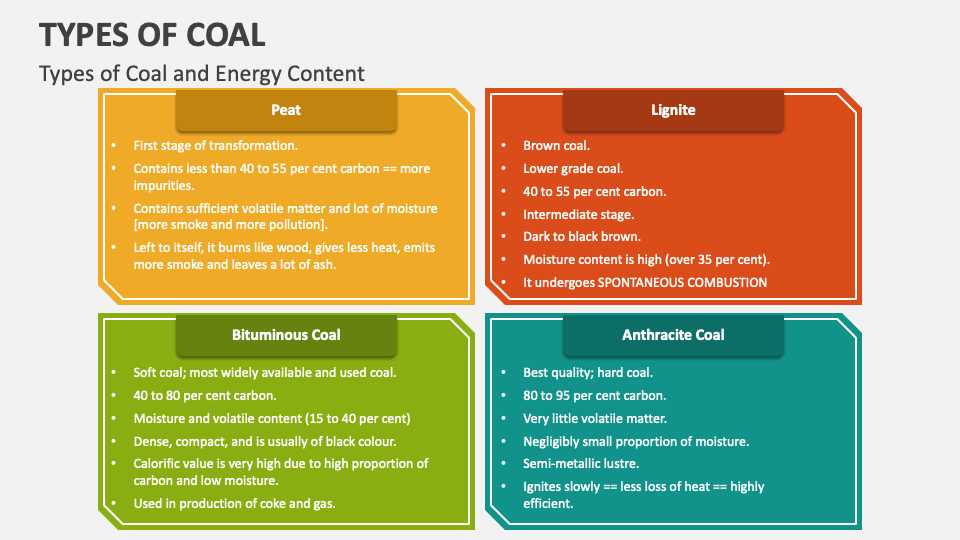
Imagine going back millions upon millions of years. Forests grew lush and died, then got buried under layers of gunk and grit. Over eons, with incredible pressure and heat, those squishy plant bits slowly, magically, transformed into the solid black gold we call coal! It’s like nature's very own, super slow-motion pressure cooker.
But here's the kicker: not all these geological kitchen experiments ended up with the same result! Some cooked longer, some cooked hotter, and some are still a bit "undercooked." This journey of transformation gives us four main types of coal, each with its own special flair and energy punch.
Must Read
The Coal Family Album: Four Shades of Awesome!
1. Lignite: The New Kid on the Block
First up, let's meet Lignite! You can also call it "Brown Coal," which is a pretty big hint about its youthful appearance. Think of Lignite as the enthusiastic teenager of the coal family, still a bit raw and full of potential, but not quite ready for prime time.
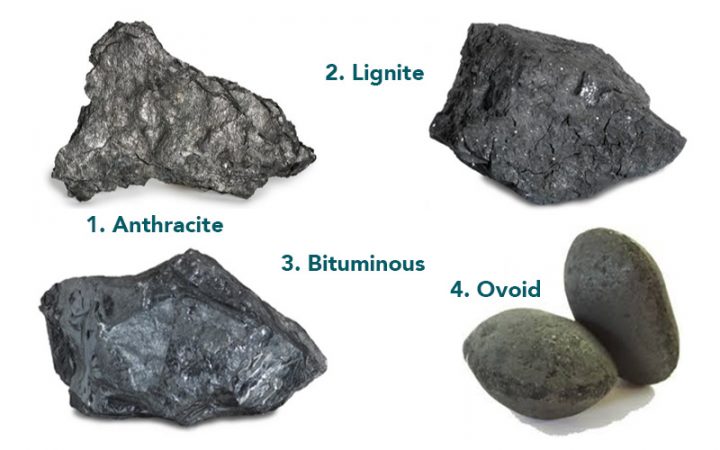
It's the youngest, geologically speaking, and it hasn't spent as much time in nature's pressure cooker. Sometimes, you can even spot bits of its original woody ancestors still visible in its structure! It's like finding a half-eaten sandwich in a teenager's backpack – a clear sign of its recent past.
Because it's not as "cooked," Lignite holds a lot more moisture than its older siblings. This means it's relatively softer and gives off the least amount of energy when burned. It's like a damp log trying to start a bonfire – it'll burn, but you'll need a lot of it for serious heat.
"I'm fresh out of the ground, full of youthful energy, but maybe a bit too eager to burn out quickly!"
Because it's heavy with water and lower in energy, Lignite usually stays close to home. It's often used in power plants located right next to the mines where it's found, making it a true hometown hero. Shipping it long distances just isn't very efficient.
2. Subbituminous: The Reliable Middle Child
Next, we climb a step up the maturity ladder to Subbituminous coal. This type has been under a bit more pressure and heat than Lignite, growing up and shedding some of that youthful dampness. It's like the reliable middle child – not too flashy, but incredibly dependable.
Subbituminous coal is darker than Lignite, moving from a brownish-black to a more solid, deep black. It's also harder and less prone to crumbling. You can tell it's been through more, getting denser and more concentrated.
It packs a noticeably bigger energy punch than its younger sibling, making it a very popular choice for generating electricity. It’s the steady workhorse of the power industry, powering countless homes and businesses without all the fuss. Think of it as the perfectly brewed cup of coffee – strong enough to get you going, but not overwhelmingly intense.

"I've matured, I'm efficient, and I'm ready to power your world with consistent, unflashy reliability!"
This coal type is abundant in places like the western United States, often found in thick seams that make it economical to mine. It's a true backbone of modern energy, a quiet superstar that keeps things humming along.
3. Bituminous: The Rock Star of Coal!
Now we're talking serious energy! Meet Bituminous coal, often considered the "classic" coal. When most people picture coal, they're probably imagining this shiny, powerful, and very popular type. It’s the rock star of the coal world – everyone wants a piece of it!
Bituminous coal has been through a significant amount of heat and pressure, transforming into a dense, hard, and typically deep black substance with a bright, lustrous sheen. It’s been polished by the earth itself, gleaming with concentrated energy.
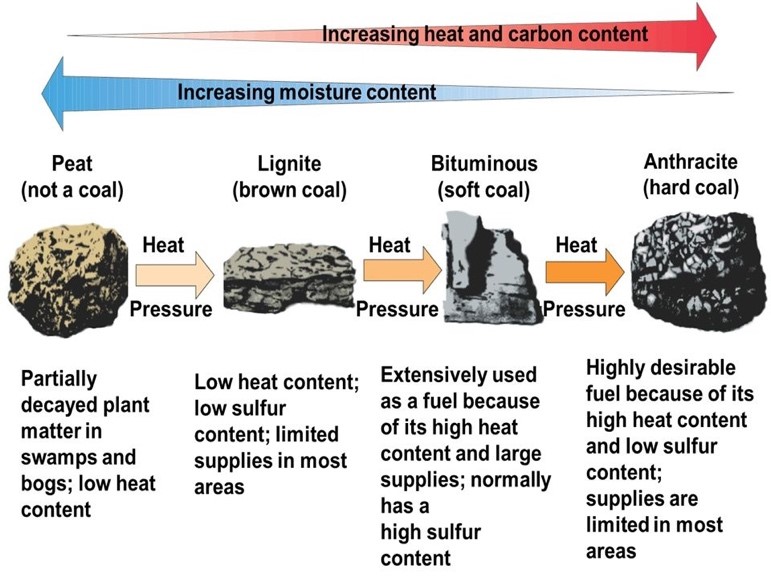
This superstar delivers a very high energy content, burning hot and efficiently. It's like a finely tuned engine, ready to unleash immense power. It truly lives up to its reputation as a heavyweight champion in the energy arena.
"I've endured the pressure, embraced the heat, and now I'm here to light up your life with maximum energy and a fiery performance!"
Bituminous coal isn't just for power plants, oh no. It's also a crucial ingredient in making coke, which is essential for manufacturing steel! So, every time you see a skyscraper or a car, remember that Bituminous coal might have played a vital role. It's a versatile master of many trades.
4. Anthracite: The Diamond of Coals
And finally, for the grand finale, we present Anthracite! This is the oldest, wisest, and hardest of the coal family, often called "hard coal." Think of it as the grandmaster, the ultimate zen master of coal, having endured the most extreme conditions.
Anthracite coal is absolutely gorgeous, boasting a brilliant, almost metallic luster. It's incredibly dense and pure, feeling smooth and sleek to the touch. It practically sparkles, looking less like a rock and more like a mysterious, polished gem. It's the black diamond of the energy world!
Having been subjected to the most intense heat and pressure over millions of years, Anthracite has the highest carbon content and, consequently, the highest energy content of all coals. It burns long, hot, and with very little smoke, making it a clean-burning marvel.
"I took my sweet time, endured immense pressure, and now I'm here to deliver pure, unadulterated heat with unmatched elegance and minimal fuss!"
Because of its superior qualities and cleaner burn, Anthracite has historically been prized for residential heating and specialty industrial applications. It's a premium product, a niche luxury in the energy market, offering sustained warmth and efficiency.
So there you have it, the fantastic four of the coal world! From young, eager Lignite to the ancient, sparkling Anthracite, each type tells an incredible story of geological transformation. It's a journey that showcases nature's astonishing ability to turn prehistoric plants into concentrated powerhouses.
Next time you hear about coal, you'll know it's not just one thing, but a whole spectrum of amazing, energy-packed rocks. Each type has its own incredible journey from squishy, green plants to the solid, black energy source that has fueled so much of our modern world. Isn't geology just the coolest?!