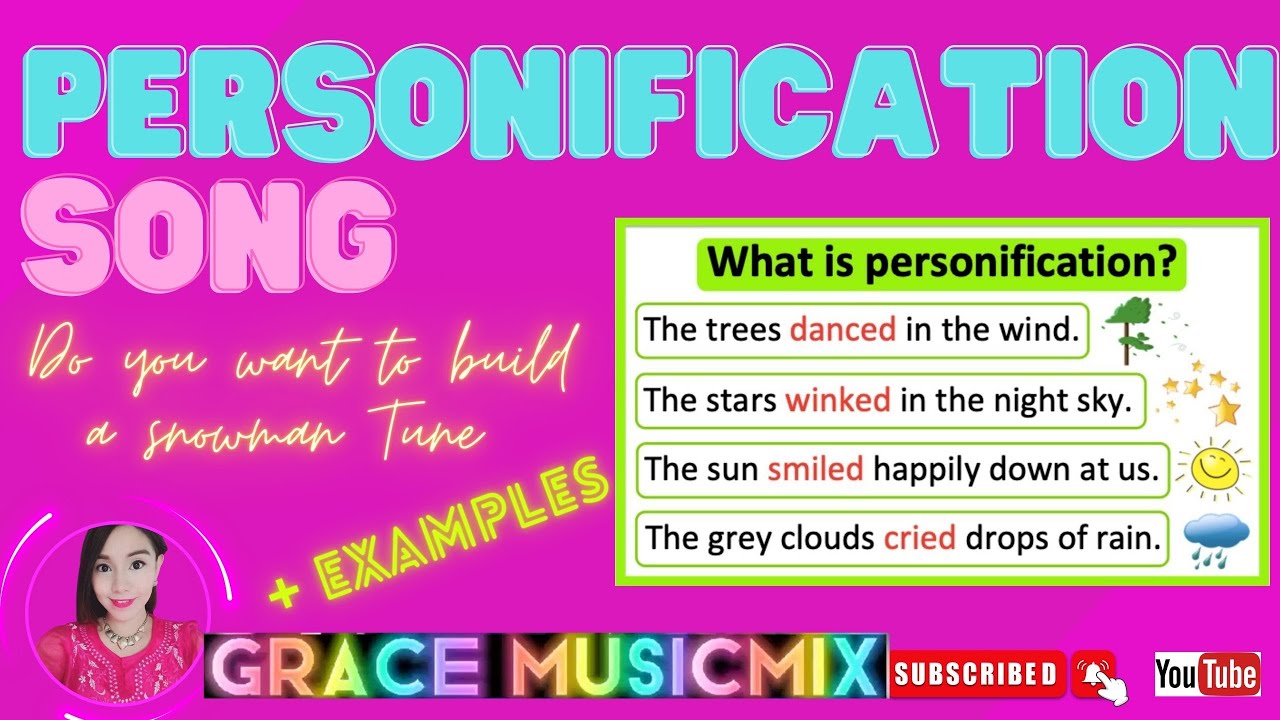
What Are Some Songs With Personification
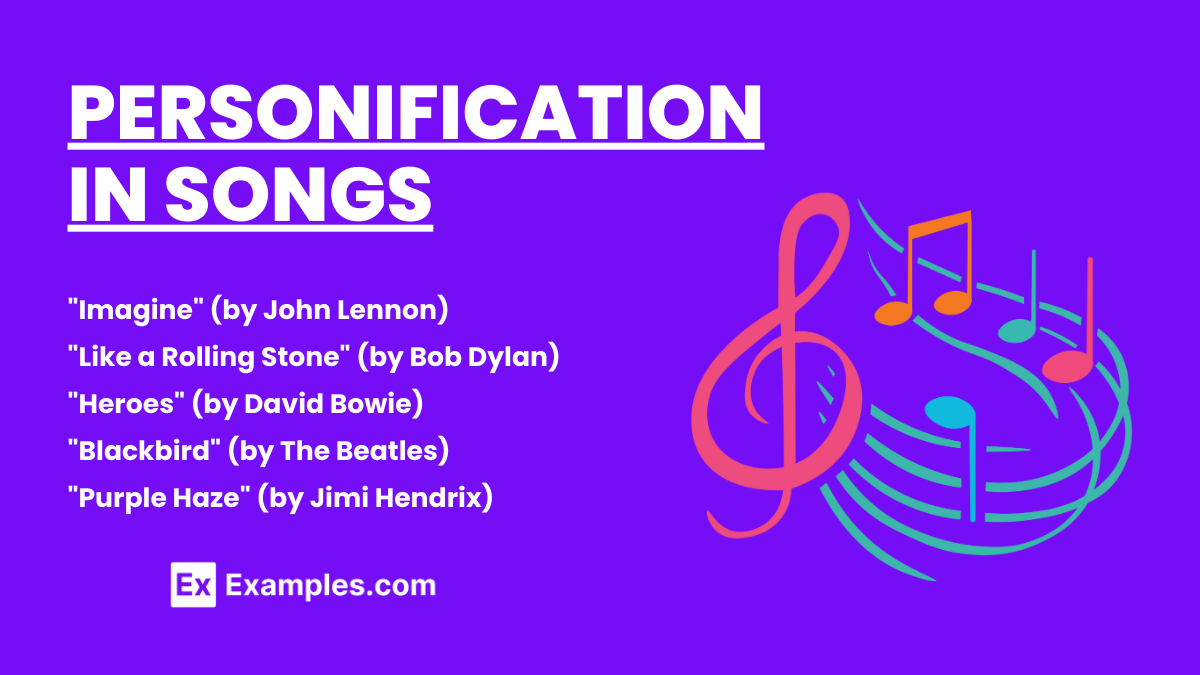
Ever notice how some songs just seem to breathe life into inanimate objects? It's like your radio's telling you a secret, or your shoes are complaining about that uphill walk. That's the magic of personification at play in music! Basically, it's when songwriters give human qualities to things that aren't human – a feeling, an object, even the weather. And it can make a song go from good to absolutely unforgettable.
The Weepy Guitar and the Grumbling Train
Think about blues music. How many times have you heard a guitar described as "crying"? That's personification gold! It's not just making a noise; it's expressing heartbreak, yearning, maybe even a little bit of sassy attitude. In countless blues songs, the guitar becomes a voice for the unspoken emotions. It wails when the singer's down, it rejoices when they're feeling good. The instrument isn't just an instrument; it's a confidante, a partner in crime, a walking (or should we say, playing?) example of personification.
Then there's the trusty train. In folk and country music, trains are almost always personified. They're not just metal boxes on wheels; they're symbols of freedom, escape, or even regret. They "roar" through the night, "carrying" burdens, or "whispering" secrets of faraway lands. In Johnny Cash’s “Folsom Prison Blues,” that train whistle practically screams with longing and missed opportunities. It's not just a sound effect; it's a character in its own right, taunting the prisoner with the life he's missing.
Must Read
When Rain Gets Sentimental and Wind Becomes a Storyteller
Weather is another prime candidate for the personification treatment. Rain isn't just water falling from the sky; it's "crying" for lost love, "washing away" sorrows, or even "dancing" on the rooftops with glee. Think of a somber ballad where the rain perfectly mirrors the singer's sadness. The rain isn't just a backdrop; it's actively participating in the emotional landscape of the song. It understands, it sympathizes, it weeps along with the listener.

And the wind? Oh, the wind loves to talk. In songs, it "whispers" secrets through the trees, "howls" with fury during a storm, or "carries" the scent of faraway places. It's a messenger, a storyteller, a gossipy neighbor always sharing the latest news. Bob Dylan's songs, for instance, often use the wind to represent change, uncertainty, and the ever-shifting nature of life. It's not just a breeze; it's a force, a presence, a character that shapes the narrative.
More Than Just Words: The Emotional Connection
But why do songwriters use personification? It's not just about being clever with words. It's about forging a deeper connection with the listener. When you hear a song where the guitar is crying or the wind is whispering, it's easier to feel the emotions the songwriter is trying to convey. It's like the song is speaking directly to your heart, using images and metaphors that resonate on a gut level.
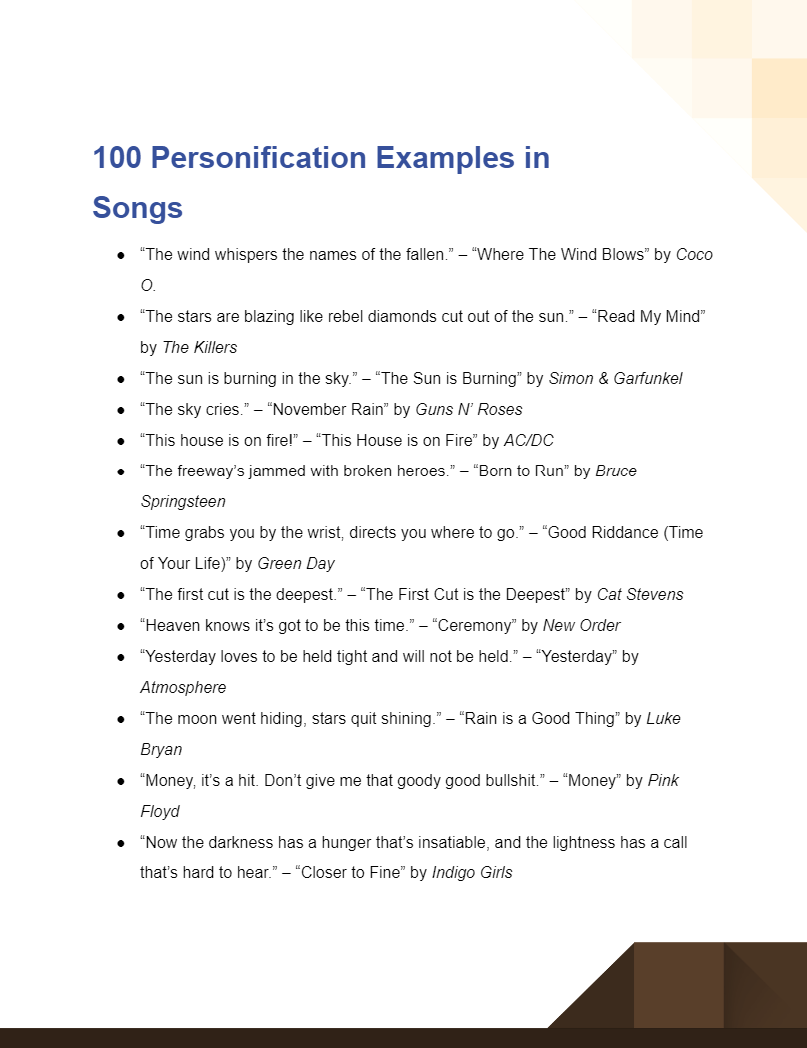
Think about songs about heartbreak. It’s one thing to say, "I'm sad." It's another thing entirely to say, "My heart aches." That phrase, even though it's a common idiom, is a form of personification. It suggests that your heart, your physical heart, is actually capable of feeling pain. And that image is far more powerful and evocative than simply stating your sadness. It helps the listener understand and empathize with your emotional state.
So, the next time you're listening to music, pay attention to the lyrics. See if you can spot any examples of personification. Is the sun "smiling" down on you? Is the river "calling" your name? Once you start looking for it, you'll be amazed at how often songwriters use this powerful tool to bring their songs to life. You might even find that your favorite songs take on a whole new meaning when you realize the world around you is bursting with voices, stories, and emotions just waiting to be sung.