
What Are Some Of The Characteristics Of Metals

Ever look around and notice how much stuff is made of, well, metal? It's practically everywhere! From the spoon you eat your cereal with to the skyscrapers that tickle the clouds, metal's the real MVP. But what exactly makes something metal? Let's dive in and explore some of its coolest characteristics.
Shiny and Bright: The Luster of Metals
Okay, first up: metals are generally shiny! Think of your grandma's silver cutlery, gleaming under the dining room light. That characteristic shine is called luster, and it's one of metal's most recognizable features.
Imagine a pirate's treasure chest overflowing with gold doubloons. Is there a reason that those were gold and not made of, say, wood?
Must Read
It's because metals can reflect light like nobody's business, giving them that eye-catching shimmer. It’s a dazzling display that makes metals stand out.
Tough Cookies: Strength and Hardness
Metals are also usually super strong and hard. Try bending a steel girder with your bare hands - I'm pretty sure you won't succeed! That’s because metals tend to resist deformation, making them excellent materials for building things like bridges and car chassis.
You wouldn't want your car crumpling like a paper bag at the first sign of a fender-bender, would you?
Strength and hardness are why we trust metals to keep us safe in all sorts of situations.
Bend It Like Beckham (Or At Least Try To): Malleability
Now, while metals are strong, many of them can also be shaped without shattering, which is something of a paradox. This is known as malleability, and it's what allows metals to be hammered into thin sheets.
Think of aluminum foil – it’s metal, but it’s thin enough to tear with your fingers!
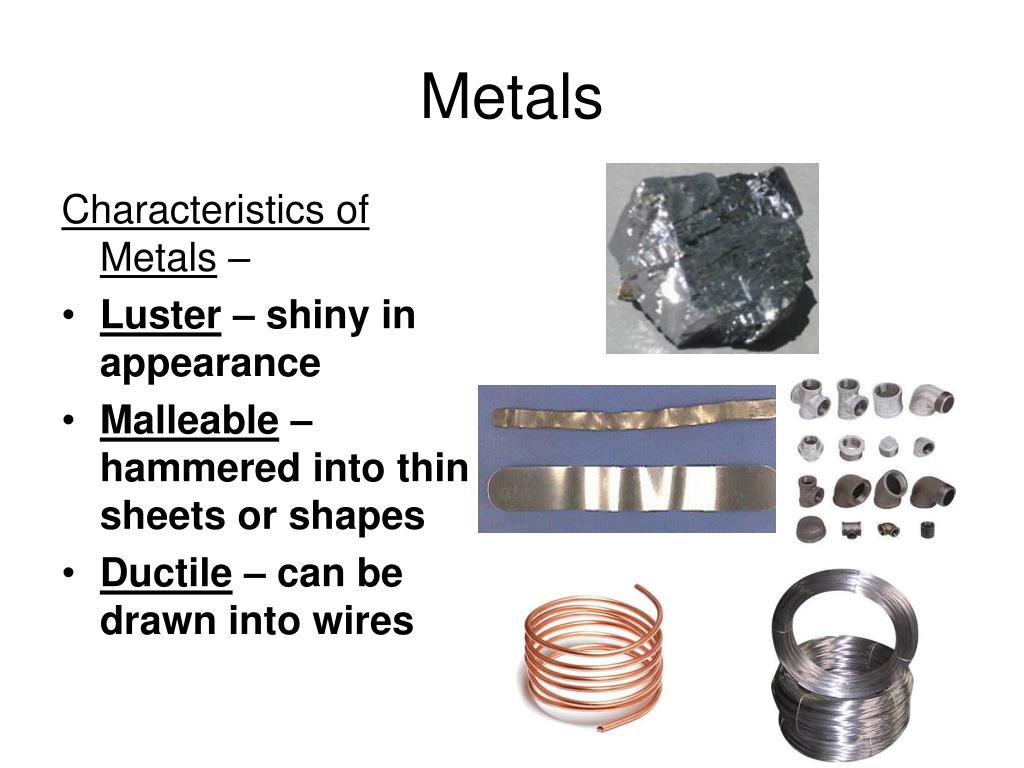
Blacksmiths rely on malleability to forge intricate designs, and manufacturers use it to create everything from car panels to soda cans. This property makes metal exceptionally versatile.
Pulling Strings: Ductility
Similar to malleability, ductility is the ability of a metal to be drawn into wires. Copper, for example, is super ductile, making it ideal for electrical wiring.
Imagine trying to make electrical wires out of glass. That would be a shocking experience (pun intended)!
Ductility lets us transmit power across vast distances. It is also used to make fine jewelry that requires thin threads of gold or silver.
Hot Stuff: Thermal Conductivity
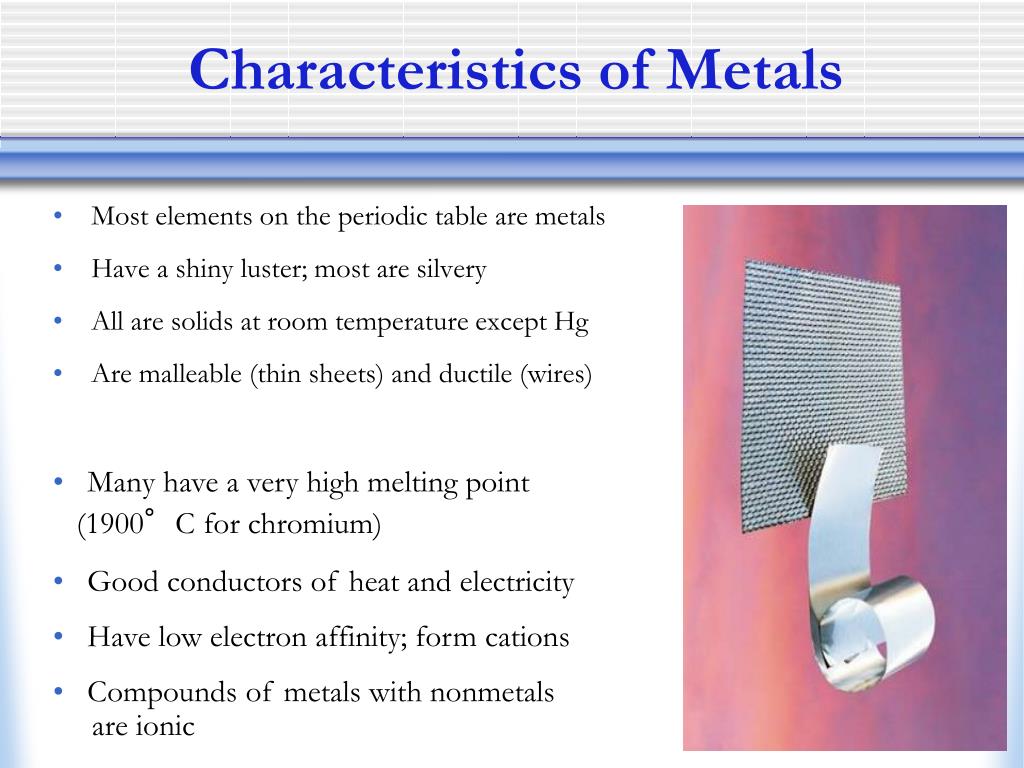
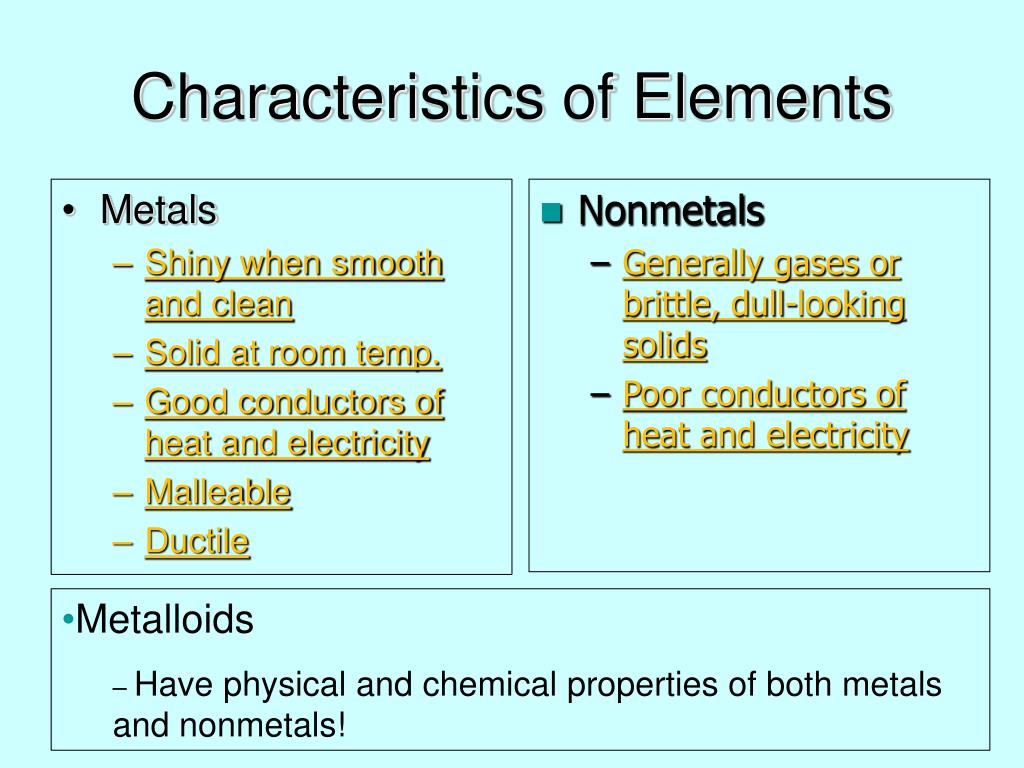
Metals are fantastic conductors of heat. That means they transfer heat quickly and efficiently. Ever notice how a metal spoon gets hot really fast when you stir it in a hot cup of coffee?
That's thermal conductivity in action! That's why pots and pans are typically made of metal. They distribute heat evenly, ensuring your food cooks properly.
Imagine trying to cook on a wooden stove top – talk about a recipe for disaster! Metals, on the other hand, are the culinary heroes we can depend on.
Zapping Good Time: Electrical Conductivity
Just as they conduct heat well, metals are also excellent conductors of electricity. This is why they're used extensively in electrical wiring and electronic devices. Copper and aluminum are particularly good at conducting electricity.
Imagine your phone trying to run on a potato battery – that would be a pretty dim experience!
Thanks to metals, our devices can power up reliably, keeping us connected and entertained.
Melting Moments: Melting Points
Every metal has a melting point, which is the temperature at which it transitions from a solid to a liquid. Some metals, like mercury, have very low melting points and are liquid at room temperature. Others, like tungsten, have incredibly high melting points.
Tungsten's high melting point is why it's used in light bulb filaments – it can withstand extreme heat without melting.
Imagine a light bulb filament made of butter – it would melt faster than you can say "light bulb"! Melting point plays a crucial role in determining a metal's suitability for various applications.
Heavy Hitters: Density
Metals are generally quite dense, meaning they pack a lot of mass into a small volume. Osmium and iridium are among the densest naturally occurring elements.
Imagine trying to lift a suitcase filled with feathers versus a suitcase filled with lead – the difference in weight would be astronomical!
Density is important in applications where weight and compactness are critical factors.
Alloyed Forces: Alloys
Often, metals are mixed with other elements to create alloys. Alloys can have properties that are different from the individual metals that make them up.
Steel, for example, is an alloy of iron and carbon. It’s stronger and more durable than pure iron.

Brass, bronze, and stainless steel are other common alloys, each with its own unique set of characteristics. Alloying allows us to tailor the properties of metals to meet specific needs.
A Few Extra Quirks: Reactivity and Magnetism
Some metals are highly reactive, meaning they readily combine with other elements. Others are relatively inert. Sodium, for example, reacts violently with water, while gold is much more stable. And then there's magnetism. Iron, nickel, and cobalt are the three most common ferromagnetic metals, meaning they can be strongly magnetized.
Some metals are more outgoing than others.
These properties affect how metals interact with their environment and what they can be used for.
So, There You Have It!
Metals are a diverse and fascinating group of materials with a wide range of characteristics. From their shiny luster to their strength and conductivity, metals play an essential role in our modern world. They are the unsung heroes of engineering, construction, and everyday life.
Next time you see something made of metal, take a moment to appreciate its unique properties. These characteristics are what makes it so useful and versatile.
Now go forth and appreciate the metallic wonders all around you!