What Are Some Disadvantages Of Wind Turbines

Hey there! So, wind turbines, right? Those big, majestic windmills that are supposed to save the planet? They're pretty cool, and honestly, we need more clean energy sources. But like that amazing-looking cake that tastes a little...off, even wind turbines have their downsides. Let's chat about some of those, shall we?
The Noise Factor: Like a Really Annoying Neighbor
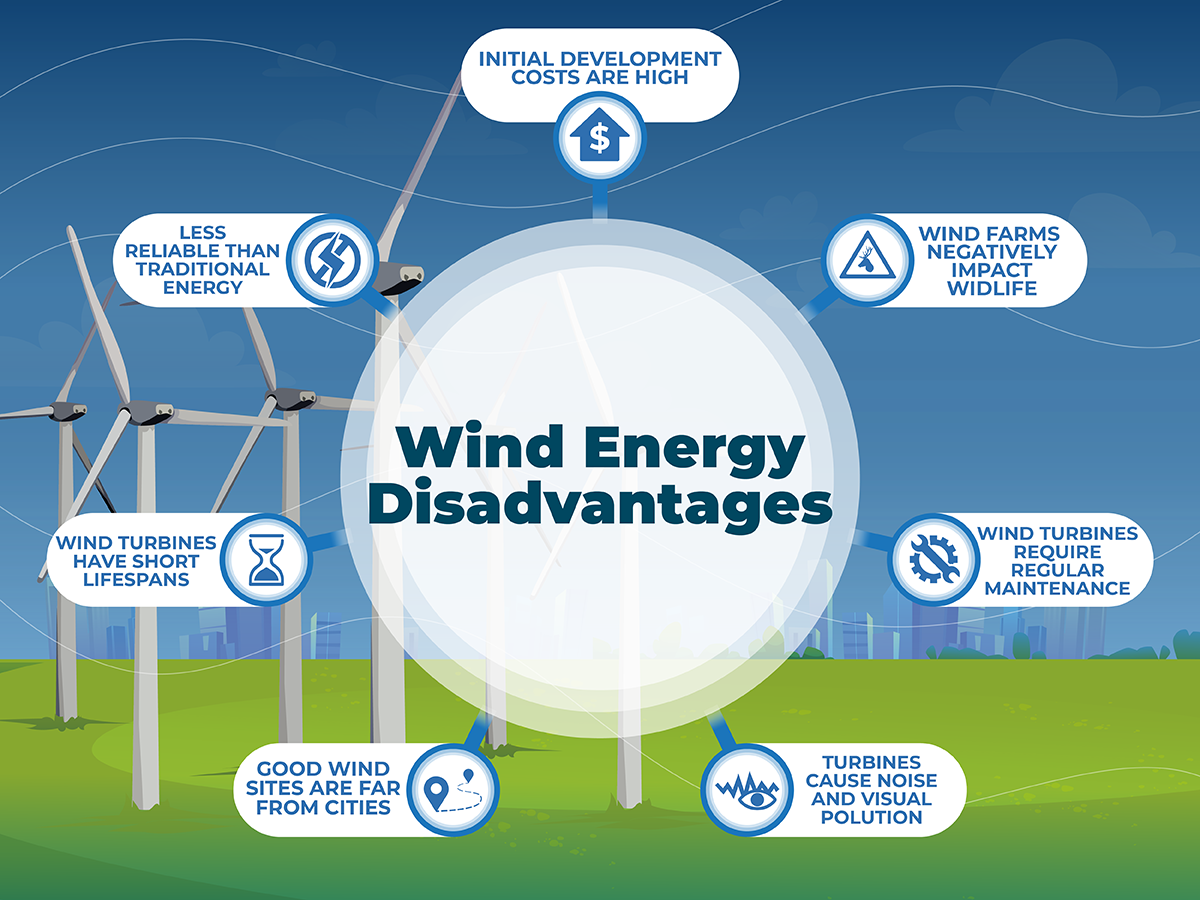
Imagine trying to relax in your backyard, sipping lemonade, only to be constantly bothered by a rhythmic "whoosh, whoosh, whoosh." That's kind of what living near a wind turbine can be like. The noise they generate, sometimes described as a low-frequency hum or a swishing sound, can be quite disruptive, especially at night. It's like having a persistent, slightly irritating neighbor who just won't turn down their music. For some folks living close by, it can seriously impact their quality of life, making it hard to sleep or simply enjoy peace and quiet. Think of it as the anti-zen.
Bird and Bat Woes: Not a Happy Flight Path
This is a biggie, and it's a real bummer. Wind turbines, with their rapidly spinning blades, can pose a significant threat to birds and bats. These creatures can fly into the blades, resulting in injuries or, sadly, fatalities. It's not that turbines are trying to be bird assassins, but their sheer size and location (often on migratory routes) make them a hazard. It's like building a giant, spinning obstacle course in the middle of the sky. We all love watching birds soar, right? Protecting them is key, and this is one area where wind energy needs serious improvement.
Must Read
The Visual Impact: Beauty is in the Eye...Unless It's a Wind Farm?
Okay, this one's subjective. Some people find wind turbines graceful and modern, like giant, elegant sculptures. Others...not so much. Imagine your favorite scenic vista – a rolling hillside, a breathtaking coastline. Now, picture a whole bunch of towering wind turbines dominating the landscape. For some, it ruins the natural beauty. It's like adding a bunch of skyscrapers to a nature documentary. Beauty is in the eye of the beholder, sure, but the visual impact can be a real concern, especially in areas known for their pristine landscapes.

Intermittency: Wind's a Fickle Friend
Here's the thing about wind: it doesn't blow all the time. Seems obvious, right? But it's a huge challenge for wind energy. Unlike a coal-fired power plant that can churn out electricity consistently, wind turbines only generate power when the wind is blowing. If there's no wind, there's no electricity. This "intermittency" means we can't rely solely on wind power. We need backup systems – like battery storage or other power sources – to fill in the gaps. It's like trying to bake a cake with an oven that only works sporadically. Reliability is paramount when it comes to keeping the lights on!
The Cost of Construction and Maintenance: Not Exactly Pocket Change
Building and maintaining wind turbines is expensive. The initial investment in constructing a wind farm is significant, and then there's the ongoing cost of keeping those turbines running smoothly. They're complex machines, and they're exposed to harsh weather conditions, so repairs are inevitable. Think of it like owning a fancy sports car – fun, but pricey to keep in top shape. While wind energy can be competitive with other sources in the long run, the upfront costs can be a barrier to entry.
Raw Materials and Manufacturing: Not Always Sunshine and Rainbows
The components of wind turbines require specific raw materials, some of which are mined or sourced from places with questionable environmental or labor practices. The manufacturing process itself also has an environmental footprint. So, while wind energy is cleaner than fossil fuels, it's not entirely without its own set of environmental considerations. It's like switching from sugary soda to "healthy" juice – still has some sugar, just a different kind. We need to be mindful of the entire lifecycle of wind turbines, from raw materials to disposal, to ensure they're truly sustainable.
So, there you have it! Wind turbines are a valuable tool in our fight against climate change, but it’s important to understand their limitations too. The key is finding a balance, innovating to overcome these challenges, and making informed decisions about how we power our world. Because ultimately, a sustainable future is a future we all want.