
What Are Pros And Cons Of Hydroelectric Energy

Hey there, energy enthusiasts! Ever stood next to a roaring waterfall and felt…powerful? Well, that feeling is kind of what hydroelectric energy is all about. We’re talking about harnessing the incredible force of water to generate electricity. Sounds pretty cool, right? But like anything, there are two sides to the coin. So, let's dive into the pros and cons of this fascinating energy source.
The Perks: Riding the Wave of Positives
First up, let's talk about the good stuff. Why is hydroelectric power often touted as a green solution?
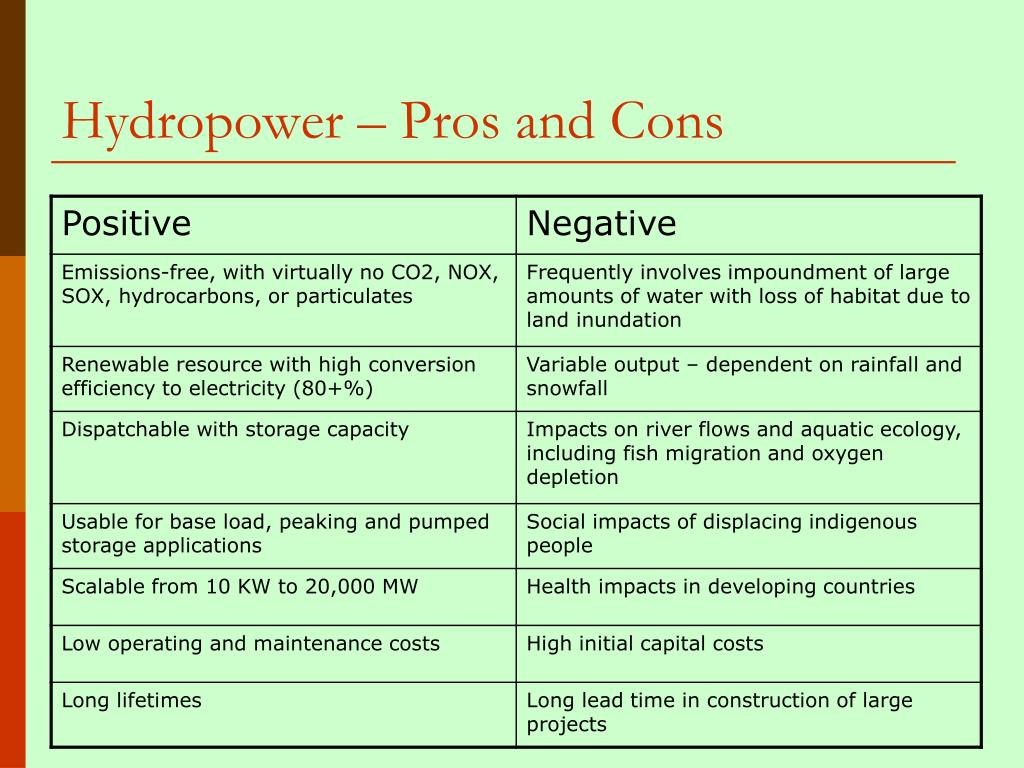
One of the biggest advantages is that it's a renewable energy source. What does that mean? Simply put, we’re using water, and water (generally) keeps on flowing. It's not like fossil fuels that eventually run out. Think of it as having an endlessly refillable energy drink, versus a can you can only drink once. Big difference, eh?
Must Read
Hydroelectric power is also relatively clean. Once the dam is built, there aren't a lot of greenhouse gasses being released into the atmosphere. It's not completely emission-free (we'll get to that later), but it’s a heck of a lot better than burning coal or gas.
And speaking of dams, they aren't just for making electricity! Many dams provide flood control. Ever seen a dramatic movie where a dam saves a town from being washed away? That's a real thing! They also can provide a reliable water supply for irrigation, drinking, and industrial uses. Talk about multi-tasking!

Then there's the reliability factor. Unlike solar or wind power, which depend on the sun shining or the wind blowing, hydroelectric power can be generated pretty much whenever you need it. As long as there's water in the reservoir, you're good to go. It’s like having an energy source that's always "on call."
Finally, hydroelectric plants can be surprisingly long-lasting. Some have been operating for decades, providing clean energy for generations. That's a pretty good return on investment, wouldn't you say?
The Downsides: Navigating the Rapids of Negatives
Okay, so hydroelectric power sounds almost perfect, right? But hold on – every rose has its thorns. Let's explore the potential drawbacks.

The biggest issue is the environmental impact of building dams. To create a reservoir, you often have to flood large areas of land. This can destroy forests, displace communities, and disrupt ecosystems. Imagine your entire neighborhood being underwater! Not a pretty picture.
And it's not just the land that suffers. Dams can also disrupt fish migration. Fish like salmon need to swim upstream to spawn, and a dam can be a major obstacle. Think of it as putting a giant wall in the middle of their highway. Some dams have fish ladders to help them, but they're not always effective.
Another issue is methane emissions. Wait, what? Methane? I thought we said it was clean! Well, when organic matter decomposes underwater in the reservoir, it releases methane, a potent greenhouse gas. While hydroelectric power produces far less methane than fossil fuel plants, it’s still something to consider.
Construction costs can also be very high. Building a large dam is a massive undertaking, requiring a lot of money, resources, and time. It's not something you can just whip up over a weekend!
And then there’s the risk of dam failure. While rare, dams can fail, leading to catastrophic flooding downstream. Nobody wants to think about that scenario. Proper engineering and maintenance are key to minimizing this risk.

So, What's the Verdict?
Hydroelectric energy is like a superhero with a few quirks. It's a powerful, renewable resource that can provide clean energy and other benefits. But it also has potential environmental and social costs that need to be carefully considered.
Ultimately, the decision of whether or not to build a hydroelectric plant is a complex one, weighing the pros and cons and taking into account the specific circumstances of each project. It’s all about finding the right balance between our energy needs and the health of our planet. Are there better alternatives? Can we mitigate the damage? These are the questions we need to ask.
What do you think? Is the power of water worth the price? It's a fascinating debate with no easy answers!