Welding Chromoly To Mild Steel

Ever gazed at a sleek, minimalist chair with impossibly thin legs, or a custom bicycle frame that looks both delicate and incredibly strong? You might be looking at the magic of welding chromoly to mild steel! It’s a technique that sounds a bit technical, but at its heart, it’s about mixing and matching materials to get the best of both worlds. Think of it like a culinary artist blending different spices to create a dish that’s both flavorful and perfectly textured. This particular blend opens up a world of creative and practical possibilities, making it increasingly popular among hobbyists and artists alike.
For the aspiring creator, this combination offers some truly remarkable advantages. Artists love it because chromoly, with its superior strength-to-weight ratio, allows for sculptures with slender, gravity-defying forms that wouldn't be possible with mild steel alone. Yet, by joining it with readily available and easier-to-work-with mild steel, the overall project becomes more accessible and cost-effective. For hobbyists, this means you can build that super-light racing drone frame, a sturdy yet elegant custom desk, or even parts for a mini-bike without breaking the bank or requiring highly specialized equipment for the entire build. It's a fantastic gateway to understanding dissimilar metals and expanding your welding repertoire beyond basic mild steel projects.
The beauty of welding chromoly to mild steel lies in its versatility. Imagine an abstract sculpture where the intricate, delicate elements are chromoly, seamlessly flowing into a robust mild steel base. Or consider a piece of modern furniture: sleek, thin chromoly tubing for the frame providing both strength and a minimalist aesthetic, anchored to a heavier mild steel top or base for stability. Custom bicycle builders often use chromoly for the critical, high-stress sections of a frame and mild steel for less critical areas, optimizing both performance and cost. The contrast in material properties allows for designs that are both functionally superior and visually striking, giving your creations an edge of sophisticated engineering.
Must Read
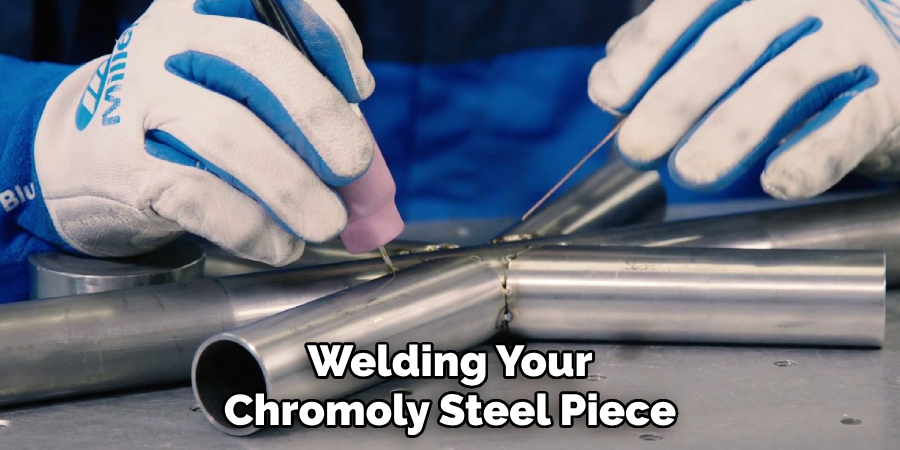
Ready to give it a whirl? Here are some friendly tips for trying it at home. First, cleanliness is paramount! Both materials must be free of oil, rust, and mill scale. For welding chromoly, TIG welding is often preferred due to its precise heat control, which is crucial as chromoly is more sensitive to heat input than mild steel. However, MIG welding can also be used successfully with the right settings and wire. When joining chromoly to mild steel, the choice of filler rod is key. An ER70S-2 or ER70S-6 (a mild steel filler rod) is typically recommended. It’s designed to handle the slight alloy differences and offers excellent strength and ductility for the joint. Keep your heat input minimal, move with purpose, and always practice on scrap pieces first. You’ll be amazed at how quickly you can develop a feel for it!
Ultimately, welding chromoly to mild steel isn’t just about joining two pieces of metal; it’s about unlocking new dimensions in your creative and practical projects. There’s immense satisfaction in learning a new skill and then applying it to build something that is not only visually appealing but also incredibly strong and durable. The challenge, the learning, and the tangible result make it an incredibly rewarding endeavor. So grab your welder, some scrap metal, and start exploring the exciting world where strength meets accessibility!