Ever watched someone weld and thought it looked incredibly cool, but also a little bit like magic? All those sparks and glowing metal, creating something new and strong. It truly is an amazing skill. But maybe you also thought, "How in the world do they know what settings to use?" Well, dear reader, let me introduce you to the secret ingredient that makes welding accessible, fun, and far less intimidating: the MIG welding chart.
Forget the image of grizzled experts squinting at dials for hours. For everyday folks like us, the MIG welding chart is like having a friendly cheat sheet right by your side. Think of it as your personal recipe book for metal. Just as you wouldn't bake a cake without knowing how much flour to use, you wouldn't want to weld without a little guidance on your machine's settings.
Your Guide to Metal Magic
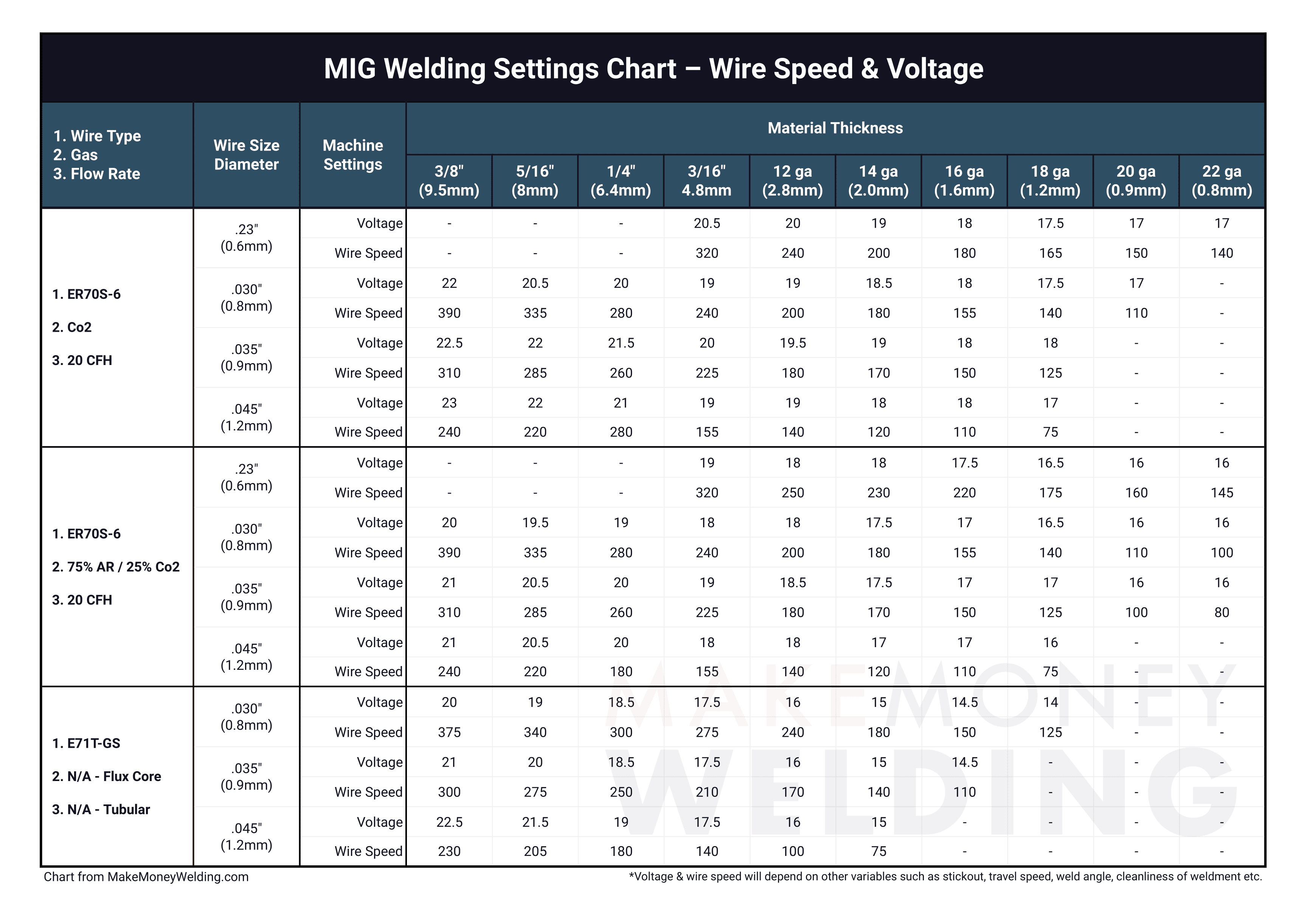
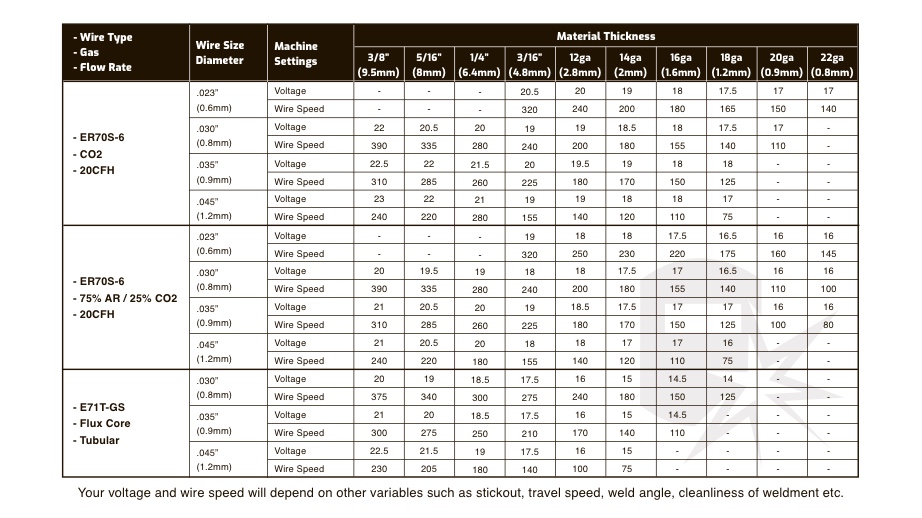
So, what exactly is this mystical chart? In simple terms, it's a table. A table that tells you exactly what settings to use on your MIG welder based on two key things: the type of metal you're working with and its thickness. Imagine trying to get a perfect golden-brown crust on a pizza. You need the right temperature and the right time, right? The welding chart does the same for fusing metal, telling you the ideal voltage and wire speed.
What makes this chart so special and, dare I say, entertaining? It's the sheer joy of seeing instant, satisfying results without the guesswork. No more head-scratching or wild trial-and-error that might leave you with a mess. This chart hands you the confidence on a silver platter (or, perhaps, a steel one!).
It turns the complex art of welding into a surprisingly straightforward, almost playful, process. It's like having the answer key before the big test.
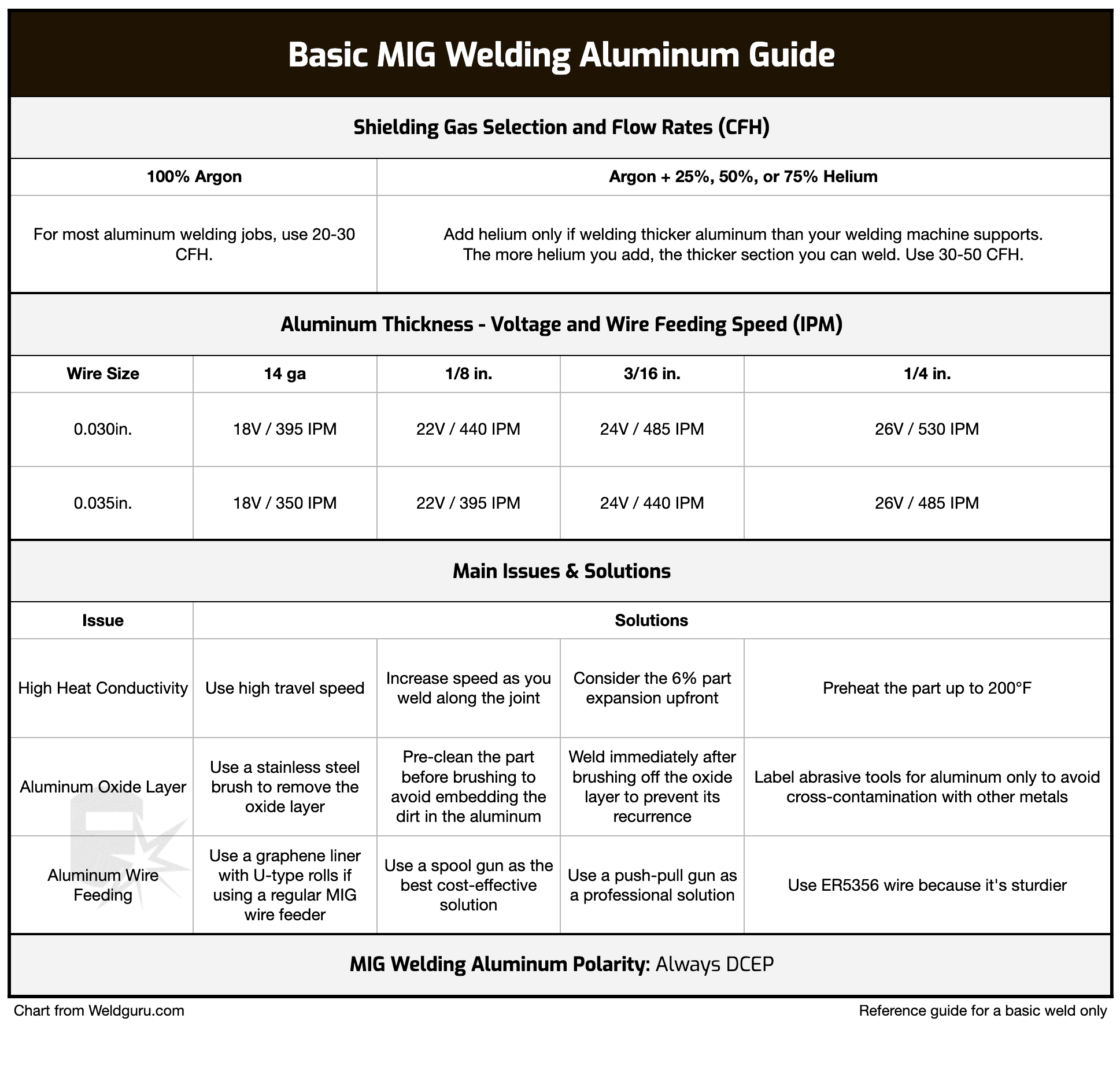
How To MIG Weld Aluminum: Beginners Guide (with Chart)
For beginners, this is a game-changer. The fear of getting it "wrong" often stops people from trying new hobbies. But with a MIG welding chart, that fear melts away faster than a stick of solder. You pick your metal – maybe a piece of thin sheet metal for a fun sculpture, or something thicker for a garden gate repair. You find that metal's row on the chart. Then, you simply adjust your machine's dials to match the recommended wire speed and voltage. Voila! You're ready to create.
The Delight of Instant Success
There's a real thrill in putting on your helmet, pulling the trigger, and watching a beautiful, consistent bead form right before your eyes. And knowing that the humble MIG welding chart helped you achieve that? That's pure satisfaction. It allows you to focus on the act of welding itself – guiding the gun, maintaining your travel speed – rather than constantly worrying about machine settings.
MIG Welding Wire Essentials: A Guide to Types & Uses
This freedom from technical worry is what makes it so engaging. It frees up your brain to be creative. Suddenly, that rusty old bicycle frame isn't just junk; it's the potential base for a quirky art piece. That broken chair isn't destined for the dump; it's a quick fix away from being useful again. The chart empowers you to tackle these projects with a can-do attitude.
Think of it like learning to play a musical instrument with training wheels. The welding chart gives you the initial stability and correct form. As you gain experience, you'll start to understand why certain settings work, and you might even tweak them slightly for your unique style. But to start, it’s an invaluable friend.
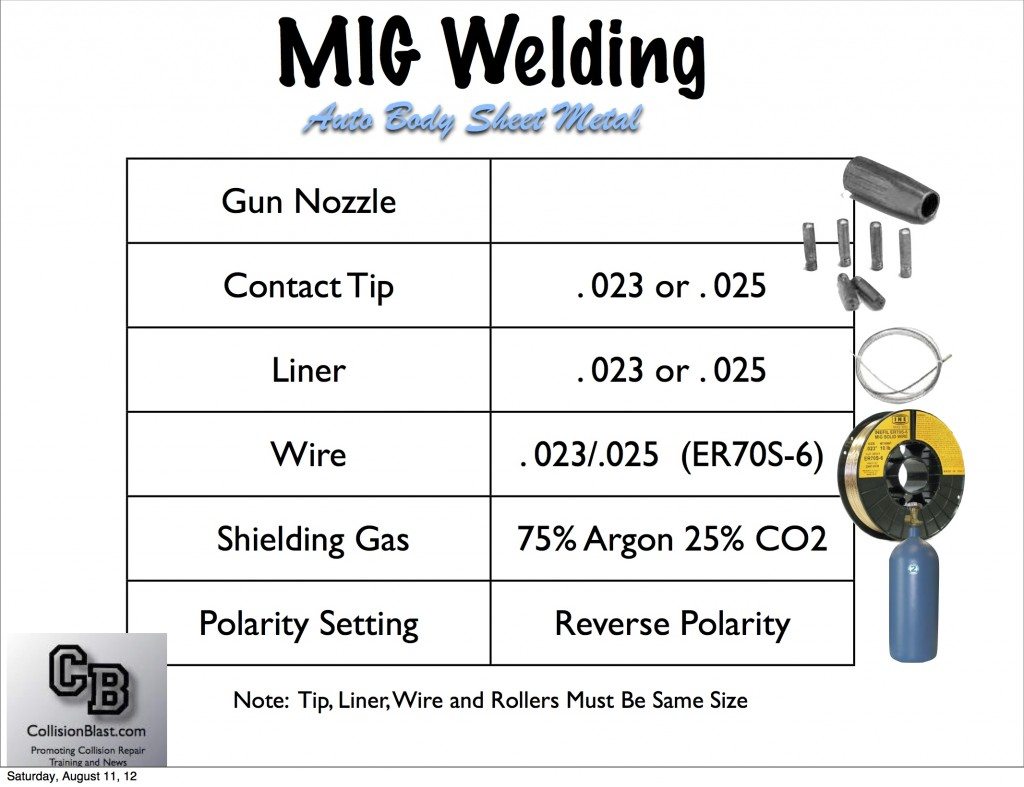
Mig Welding Diagram
Demystifying the Sparks
It's not just for newbies, either. Even seasoned welders keep a chart handy for those less common metals or unfamiliar thicknesses. It's a quick reference, a universal translator in the world of metal fabrication. The fact that such a simple tool can demystify such a powerful process is truly remarkable. It brings welding down to earth, making it less of an exclusive club and more of a widely enjoyable craft.
So, if you've ever dreamt of creating with metal, of joining pieces together with a satisfying sizzle, don't let the technical jargon scare you off. The MIG welding chart is waiting to be your trusty guide, turning potential frustration into genuine fun. It’s a wonderful example of how a bit of organized information can unlock a whole world of creativity and hands-on satisfaction. Why not explore the world of MIG welding and discover the magic for yourself? You might just find your new favorite way to build, fix, and create.