
Vacuum Hose 5.4 Triton Vacuum Diagram
Alright, settle in, grab a coffee (or something stronger, I won't judge), because we're diving deep into the thrilling world of… vacuum hoses! And not just any vacuum hoses, oh no. We're talking specifically about the ones attached to a Ford 5.4 Triton engine. I know, I know, you're probably thinking, "This is how I spend my Saturday?" Trust me, it's going to be more exciting than watching paint dry. Maybe. Okay, slightly more exciting.
Let's face it, vacuum hoses are the unsung heroes of your engine. They're like the plumbing of the automotive world, silently sucking away (pun intended!) excess air and ensuring everything runs smoothly. But when they crack, leak, or decide to spontaneously combust (okay, maybe not combust, but get dramatically dry-rotted), things can go south fast.
Imagine this: you're cruising down the highway, windows down, Bon Jovi blasting… and suddenly, your engine starts sounding like a asthmatic walrus. Your check engine light, which you've expertly ignored for the past six months, decides to throw a full-blown rave. Chances are, my friend, you've got a vacuum leak. And a 5.4 Triton, bless its heart, is notorious for them.
Must Read
Why the Fuss About Vacuum Hoses on a 5.4 Triton?
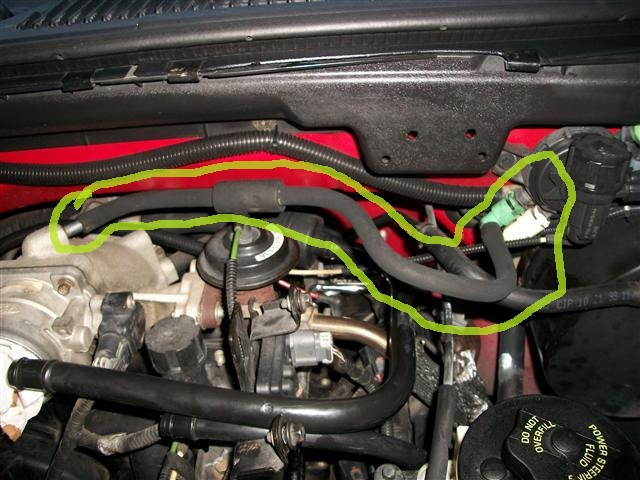
The 5.4 Triton, especially in certain Ford models (think F-150s, Expeditions, and even some Mustangs – yes, seriously!), has a complex network of vacuum hoses. It's like a spaghetti junction under the hood. And just like a real spaghetti junction, getting lost in it is incredibly easy. Think of it as a game of 'Where's Waldo,' but instead of finding a stripey guy, you're hunting for a cracked piece of rubber that's causing your truck to run like it’s powered by hamsters on a tiny treadmill.
One of the main culprits is the Positive Crankcase Ventilation (PCV) system. This system is responsible for venting harmful fumes from the engine crankcase back into the intake. When the PCV valve or its associated hoses fail, you get… well, you get all sorts of exciting symptoms. Rough idling, poor fuel economy (as if a 5.4 Triton was ever economical!), and a general feeling that your engine is about to stage a full-blown rebellion.
So, what's a poor soul to do?
The All-Important Vacuum Diagram
This is where the vacuum diagram comes in. Think of it as the Rosetta Stone of your engine's air management system. Without it, you're basically trying to assemble IKEA furniture blindfolded, while wearing oven mitts. Trust me, I've been there. It's not pretty.

A vacuum diagram is a visual representation of all the vacuum lines, their connections, and the components they serve. It shows you exactly where each hose is supposed to go, which is crucial when you're trying to replace a brittle, disintegrated hose that resembles nothing more than a dusty shoelace.
Finding the right diagram is key. There are different diagrams for different years and models, even within the 5.4 Triton family. So, make sure you have the correct diagram for your specific vehicle. Consult your owner's manual, a reliable online database, or even a friendly mechanic (the friendly part is optional, but highly recommended).
Decoding the Diagram (Don't Panic!)
Alright, you've got your diagram. Now what? Don't be intimidated by the seemingly endless maze of lines and symbols. Start by identifying the major components: the PCV valve, the intake manifold, the vacuum reservoir, and any other bits and bobs lurking under your hood.

Then, trace the lines from each component, following them carefully to their destination. Use colored markers or highlighters to make it easier to track the different lines. Think of it as a coloring book for gearheads. (Someone should really market that, actually.)
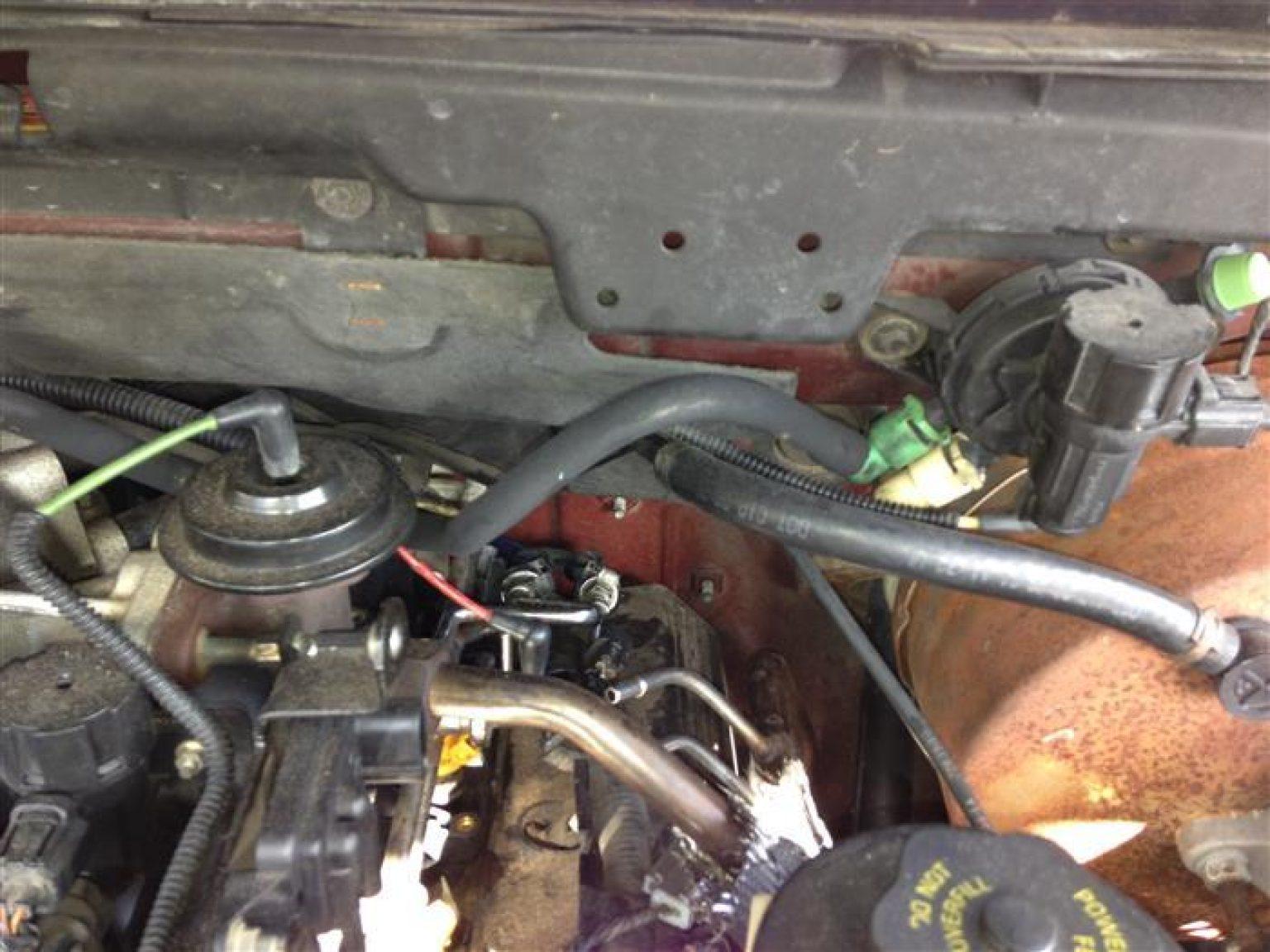
Pro Tip: Take pictures of your existing hose setup before you start disconnecting anything. Future you will thank you profusely. Seriously, write future you a thank you note now. You'll appreciate it later when you're not sure if that little hose goes to the flux capacitor or the blinker fluid reservoir (okay, blinker fluid isn't real, but you get the idea!).
Replacing the Hoses (The Fun Part!)
Once you've identified the faulty hoses, it's time to replace them. Use high-quality vacuum hose that's rated for automotive use. Don't try to cheap out with garden hose or something equally ridiculous. It won't last, and you'll just end up doing the job again. Think of it as investing in a good pair of shoes – you wouldn't run a marathon in flip-flops, would you?
Cut the new hoses to the correct length, using the old ones as a guide. Make sure the connections are tight and secure. Use hose clamps if necessary. Double-check your work against the vacuum diagram to ensure everything is connected properly. And then, cross your fingers, start your engine, and hope for the best. If all goes well, your 5.4 Triton should be purring like a kitten (a very loud, slightly gas-guzzling kitten, but a kitten nonetheless).
So there you have it! A crash course in 5.4 Triton vacuum hose wrangling. Remember, a little patience, a good vacuum diagram, and maybe a few choice words of encouragement (or frustration) can go a long way. Now go forth and conquer those leaky hoses! And if all else fails, there's always duct tape. (Just kidding!…mostly.)