
Typical Sulfur Content In 304 Stainless Steel

Okay, let's talk stainless steel. Specifically, that workhorse, 304 stainless steel. We see it everywhere. From kitchen sinks to brewery tanks, it's the unsung hero of everyday life.
But have you ever wondered what's actually in this stuff? It's not just a hunk of shiny metal. It's a party of different elements all playing nice together. Mostly.
Sulfur: The Spice in the Steel?
Today's topic: sulfur. Yes, that element that sometimes smells like rotten eggs. Stay with me, though! It's more interesting than it sounds.
Must Read
Now, 304 stainless steel isn't exactly known for its high sulfur content. In fact, the spec sheets usually put a limit on it.
The Official Line on Sulfur
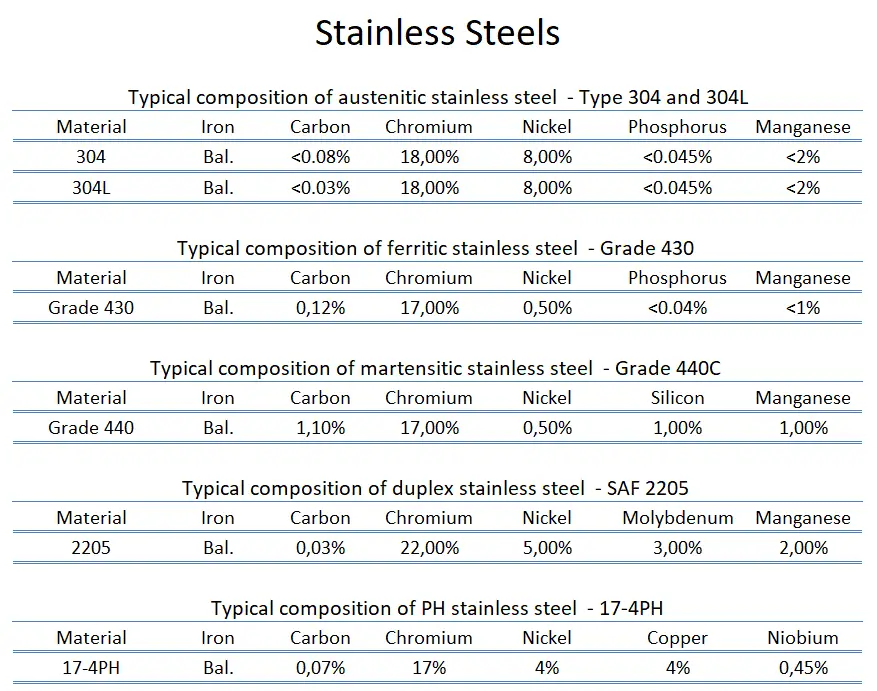
Officially, you're looking at a maximum of 0.030% sulfur in 304 stainless steel. That's the number everyone quotes. Seems pretty straightforward, right?
But here's where my unpopular opinion comes in. I think that number is... a little boring. And maybe, just maybe, a little misleading.
Think about it: metal production isn't always perfectly precise. Things can fluctuate. And honestly, a tiny bit more sulfur probably isn't the end of the world. In fact, sometimes it might even be helpful. Hear me out.
My Unpopular Opinion About Sulfur in 304
I think a tiny bit more sulfur can actually make 304 stainless steel easier to work with. Especially when it comes to machining.
Machining, for the uninitiated, is the process of cutting, drilling, and shaping metal. Sulfur can act as a sort of internal lubricant. It helps the metal "chip" away more easily.
Less friction means less heat, less tool wear, and a generally happier machinist. Happy machinists make better parts. It's a win-win, right?
The "Free-Machining" Factor
There are even grades of stainless steel specifically designed for easier machining. They often have higher sulfur content. Think of 303 stainless steel.
303 is basically 304's slightly rebellious cousin. It throws caution to the wind and embraces sulfur (within limits, of course!).
So, if a little sulfur is good for 303, wouldn't a tiny bit more be alright for 304 too? That's my controversial take.
The Dark Side of Sulfur (Don't Panic!)
Okay, okay, I know what you're thinking. Too much sulfur is bad. And you're right. It definitely can be.

Excessive sulfur can make stainless steel more susceptible to corrosion. Especially in certain environments. Nobody wants rusty stainless!
It can also reduce the weldability of the steel. Welding is how we join pieces of metal together. If it's hard to weld, it's hard to build things.
The Balance is Key
That's why the 0.030% limit exists in the first place. It's a balancing act. Enough sulfur to potentially aid machining, but not so much that it compromises the steel's other properties.
It's a delicate dance between ease of manufacturing and long-term performance. And the engineers who set these standards are usually pretty smart cookies.
So, I'm not saying we should throw the spec sheets out the window. Just suggesting that maybe, just maybe, a smidge more sulfur wouldn't be the end of civilization.
Practical Implications: Does It Matter?
Realistically, for most everyday applications, the tiny variations in sulfur content within the allowed range aren't going to make a huge difference.

Your kitchen sink isn't going to suddenly disintegrate because the sulfur content was 0.031% instead of 0.029%. Relax.
But in highly specialized applications, where even the smallest variations can impact performance, it's worth paying attention to the material certifications and making sure the sulfur content is within the specified limits.
Know Your Application
For example, in the aerospace industry, where components need to withstand extreme conditions, the material properties are rigorously controlled.
Or in the medical field, where biocompatibility is paramount, the chemical composition of the stainless steel is carefully monitored.
In those cases, sticking to the official sulfur limit is definitely the smart move. No room for my "slightly rebellious" opinion there.
In Conclusion: Sulfur, a Necessary Evil (or a Helpful Friend?)
Sulfur in 304 stainless steel is a bit like salt in cooking. A little bit can enhance the flavor. Too much can ruin the dish.

The 0.030% limit is there for a reason. It's a safeguard against potential problems. But I still think a tiny bit of wiggle room might be okay.
Ultimately, it's up to the engineers and metallurgists to decide what's best for each specific application. But it's fun to question the status quo, right?
So, What's Your Take?
Do you think I'm crazy for suggesting that a little more sulfur might be okay? Or do you secretly agree with me?
Let me know in the comments! I'm always up for a lively debate about the finer points of stainless steel chemistry.
Just promise me you won't blame me if your sink rusts. (It won't. Probably.)