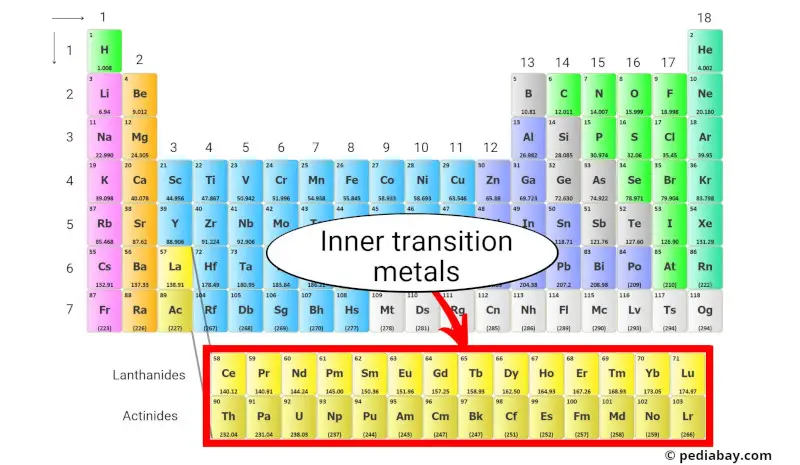
Transition Metals Vs Inner Transition Metals
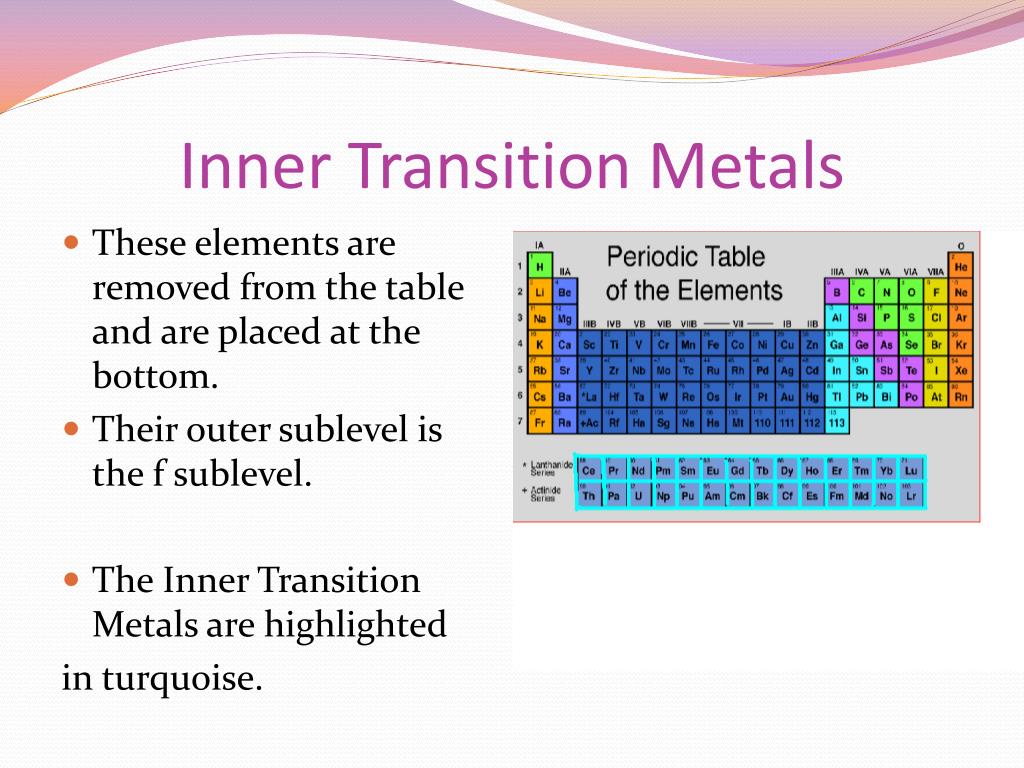
Okay, let's talk about metals. Not just any metals, but the cool kids on the periodic table: the transition metals and their, shall we say, slightly more secluded cousins, the inner transition metals. Think of it like this: the transition metals are the popular kids in high school, always out there doing stuff, while the inner transition metals are hanging out in the back, quietly being fascinating (and maybe a little mysterious).
You’ve definitely bumped into transition metals. They're everywhere! Remember that awesome shiny jewelry you saw at the store? Chances are, it's got some gold, silver, or platinum – all transition metals. And what about that strong steel that supports skyscrapers? Yep, transition metals again, usually iron mixed with a bunch of other metallic buddies.
Transition Metals: The Everyday Heroes
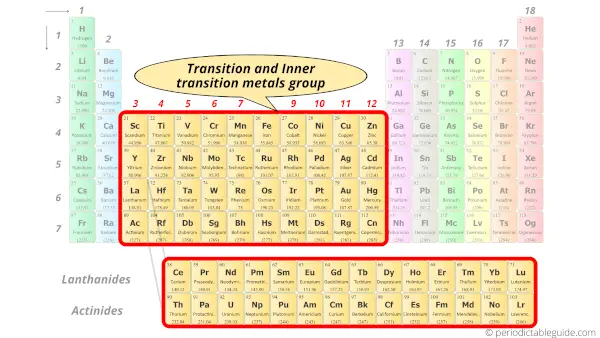
Transition metals are located in the middle block of the periodic table – a.k.a., the prime real estate! They're like the reliable, dependable friends who always show up. They're the workhorses of the metal world, forming all sorts of useful compounds. Think of them as the multi-tool of elements. They can do almost anything! Need a catalyst to speed up a chemical reaction? Transition metal to the rescue! Want a colorful pigment for your paint? You guessed it, transition metal compounds.
Must Read
One of their coolest features is their ability to have multiple oxidation states. It's like they can play different roles in a play. Iron, for example, can be Fe2+ or Fe3+. This flexibility allows them to participate in a wide variety of chemical reactions, making them incredibly versatile. They are also known for forming colored complexes, which is why we see them being used in pigments.
Inner Transition Metals: The Mysterious Ones
Now, let's venture into the more…exclusive section of the periodic table. We’re talking about the inner transition metals: the lanthanides and actinides. They're tucked away at the bottom, almost like they’re trying to avoid the spotlight. These are like the intriguing introverts you meet at a party. You know they're important, but you aren't exactly sure why.

The lanthanides, also known as the rare earth metals, are essential for modern technology. Ever wondered how your smartphone screen lights up so brilliantly? Thank the lanthanides! They are used in lasers, magnets, and a bunch of other high-tech applications. These are the elements that make our modern lives so much more convenient!
The actinides, on the other hand, are a bit more…complicated. Most of them are radioactive, and several are man-made. Think uranium and plutonium. These are the ones that power nuclear reactors (and, unfortunately, nuclear weapons). They have fewer everyday applications and more specialized and impactful ones. They are truly special elements!
The Big Differences
So, what really sets these two groups apart? Besides their location on the periodic table, it's all about their electrons. Transition metals fill their d orbitals, while inner transition metals are all about those f orbitals. This seemingly small difference leads to significant variations in their chemical behavior. It's like the difference between focusing on a team sport (transition metals) and deep research (inner transition metals). Both important, but completely different roles.
While transition metals are busy forming strong alloys and catalyzing reactions, inner transition metals are busy with emitting light and undergoing nuclear transformations. It's like comparing a construction worker (transition metals) to a physicist (inner transition metals). Both are absolutely essential to the world, but their skillsets are drastically different.
In conclusion, both transition metals and inner transition metals are vital components of our world. Transition metals are the reliable workhorses, while inner transition metals are the enigmatic specialists. Understanding these two groups helps us appreciate the incredible diversity and complexity of the chemical elements. Next time you see a beautiful piece of jewelry or use your smartphone, take a moment to thank the transition and inner transition metals that made it all possible!