
The Photovoltaic Effect Is A Phrase Used To Describe
Hey there, future solar guru! Ever heard the term "Photovoltaic Effect" and thought, "Whoa, that sounds like something from a sci-fi movie"? Well, in a way, it is kinda magical. But don't worry, it's not about lasers or teleportation (at least, not yet!). It's actually something pretty simple and incredibly useful.
So, what's the big secret? The Photovoltaic Effect is a phrase used to describe... wait for it... how light turns into electricity! Ta-da!
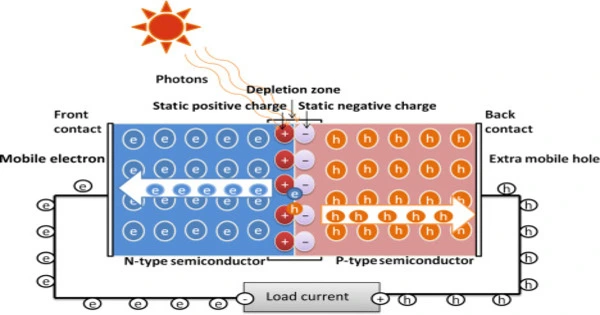
Okay, okay, I know that probably sounds a bit anticlimactic. But trust me, it's the foundation for solar power, which is a pretty darn big deal. Think of it like this: the sun sends down its radiant energy in the form of photons (tiny particles of light). These photons are like little energy messengers, and the photovoltaic effect is how we intercept those messages and translate them into something usable – electricity to power our homes, charge our phones, and maybe even fuel our flying cars someday (we can dream, right?).
Must Read
Breaking it Down: Photons and Semiconductors (Oh My!)
Let's get a little bit technical, but I promise to keep it painless. To harness this awesome power, we use something called a solar panel. These panels are made of special materials called semiconductors, usually silicon. Think of silicon like the Goldilocks of materials – it's not a great conductor of electricity (like copper), but it's not a complete insulator either (like rubber). It's just right!
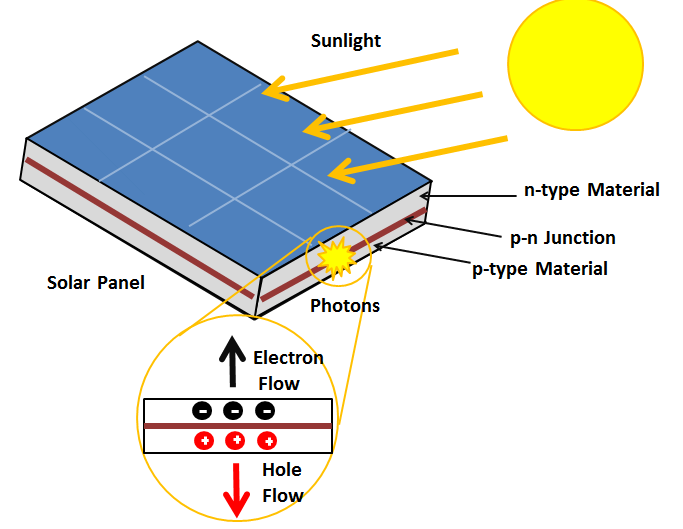
Now, when those energetic photons from the sun hit the silicon in a solar panel, they excite the electrons inside. It's like giving them a jolt of energy! These excited electrons then break free from their atoms and start moving around. And what happens when electrons move? You guessed it – electricity! This movement of electrons creates an electrical current that we can then capture and use.
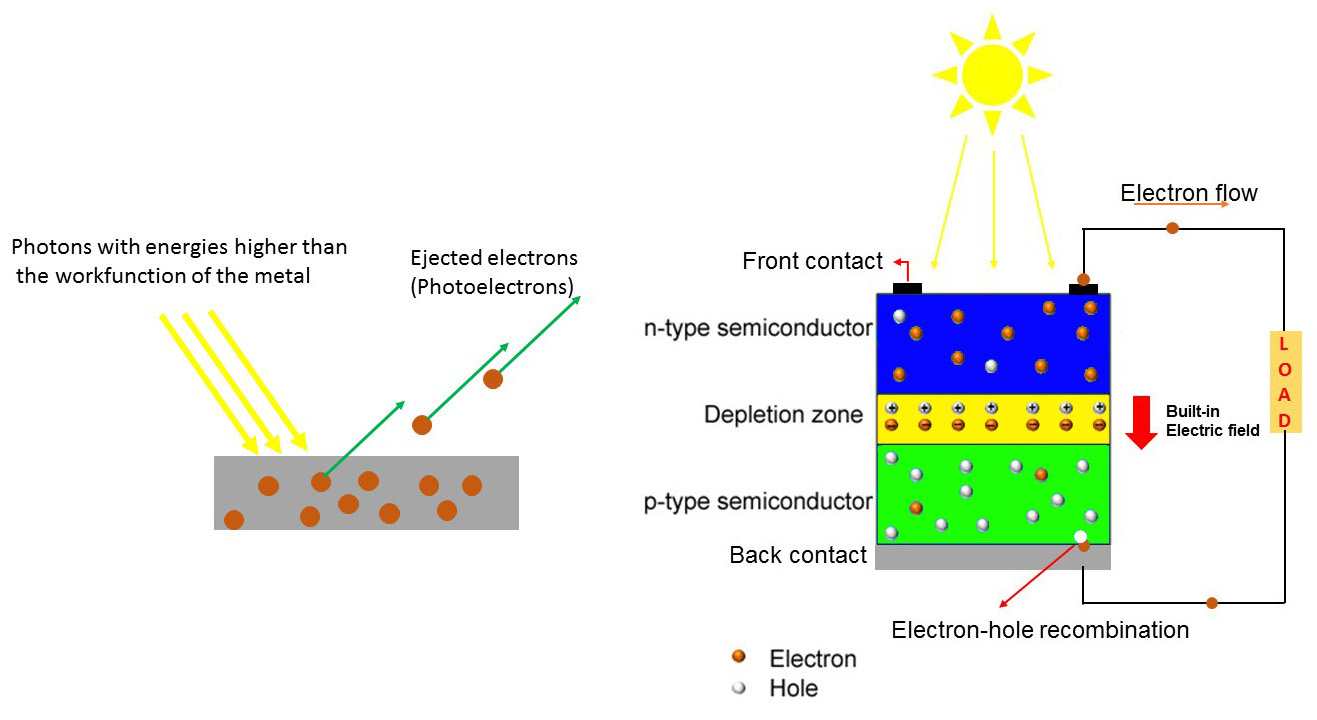
Imagine it like a tiny electron rave party, fueled by sunlight. The photons are the DJs, the silicon is the dance floor, and the electrons are the party-goers, dancing their way to generating power. Pretty cool, huh?
In a nutshell: Light (photons) hits a semiconductor material (usually silicon), which causes electrons to move, generating electricity.
Why Should You Care About The Photovoltaic Effect?
Besides being a fascinating scientific phenomenon (and a great conversation starter at parties, I assure you!), the photovoltaic effect is crucial for a few very important reasons:
- Clean Energy: Solar power is a renewable energy source, meaning it's virtually inexhaustible. Unlike fossil fuels, it doesn't release harmful greenhouse gases into the atmosphere, helping to combat climate change. Go team planet!
- Reduced Electricity Bills: Slapping some solar panels on your roof can significantly reduce (or even eliminate!) your electricity bill. That's more money in your pocket for, you know, fun stuff! Like that electron rave dance class you've always wanted to take.
- Energy Independence: Relying less on traditional power grids means greater energy independence for individuals and even entire countries. Think of it as becoming your own power plant!
Plus, let's be honest, solar panels just look cool. They're like the environmentally conscious, energy-efficient equivalent of chrome rims on a car.
So, What Now?
Now you know! The Photovoltaic Effect is the principle behind solar power, turning sunlight into electricity. It's a clean, renewable, and increasingly affordable energy source that has the potential to revolutionize the way we power our world. Isn't that exciting?!
Maybe you'll even be inspired to learn more about solar energy, consider installing solar panels on your own home, or simply spread the word about this amazing technology. Every little bit helps!
The future is bright (literally!), and thanks to the photovoltaic effect, we can harness the power of the sun to create a cleaner, more sustainable world for ourselves and generations to come. Now go forth and soak up some sunshine (responsibly, of course!).
