
The Opposite To Current Flow In An Ac Circuit

Alright, gather 'round, folks! Let's talk about something electrifying... literally! We're diving headfirst (but safely, of course – safety first!) into the wacky world of AC circuits. You know, those circuits that power your toaster, your TV, and that super cool lava lamp you "totally don't still own." Today's mission: unraveling the mystery of what the heck happens opposite of current flow. Buckle up, buttercups, because it's about to get weirdly interesting.
Now, before we plunge in, let's quickly recap the basics. Think of electricity like water flowing through a pipe. In a DC (Direct Current) circuit – like the one powering your phone – the water flows in one direction, always. Simple, right? Like a one-way street for electrons. But AC (Alternating Current), used in your wall sockets, is like a river doing the tango. It flows one way, then reverses direction, then flows the other way, back and forth, back and forth, like a hyperactive electron disco.
So, what's the opposite of current flow? Well, it's not exactly like trying to swim upstream in that electron disco. It's more nuanced. We're talking about concepts like impedance, reactance, and the ever-elusive phase angle. Don't let those words scare you! They’re just fancy ways of saying "things that slow down or mess with the flow of electrons." Imagine them as bouncers at the electron disco, letting some in and blocking others depending on the music.
Must Read
Impedance: The Party Crasher
Think of impedance as the overall resistance to current flow in an AC circuit. It's like that one person at every party who insists on telling long, boring stories. They just impede the fun for everyone else. Impedance is a combination of resistance (the familiar opposition to current flow, like a narrow pipe) and reactance (which we'll get to in a sec). It’s measured in ohms, symbolized by the Greek letter Omega (Ω), because apparently even electricity speaks Greek.
Reactance: The Moody DJ
Now, reactance is where things get a little more spicy. Reactance comes in two flavors: inductive reactance and capacitive reactance. Inductive reactance is caused by inductors (coils of wire), and capacitive reactance is caused by capacitors (devices that store electrical energy). Think of an inductor as a tiny, electron-sized spring. It resists changes in current. When the AC current starts to increase, the inductor pushes back, trying to maintain the status quo. When the current starts to decrease, it gives a little boost. A capacitor, on the other hand, is like a tiny electron bucket. It fills up with electrons when the voltage is high and empties when it's low.
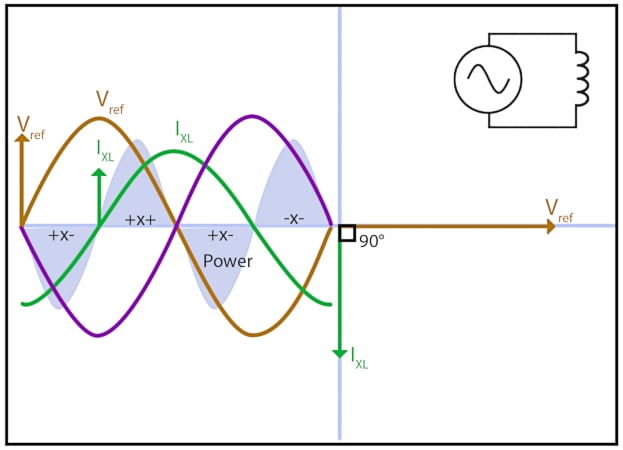
Both inductors and capacitors resist changes in current, but they do it in different ways, and this resistance changes with the frequency of the AC current. Imagine a DJ who's incredibly moody. Sometimes he speeds up the music, sometimes he slows it down, all to mess with the dancers (the electrons). That's reactance in a nutshell. It reacts to the changing current.
Phase Angle: The Awkward Dance-Off
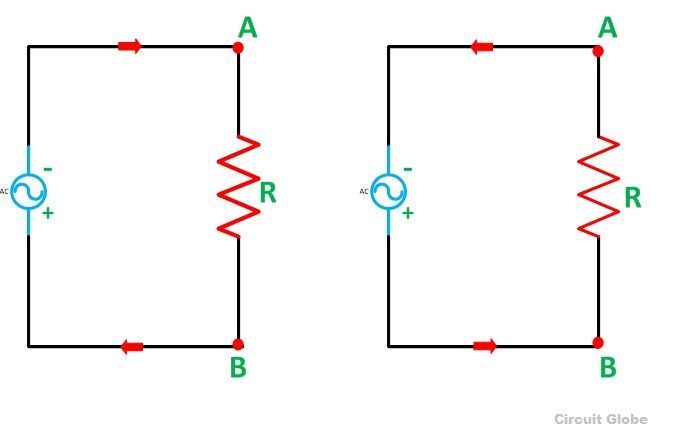
And finally, we arrive at the phase angle. This is where the current and voltage in an AC circuit aren't perfectly in sync. In a purely resistive circuit (just a regular resistor, like in a toaster), the voltage and current rise and fall together, like synchronized swimmers. But in circuits with inductors or capacitors, the voltage and current get out of sync. One leads, the other lags.
Think of it as an awkward dance-off. Maybe the voltage is doing the Macarena, while the current is still stuck doing the Electric Slide. The difference in their timing is the phase angle. This angle is measured in degrees, and it tells us how much the current is leading or lagging the voltage. It can affect things like power consumption and efficiency, so it's not just a nerdy detail.
So, in conclusion, what is the opposite of current flow in an AC circuit? It’s not just a simple reversal. It's a complex interplay of impedance, reactance, and phase angles. It's like trying to understand why cats do the things they do – fascinating, slightly confusing, and probably involves quantum physics somehow.
But hey, now you know a little more about the weird and wonderful world of AC electricity. Next time you flip on a light switch, you can impress your friends (or bore them to tears, depending on their interests) with your newfound knowledge of electron discos and awkward dance-offs. You're welcome!

