The North Star Is Part Of What Constellation

Have you ever looked up at the night sky and felt a sense of wonder? One of the coolest things you can do is learn to find your way around using the stars. And the North Star, also known as Polaris, is your ultimate guide. But did you know it's actually part of a constellation? Finding out which one unlocks a whole new level of stargazing fun, whether you're a complete beginner or have some experience.
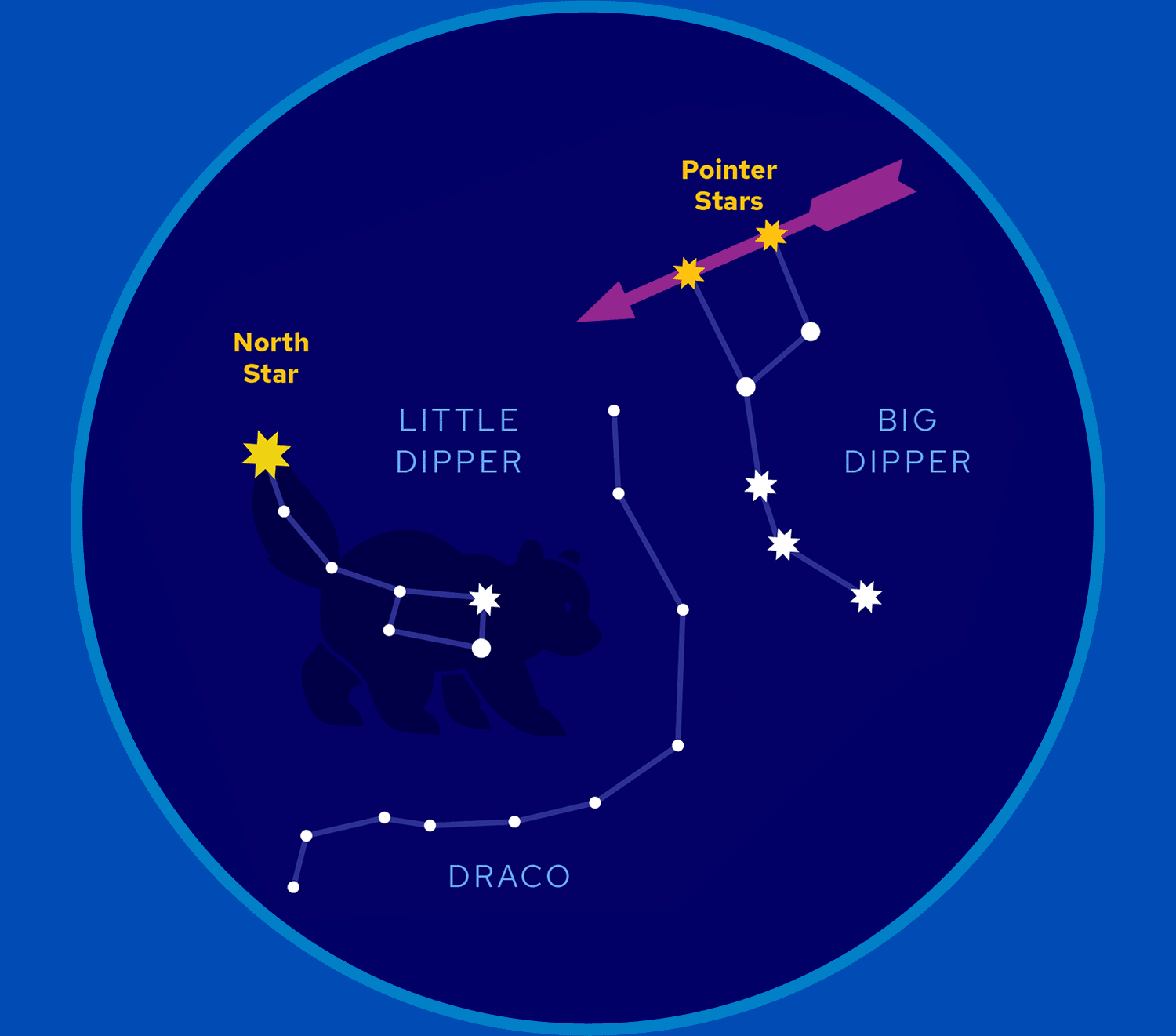
So, which constellation is the North Star a member of? It's Ursa Minor, also known as the Little Bear! While Ursa Major (the Big Bear) gets most of the attention, its smaller cousin holds the key to finding true north. Understanding this connection is super useful for different folks:
- For beginners: Knowing Polaris is in Ursa Minor gives you a specific area of the sky to focus on. Instead of searching randomly, you're looking for a smaller, more manageable pattern.
- For families: Teaching kids about the Little Bear and its role in navigation is a fantastic way to make astronomy interactive and educational. Imagine the excitement of finding the North Star together!
- For hobbyists: Even experienced stargazers benefit from knowing the constellations around Polaris. These can serve as landmarks to find other, fainter objects and constellations in the northern sky.
Think of it this way: you're not just memorizing one bright star. You're learning a whole constellation that points the way. Ursa Minor isn't as prominent as Ursa Major, but it's still recognizable. It's shaped like a small dipper, and Polaris sits at the very tip of the handle.
Must Read
There's another constellation, Cassiopeia, which can help you locate Polaris if Ursa Minor is hard to see. Cassiopeia is a distinctive 'W' or 'M' shape in the sky. You can use the two end stars of the 'W' to point towards Polaris. This works well when Ursa Minor is low on the horizon or obscured by trees or buildings.

Getting started is easy! Here are a few simple tips:
- Download a stargazing app: Apps like Star Walk 2 or SkyView use your phone's camera to show you the constellations in real-time. They can help you identify Ursa Minor and Cassiopeia.
- Find a dark spot: Light pollution makes it harder to see fainter stars. Get away from city lights if possible.
- Use a star chart: A physical star chart can be a great tool to learn the patterns of the constellations.
- Start with Ursa Major: Learn to identify the Big Dipper first. It's easier to spot and a good reference point for finding Ursa Minor and Polaris.
- Practice regularly: The more you observe, the better you'll become at recognizing constellations.
Learning that the North Star is part of Ursa Minor opens up a whole new world of stargazing. It’s more than just finding a single star; it’s about understanding the relationships between stars and constellations, learning about navigation, and appreciating the beauty of the night sky. So grab your binoculars, download an app, and get ready to explore the cosmos. You might just discover a lifelong passion!