
The Hottest Part Of The Flame

Alright folks, gather 'round! Today we're diving headfirst (metaphorically, of course! Safety first!) into the wild and wonderful world of fire. Specifically, we're tackling a question that's probably been burning in your mind (again, metaphorically... mostly): where's the hottest part of a flame?
The Great Flame Temperature Mystery
Now, you might think it's obvious. Maybe you picture the whole thing as one giant inferno, uniformly hot from top to bottom. But my friends, that's just not how flames roll! They're more like a layered cake of heat, with some layers being significantly spicier than others.
Think of it like a chili contest. You wouldn't expect every single bowl to pack the same punch, would you? Some are mild and mellow, perfect for beginners. Others, well, they require a gallon of milk and a signed waiver!
Must Read
The Obvious Suspects: Color Clues!
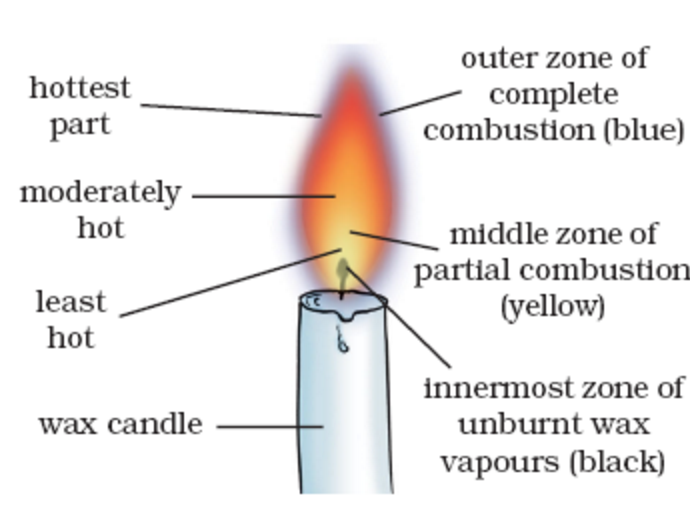
Before we reveal the ultimate answer, let's consider the evidence. Have you ever noticed how flames aren't just one single color? There's usually a whole rainbow happening, from reddish-orange at the bottom to bluish-white at the top (sometimes!).
That color difference isn't just for show, folks! It's actually a crucial clue in our temperature investigation. Generally speaking, the brighter and whiter the flame, the hotter it is. Think about it like the sun - white hot!
But, and this is a big but, color isn't the whole story. It's a valuable guide, sure, but we need to dig a little deeper to find the true champion of heat.
Beyond Color: The Invisible Champion
So, where is this scorching hot zone we've been hunting for? Drumroll please… It's the very top of the flame, specifically right above the invisible part of the flame that hasn't started glowing yet!
Yes, you read that right: the hottest part is often invisible! Mind blown, right? It's like that quiet kid in class who turns out to be a black belt in karate. You just never saw it coming!
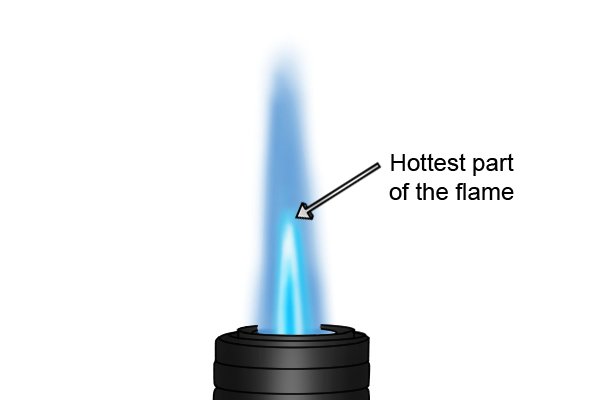
Why is this invisible zone so hot? Well, it's where the unburnt fuel molecules are finally getting their chance to party! They're colliding with oxygen at breakneck speed, releasing a ton of energy in the process. It's like the ultimate dance-off, but with molecules and fire!
Relatable Examples: Putting the Heat in Perspective
Okay, so we know the top (mostly invisible) part of the flame is the hottest. But what does that actually mean in everyday terms? Let's consider a few examples to help you visualize this fiery phenomenon.
Imagine you're trying to boil water on a campfire. Where do you position the pot? Directly in the heart of the roaring blaze? Nope! You want to place it just above the flames, where that invisible heat is working its magic.
That's because putting it inside the flame reduces the oxygen available to the fuel so it burns cooler! So that's another thing to remember, more oxygen means a hotter burn. Less oxygen means a cooler, more yellow burn.
Think about a blacksmith forging metal. They don't just shove the metal into the middle of the fire, do they? They carefully position it in the hottest part of the flame, so the metal reaches the perfect temperature for shaping.

Or, consider a gas stove. The blue flame is hotter than the yellow flame, and it's that intense heat right at the tip that sears your steak to perfection (or, you know, burns it if you're not careful!).
Debunking Flame Myths: Setting the Record Straight
Now that we've revealed the hottest spot, let's clear up some common misconceptions about flames. There are plenty of flame-related myths floating around, so let's extinguish them one by one!
Myth #1: All flames are created equal. We've already busted this one! Flames are complex and dynamic, with varying temperatures and colors. No two flames are exactly alike, just like snowflakes (but hotter!).
Myth #2: Bigger flames are always hotter. Not necessarily! A small, focused flame can be much hotter than a large, smoky one. It's all about the efficiency of the combustion process. Think of it like a laser beam versus a floodlight. One is focused and intense, the other is spread out and less powerful.
Myth #3: You can't see the hottest part of a flame. Well, we know that this isn't entirely true. The hottest part is often just above the visible part, but still close enough to influence its characteristics.
Fun Flame Facts: Impress Your Friends!
Want to be the life of the party? Here are a few fun flame facts that will impress your friends and family (or at least make them think you're really into fire!):
Flames don't have shadows! This is because flames are a source of light themselves, so they don't block light from other sources like a solid object would.
A candle flame is hotter than boiling water! The average candle flame burns at around 1,000 degrees Celsius (1,832 degrees Fahrenheit), while boiling water is only 100 degrees Celsius (212 degrees Fahrenheit).
Fire needs three things to exist: fuel, oxygen, and heat. This is known as the "fire triangle." Remove any one of these elements, and the fire will go out.
Safety First: Respect the Flame!
While flames are fascinating and useful, it's crucial to remember that they can also be dangerous. Always exercise caution when working with fire, and follow these safety tips:

Never leave a fire unattended. Even a small candle can quickly become a major hazard if left unsupervised.
Keep flammable materials away from flames. This includes paper, cloth, and anything else that could easily catch fire.
Have a fire extinguisher or water nearby in case of emergency. It's always better to be prepared!
The Final Verdict: Bow Down to the Invisible Heat!
So, there you have it, folks! The hottest part of the flame is the very top, especially right above the visible part. This invisible zone is where the magic happens, where fuel and oxygen collide in a fiery dance of energy.
Remember, respect the flame, appreciate its power, and maybe even impress your friends with your newfound knowledge. Now go forth and spread the word (but please, not literally spread fire!).
Until next time, keep your curiosity burning bright!