
The Difference Between A Tornado Watch And Warning
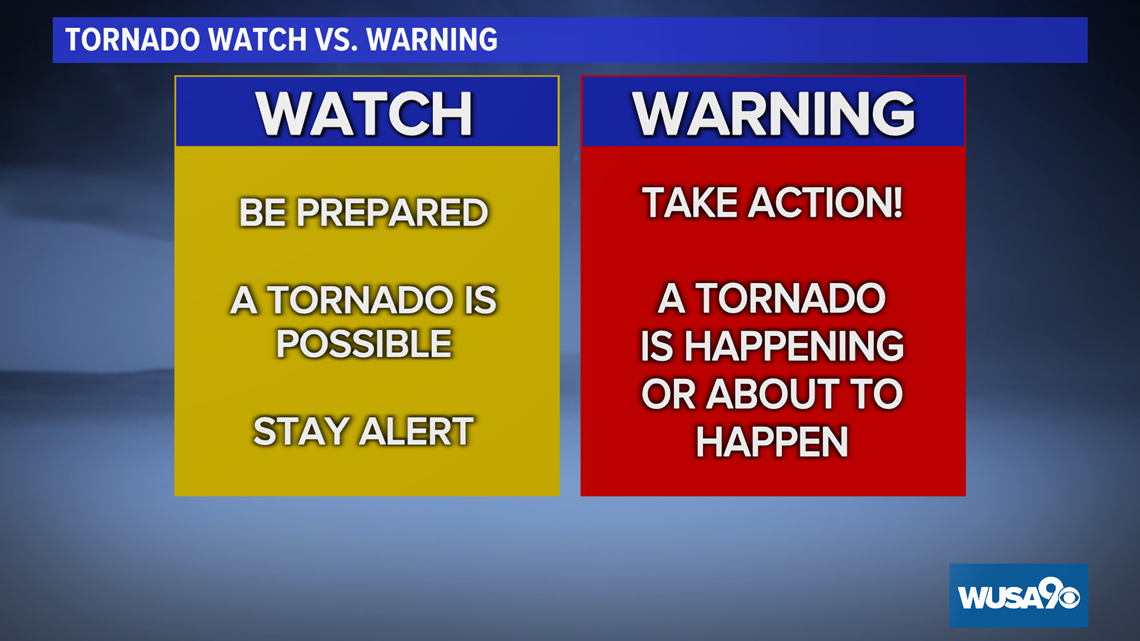
Alright, friends, let's talk weather. Specifically, the kind of weather that makes Dorothy Gale pack her bags faster than you can say "Toto." We're diving into the difference between a tornado watch and a tornado warning. Think of it as decoding the meteorological equivalent of "Proceed with caution" versus "RUN!"
The Tornado Watch: Consider It a Heads-Up
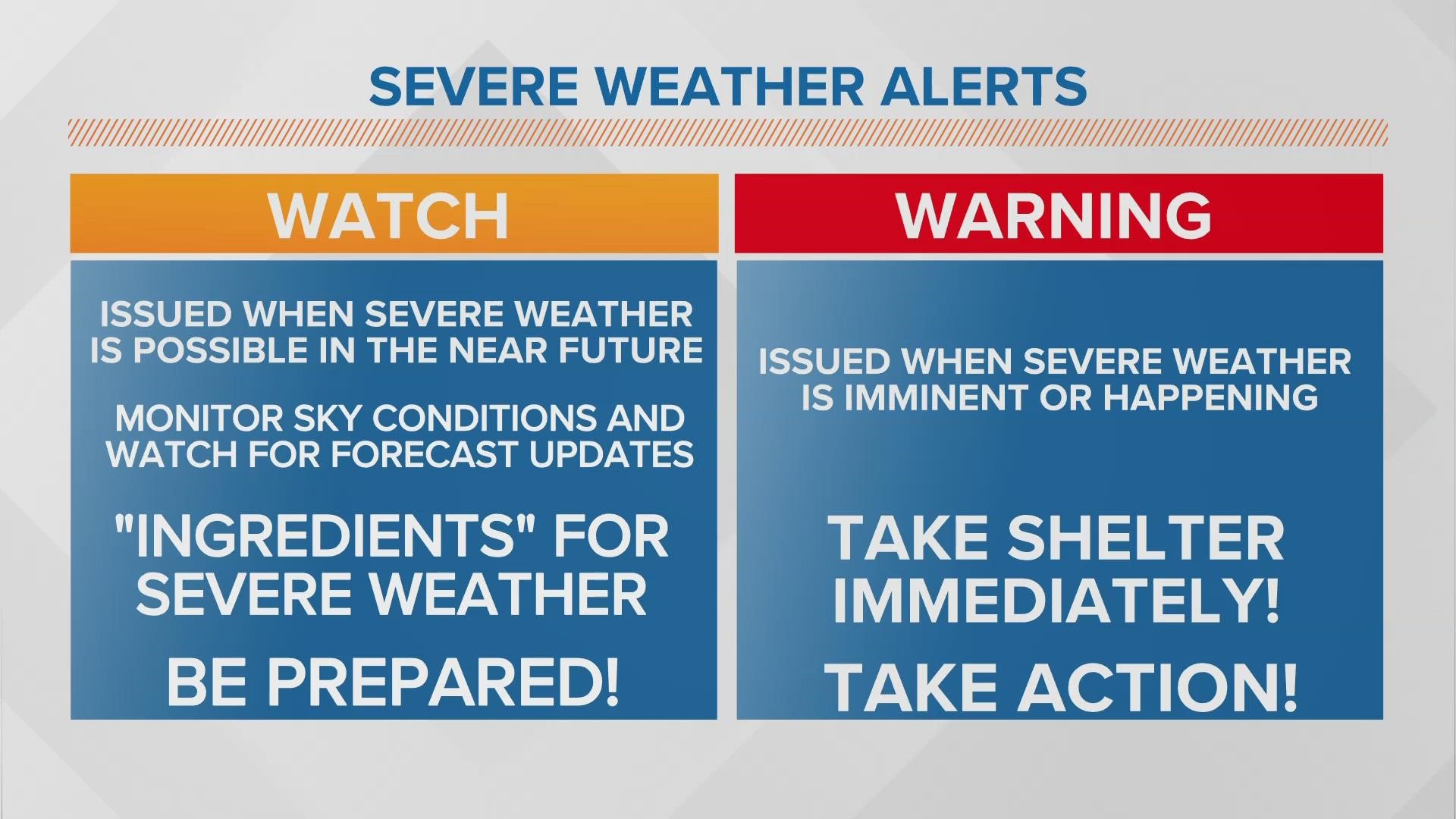
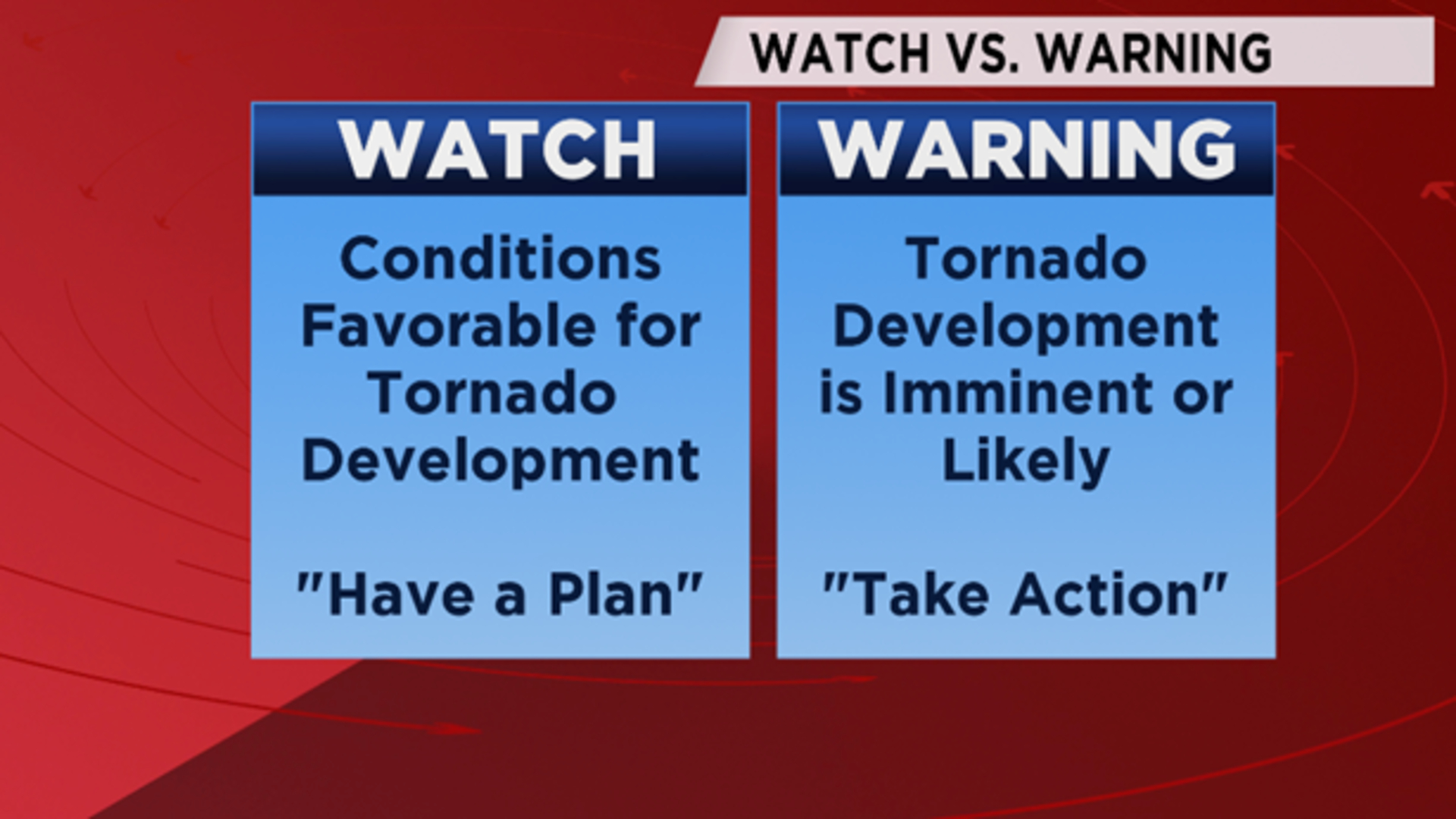
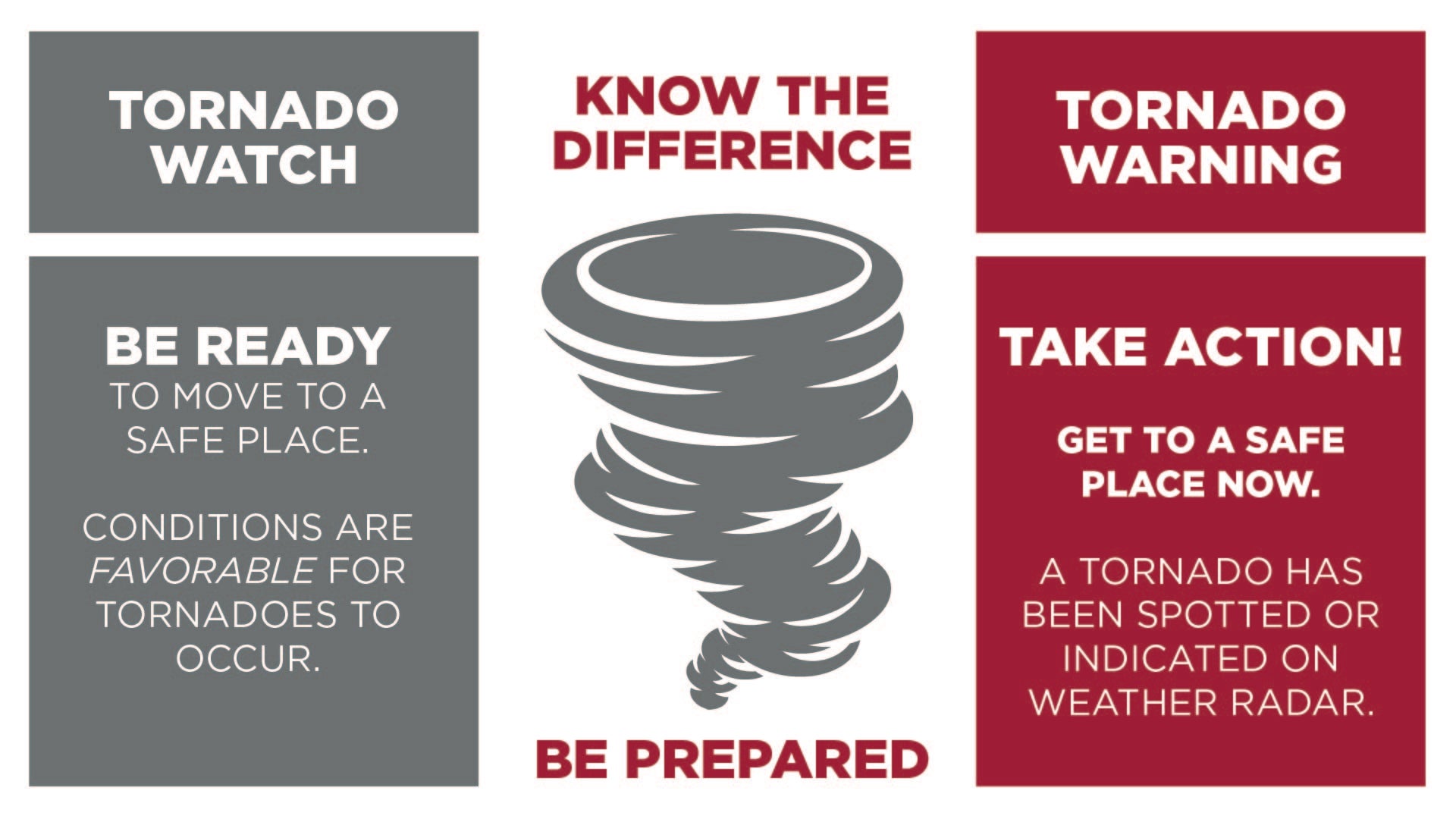
A tornado watch is issued when conditions are favorable for tornadoes to develop in a specific area. It’s like the weather service saying, "Hey, keep an eye on things. The atmospheric ingredients are all here for some serious swirling."
Think of it like this: a watch is like seeing a casting call for a disaster movie. The actors (storm clouds) are showing up, the script (atmospheric instability) is on set, but the cameras (actual tornadoes) aren't rolling yet.
Must Read
What to do during a tornado watch:
- Stay informed: Monitor local news, weather apps, or a NOAA Weather Radio. Knowledge is power, people!
- Review your plan: Dust off that emergency kit. Do you have water, non-perishable food, a flashlight, and a battery-powered radio? Time to make sure everything is ready to go.
- Stay alert: Be aware of changing weather conditions. Look for darkening skies, large hail, or a sudden drop in temperature. Basically, if it starts to look like the opening scene of "Twister," pay attention.
Remember that scene in "Back to the Future" where Doc Brown is meticulously preparing for the lightning strike? That's the energy you should be channeling. Preparation, not panic.
The Tornado Warning: Time to Take Action
A tornado warning is a whole different ballgame. This means a tornado has been sighted or indicated by weather radar. The twister is actually happening or about to happen. This is not a drill!
It's the equivalent of someone yelling, "Incoming!" You don't stop to ask questions; you take cover immediately.
What to do during a tornado warning:
- Seek shelter immediately: The safest place is an underground shelter, basement, or storm cellar.
- If you're in a building without a basement: Go to a small, interior room on the lowest level, away from windows. A bathroom or closet works well. Crouch low, cover your head with your arms, and protect yourself from flying debris.
- If you're in a car: Get out! Cars are not safe in tornadoes. Find a sturdy building or lie flat in a ditch or other low-lying area.
- Never chase a tornado: This should be obvious, but we're putting it out there. Leave the storm chasing to the professionals (and even they take risks!).
Basically, think of the Three Little Pigs and the Big Bad Wolf. Brick house > straw house. You want the sturdiest shelter possible.
A Quick Recap & Some Fun Facts
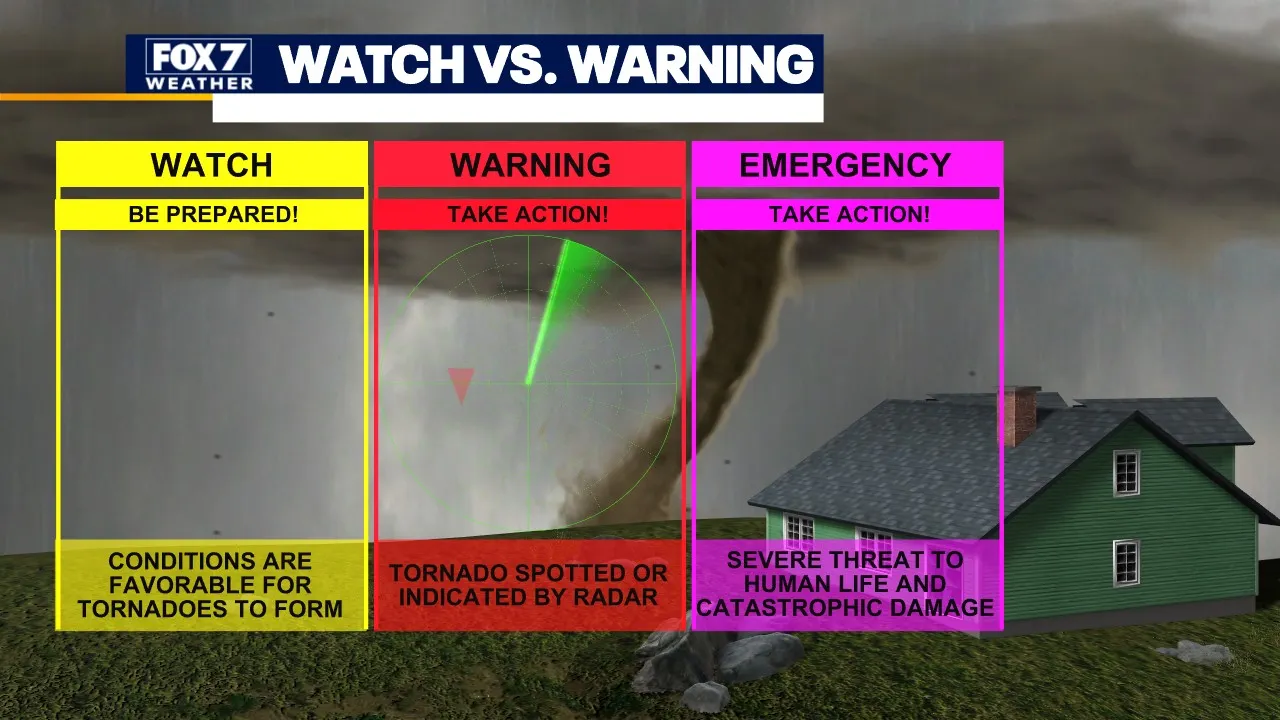
Watch = Conditions are favorable. Warning = A tornado is happening or imminent.
Here's a little weather trivia to impress your friends: Tornadoes are most common in an area of the central United States known as "Tornado Alley," which includes states like Texas, Oklahoma, Kansas, Nebraska, and South Dakota. The peak tornado season is generally from April to June, but tornadoes can occur at any time of year. Also, did you know that the Fujita scale, used to rate tornado intensity, was replaced by the Enhanced Fujita (EF) Scale in 2007? Now you do!
And remember, ignoring a warning because you think "it won't happen here" is like ignoring a flashing low fuel light. You might be fine, but you're just asking for trouble.
Bringing It Home
Ultimately, understanding the difference between a tornado watch and a tornado warning is about preparedness and taking responsibility for your safety. While we can’t control the weather, we can control how we respond to it.
Think of this knowledge as another tool in your everyday toolkit, like knowing how to change a tire or cook a decent meal. It's empowering to be informed and prepared for whatever life throws your way – even if that "thing" is a swirling vortex of destruction. Stay safe out there!