S&p 500 Without Magnificent 7 Etf
Okay, let's talk investing! Specifically, let's dive into something a little quirky but potentially super useful: an S&P 500 ETF... without the Magnificent Seven. Sounds weird, right? Like ordering a pizza without pepperoni. But hear me out! In a market increasingly dominated by these tech giants (Apple, Microsoft, Amazon, Alphabet (Google), Nvidia, Tesla, and Meta), sometimes it's worth exploring what the market looks like without their outsized influence.
So, what's the big deal? Well, the S&P 500 is a market-cap weighted index. That means the bigger a company is, the more influence it has on the index's performance. The Magnificent Seven have become so big that they now represent a significant chunk of the S&P 500. While their success has certainly driven market gains, it also means that your returns are heavily reliant on the performance of just a handful of companies. This is where the "S&P 500 Ex-Magnificent 7" ETF comes in!
The purpose of this type of ETF is simple: to give you exposure to the S&P 500 without those seven behemoths. Think of it as a diversified portfolio of the other 493 or so companies. The main benefit is increased diversification. By excluding the Magnificent Seven, you're reducing your concentration risk. If one (or more) of those giants stumbles, your portfolio won't be as heavily impacted.
Must Read
Why would you consider this? Imagine a scenario where you believe the Magnificent Seven are overvalued, or that their growth potential is limited compared to other sectors. An ex-Magnificent Seven ETF allows you to express that view in your portfolio. You're essentially betting that the remaining 493 companies in the S&P 500 will perform better (or at least comparably) to the overall index.
Another benefit? Potentially greater exposure to other sectors. With the Magnificent Seven dominating the S&P 500, other sectors like healthcare, consumer staples, and industrials get a smaller piece of the pie. An ex-Magnificent Seven ETF gives you a larger weighting in these areas, which could be appealing depending on your investment outlook.
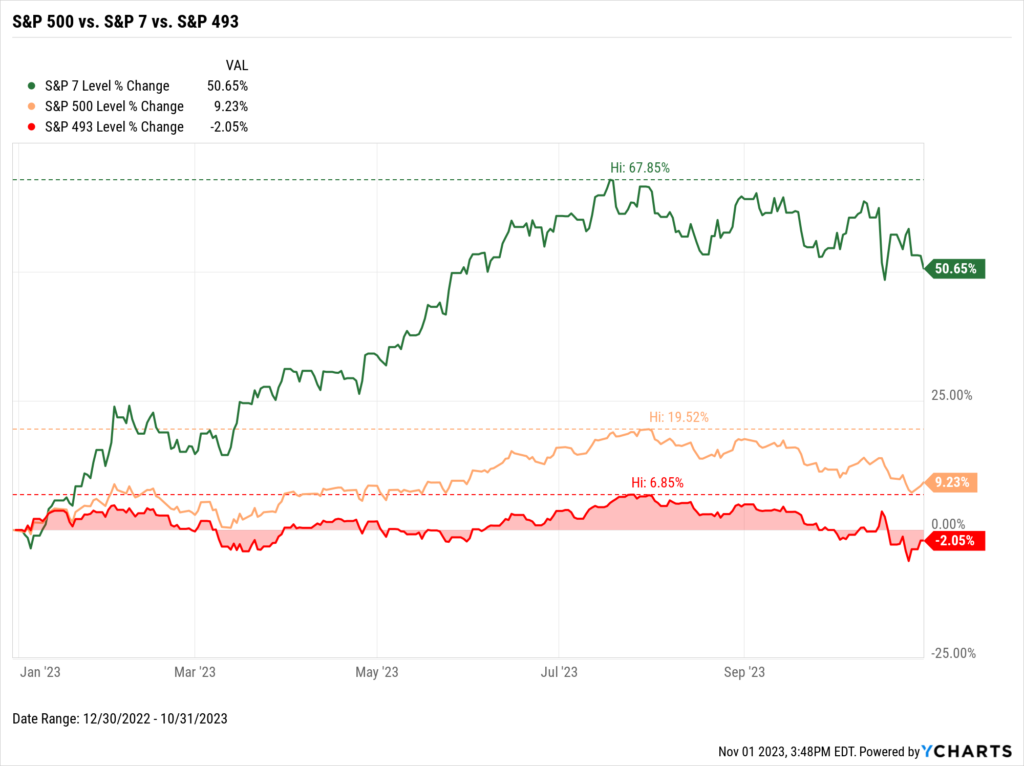
Of course, there are also potential downsides. If the Magnificent Seven continue to outperform, you'll miss out on those gains. It’s important to remember that past performance is not indicative of future results! Also, these more niche ETFs may have slightly higher expense ratios (fees) than a standard S&P 500 ETF, so be sure to compare the costs.
Ultimately, deciding whether or not to invest in an S&P 500 Ex-Magnificent 7 ETF depends on your individual investment goals, risk tolerance, and outlook on the market. It's a fascinating tool for investors who want a different kind of exposure to the broader market and are willing to do their homework. So, next time you're thinking about the S&P 500, consider the possibility of a pepperoni-free pizza. You might just find you like the taste!