
Smoke Detector Beeping After Battery Change
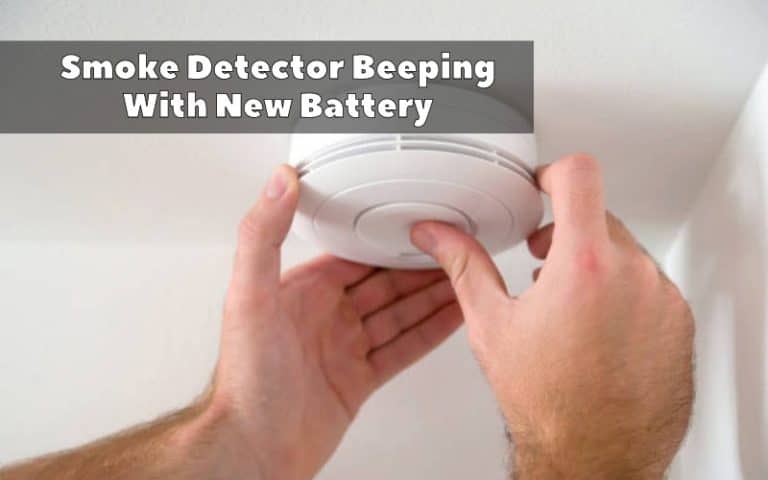
Okay, let's set the scene: you've been hearing that dreaded, intermittent chirp for what feels like an eternity. It’s been driving you absolutely bonkers, testing your patience. You finally muster the energy, grab a ladder, wrestle with the cover, pop in a fresh, brand-new battery, and... silence. Blissful, glorious silence! For about ten seconds. Then, BEEP! Or maybe a series of persistent chirps. What in the world?!
You just replaced the battery! Isn't that supposed to fix the beeping, not instantly bring it back? If you've ever found yourself in this head-scratching situation – staring up at your ceiling with a mix of frustration and utter bewilderment – you're definitely not alone. It's a surprisingly common mystery, and honestly, it's kind of fascinating once you peek behind the curtain of these humble little lifesavers.
The Great Post-Battery Beep Mystery: More Than Just Annoyance
At first blush, you might think your smoke detector is staging a tiny rebellion. "I gave you power, tiny robot! Be quiet!" But here’s the cool, and rather reassuring, part: that little chirp or beep right after a battery change isn't usually a sign of failure or a defiant act. In most cases, it's actually a strong indication that your vigilant guardian is doing exactly what it's supposed to do.
Must Read
Think of it like this: when you unplug your smartphone from the charger and then plug it back in, it doesn't just silently resume its duties. There might be a momentary flicker, a battery icon update, or perhaps even a little vibration. It’s checking its status, acknowledging the change. Your smoke detector, in its own miniature, less flashy way, is doing something remarkably similar. It's a tiny electronic brain, and brains need a moment to adjust.
It's Rebooting! (Kind Of, But Smarter)
When you pull out an old battery and pop in a fresh one, you're essentially giving your smoke detector a sudden, invigorating burst of new life. It’s like a tiny jolt of caffeine directly to its circuits! This rush of full power often triggers an internal system check, a sort of diagnostic self-scan.

Imagine waking up from a deep sleep, stretching all your limbs, and then doing a quick mental checklist: "Am I here? Is everything working? Good to go!" Your smoke detector is performing a similar, albeit more electronic and efficient, version of that. It's making sure all its internal components—the sensitive sensor, the loud alarm horn, the power connection—are fully operational and ready for continuous action.
The Curious Case of Residual Power
Here’s another neat quirk: some detectors have a tiny bit of residual electrical charge, even after the old battery is pulled out. They might contain a small capacitor, which you can think of as a miniature, super-fast battery that holds onto a trickle of power for a very brief period. When you insert the new, fully charged battery, this tiny bit of leftover energy might momentarily confuse the system or trigger a final "power down then power up" sequence as it clears its internal memory.
It’s a bit like when you switch off an old-fashioned TV, and you can still see a tiny dot of light fading on the screen for a second. Your smoke detector might be experiencing a mini-version of that, leading to a quick, confirming beep as it fully cycles its power state.

"Hello, Is This Thing On?" – The Essential Self-Test
Many modern smoke detectors are cleverly designed to perform a brief but crucial self-test whenever they receive a fresh surge of power after an interruption. This isn't just about changing batteries; it could also happen after a power outage if you have a hardwired unit with battery backup. This immediate self-test is absolutely vital because it confirms that the device is fully operational, its internal circuits are humming along, and it's ready to reliably detect smoke and sound the alarm when needed.
It’s essentially your smoke detector saying, "Testing, testing... one, two, three! Okay, I'm online, fully charged, and vigilant!" Pretty ingenious, wouldn't you say? It’s not trying to annoy you; it’s ensuring that your safety is its absolute top priority from the very second it powers back up. That initial chirp is a tiny declaration of readiness.
What to Do When It Happens (Beyond Staring in Disbelief)
So, what’s the immediate move when your newly-batteried smoke detector gives you that surprising post-change beep? Don't panic; here are a few simple, chill steps:
- Give It a Moment: Often, this initial beep or short series of chirps is just part of its startup sequence. Give it about 30 seconds to a full minute. Many times, it will simply settle down on its own after completing its internal checks. Patience is a virtue, even with tech!
- Press the Test Button: This is often the magic trick. Go ahead and press and hold the test button for about 10-15 seconds. This can force a complete reset of its internal logic and clear any lingering confusion. Think of it as giving your detector a gentle but firm "reboot now" command.
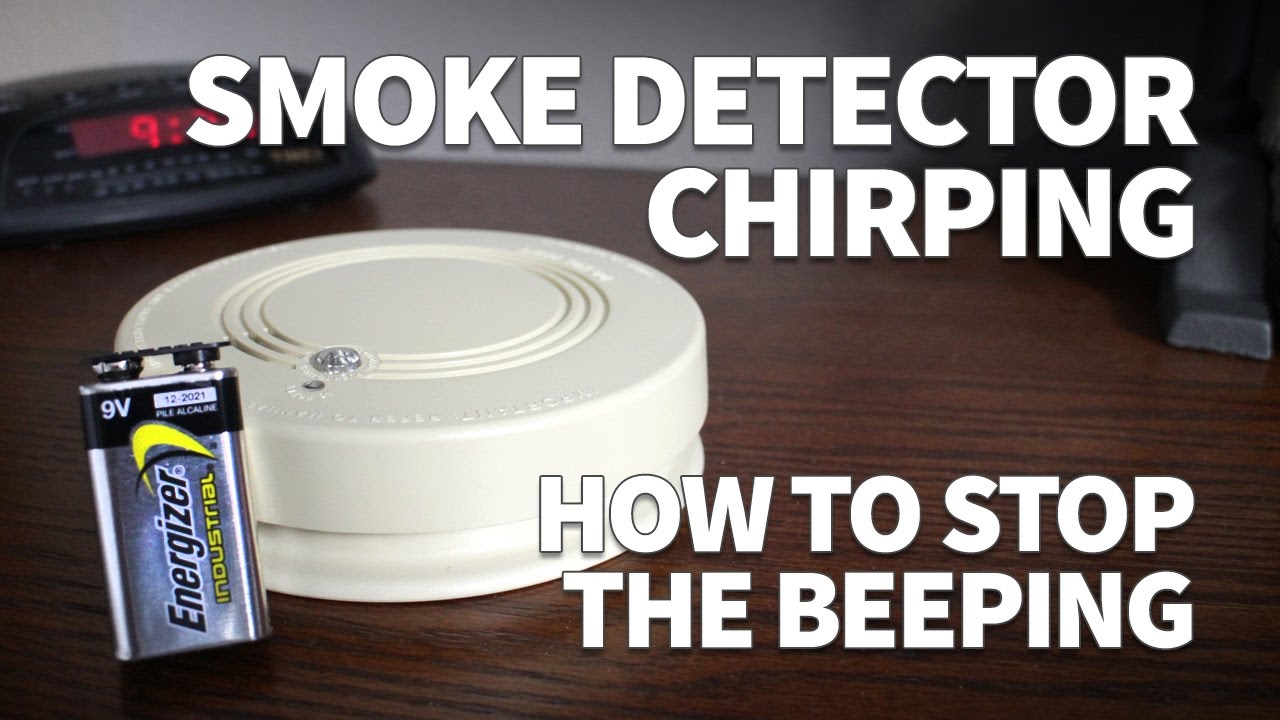
- Double-Check the Battery: Are you absolutely sure it’s a fresh, new battery? And is it inserted correctly, with the positive and negative terminals aligned as indicated? Sometimes, in our understandable haste, we might accidentally put an old battery back in, or insert it backwards. (Hey, it happens to the best of us; no judgment here!)
- Consider a Quick Clean: While less likely to be the immediate cause of a post-battery beep, a dusty sensor can definitely cause intermittent chirps later on. If the beeping persists beyond the initial startup, a quick vacuum around the vents or a blast of compressed air can clear out any accumulated gunk. This is more of a general maintenance tip.
Appreciating Our Little Guardians
Ultimately, that seemingly annoying post-battery beep is more than just a nuisance; it's a quiet testament to the sophisticated (yet wonderfully simple!) technology diligently protecting our homes and loved ones. It's a tiny, dedicated machine that, even when we're just trying to give it a fresh start, is already thinking about its primary directive: keeping you safe.
So next time it happens, instead of groaning or sighing dramatically, maybe offer a quiet nod of appreciation to your tiny, diligent guardian. It’s just stretching its digital muscles, running its self-diagnostics, and making sure it’s ready for anything. And that, in itself, is pretty cool and incredibly reassuring.
