Similarities Between Nuclear Fusion And Fission
So, you've probably heard of nuclear power. Maybe you picture glowing green goo (which, thankfully, is mostly Hollywood fiction) or giant power plants humming away. But did you know that the really fascinating stuff happens at the atomic level? And that two seemingly opposite processes, nuclear fission and nuclear fusion, are actually distant cousins sharing some quirky family traits?
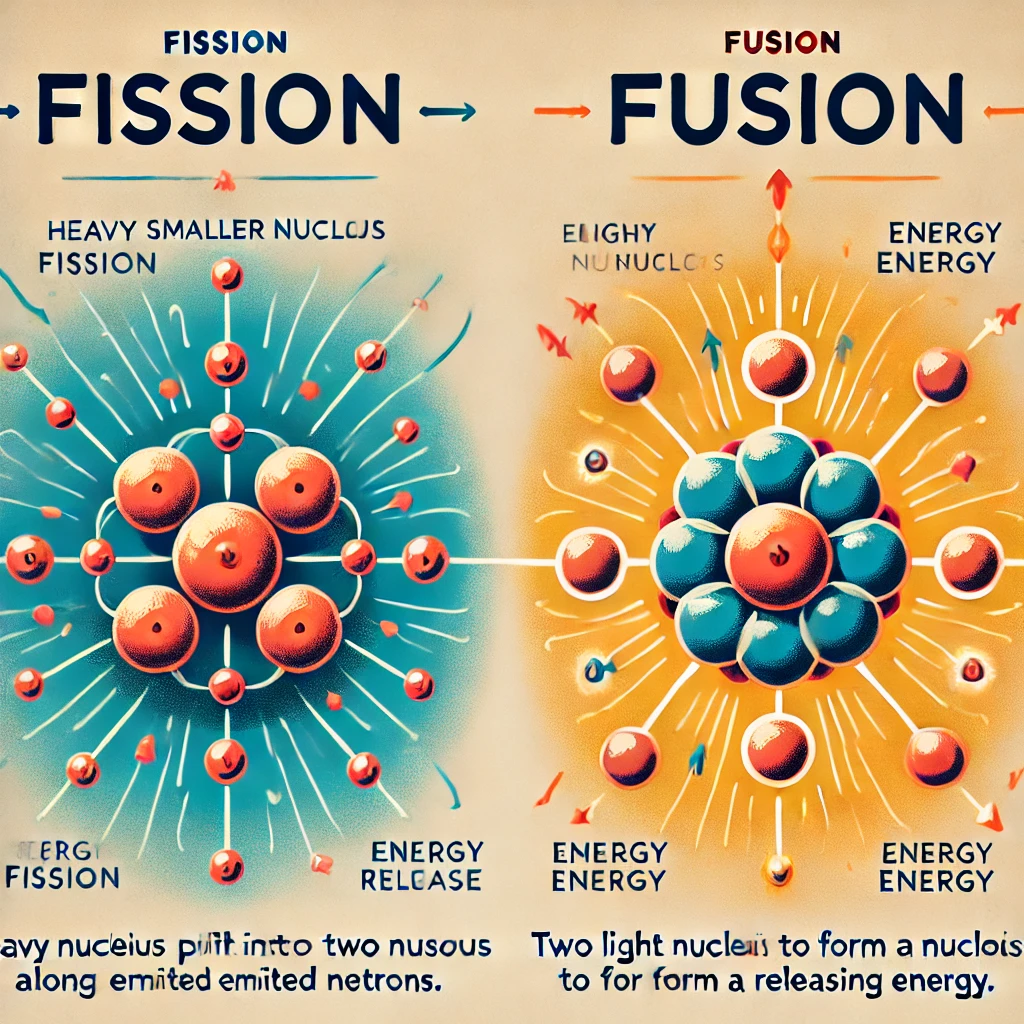
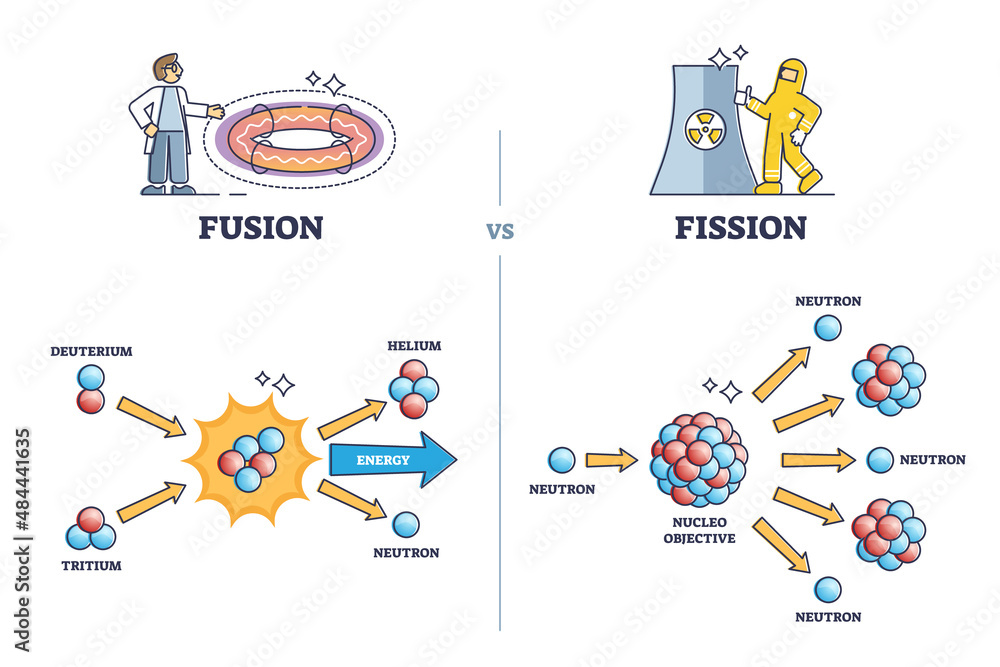
Think of it like this: fission is like your grandma's china cabinet. It's full of heavy, breakable stuff (atoms, in this case). Fission is all about taking one of those big, unwieldy plates (a heavy atom like uranium) and, well, smashing it! When you hit it with a tiny neutron "hammer," it splits into smaller pieces, releasing a ton of energy in the process. Grandma might be horrified, but hey, free energy!
Fusion, on the other hand, is more like a cosmic dating app for atoms. It's about taking two lightweight, positively-charged atoms (usually isotopes of hydrogen) and forcing them to smoosh together. Imagine trying to push two magnets together with the same poles facing each other – that's the kind of force you're dealing with! But when they finally overcome their repulsion and fuse, they create a heavier atom (like helium) and, yep, release even more energy than fission. It's the ultimate "opposites attract" story, with a seriously explosive ending.
Must Read
Common Ground: The Energy Bonanza
Here's where the family resemblance kicks in. Both fission and fusion are all about releasing huge amounts of energy from tiny amounts of matter. How huge? Well, a single gram of uranium undergoing fission releases about the same energy as burning several tons of coal. Fusion? Even more. That's why both processes are considered potential sources of abundant energy.
The secret sauce is E=mc², Einstein's famous equation. It basically says that energy (E) and mass (m) are interchangeable. In both fission and fusion, a tiny bit of mass disappears in the process and gets converted into a massive amount of energy. It’s like turning a sprinkle of fairy dust into a fireworks display!

And both processes involve neutrons. In fission, neutrons are the initial "hammer" that starts the chain reaction. In fusion, neutrons are often released as a byproduct of the fusion reaction, carrying away some of that excess energy. Neutrons are like the mischievous cousins who stir up trouble at family gatherings, but also keep things interesting.
Different Approaches, Same Goal
While the method is different, the motivation is the same: harnessing the immense power locked within the atom's nucleus. Fission is the older, more established technology. We have fission reactors that generate electricity all over the world. It's like the responsible older sibling who has a steady job and pays the bills.
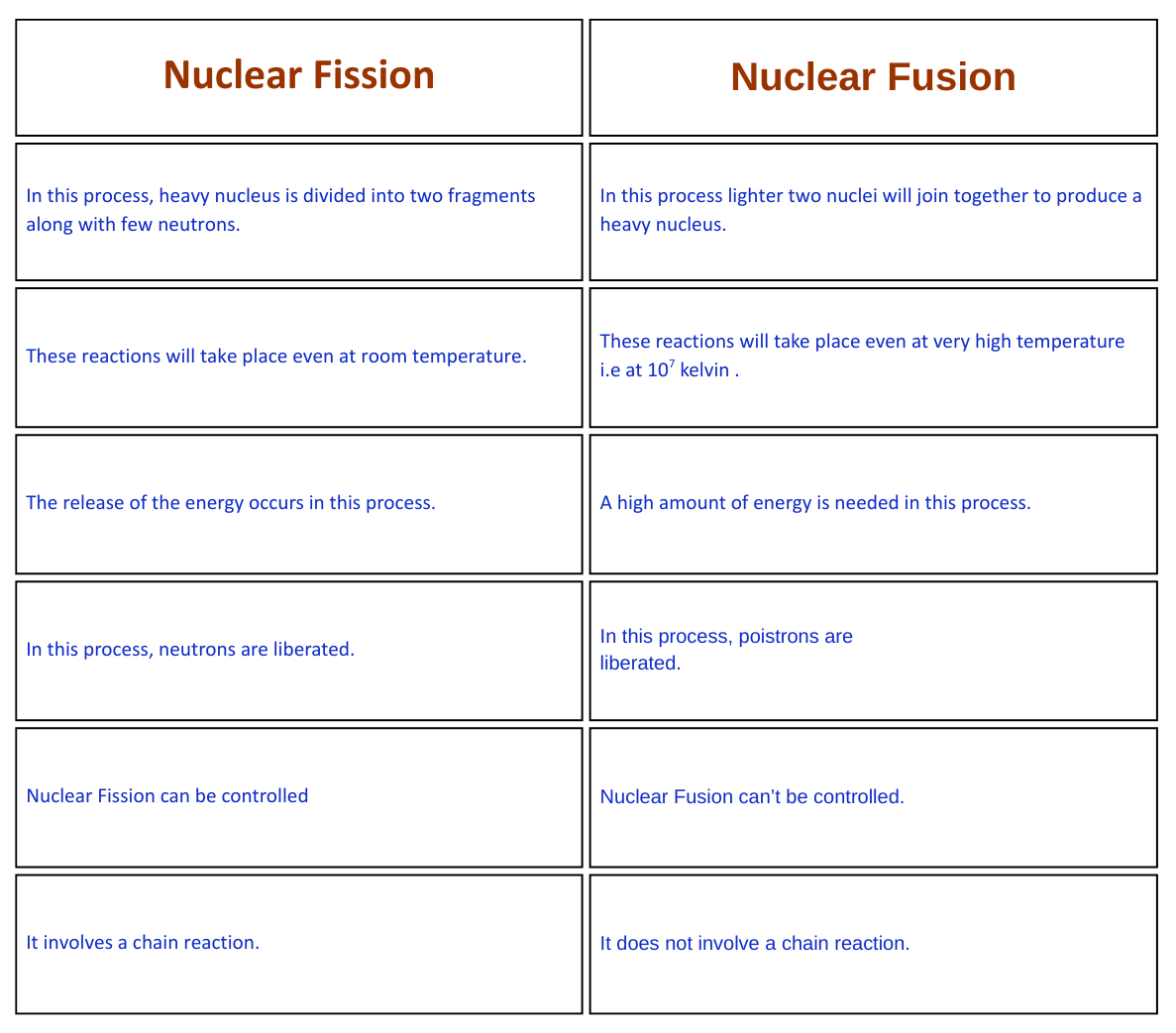
Fusion, however, is still in its "promising but needs a lot more work" phase. Scientists are working tirelessly to build fusion reactors that can contain and control the incredibly hot plasma needed for fusion to occur. It's like the ambitious younger sibling who has grand dreams but hasn't quite figured out the details yet.
The quest for controlled fusion is one of the biggest scientific challenges of our time. Imagine a world powered by clean, virtually limitless energy from fusion! It would be like having our own mini-star powering our planet. And, unlike fission, fusion doesn't produce long-lived radioactive waste, making it an even more attractive energy source.
A Family Affair for the Future
So, next time you hear about nuclear energy, remember the two cousins: fission, the splitter, and fusion, the combiner. They may have different personalities and approaches, but they both share the ability to unlock the atom's potential and, hopefully, power a brighter future. And who knows, maybe one day we'll even get them to work together, creating a super-efficient nuclear power plant that would make Einstein proud. Now that's a family reunion worth celebrating!