
Similarities Between Nuclear Fission And Fusion
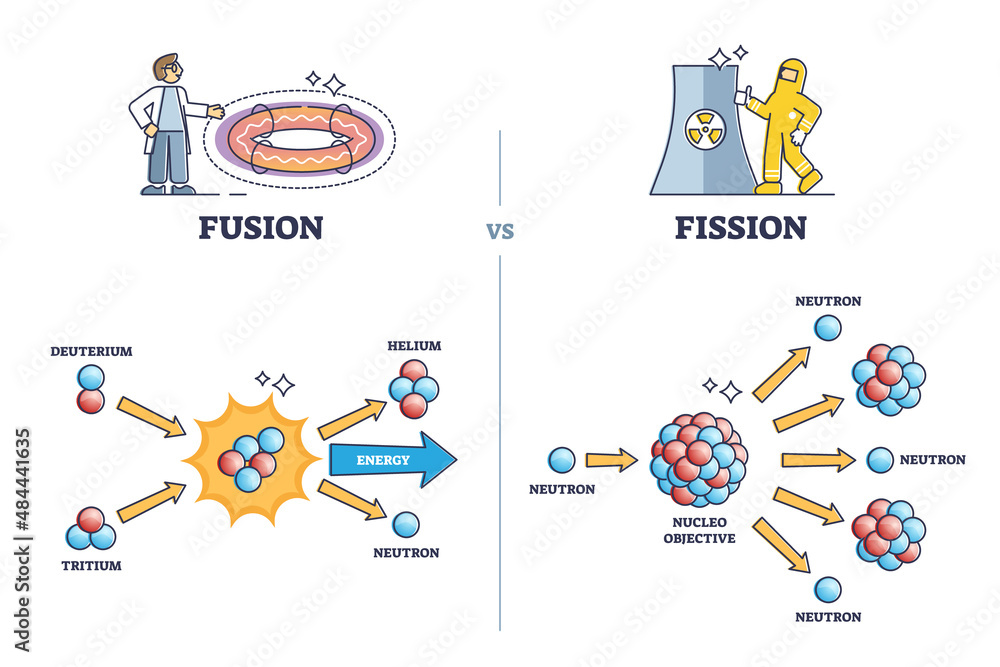
Okay, let's talk about nuclear fission and fusion. Now, before you run screaming for the hills thinking this is going to be some super boring science lecture, trust me, it's not! Think of it like this: they're both just extreme versions of things we do every day, only with a whole lot more...oomph.
They Both Involve Atomic Nuclei – Like REALLY Tiny Legos
At their heart, both fission and fusion are all about messing around with the nuclei of atoms. Now, atoms are the tiny building blocks of everything around us - your chair, your phone, even that questionable sandwich in the back of your fridge. And the nucleus is like the central command center of each atom, made up of protons and neutrons.
Imagine the nucleus as a super complicated Lego castle. In both fission and fusion, we're either smashing that castle apart or gluing smaller Lego bricks together to make a bigger one. It's all about rearranging these tiny particles within the atom's core.
Must Read
Energy Release: The Ultimate Payoff
Here's the real kicker. When you rearrange these atomic "Legos," you release an insane amount of energy. Insane. Think of it like this: have you ever been SO frustrated building Ikea furniture that when you finally get that last screw in, you feel like you could run a marathon? That's the feeling, but multiplied by, oh, I don't know, a billion.
In both fission and fusion, some of the mass gets converted into energy, following Einstein's famous equation, E=mc². It's like the atomic version of turning straw into gold! The difference is that in one case we're breaking things apart to get the energy, and in the other case, we are joining things.
Chain Reactions: Like a Runaway Viral Video
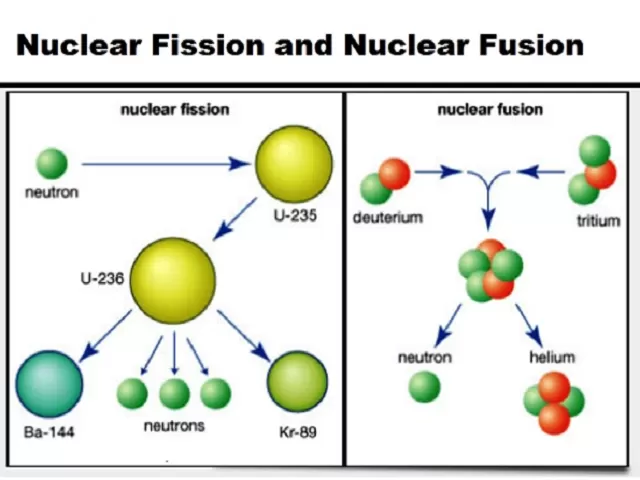
Both fission and fusion can also create what's called a chain reaction. This is where things get really interesting (and potentially scary, depending on who's in charge). Think of it like a viral video. One person posts it, then two people share it, then ten, then a hundred, and suddenly everyone's talking about that cat playing the piano.
In nuclear reactions, one initial event (splitting an atom or fusing two together) triggers more events, which trigger even more, and so on. It's a cascade of atomic chaos, but in a controlled setting (hopefully!). That controlled setting is the difference between a nuclear power plant (good!) and a nuclear bomb (very bad!).
Controlled Applications: Powering Our World
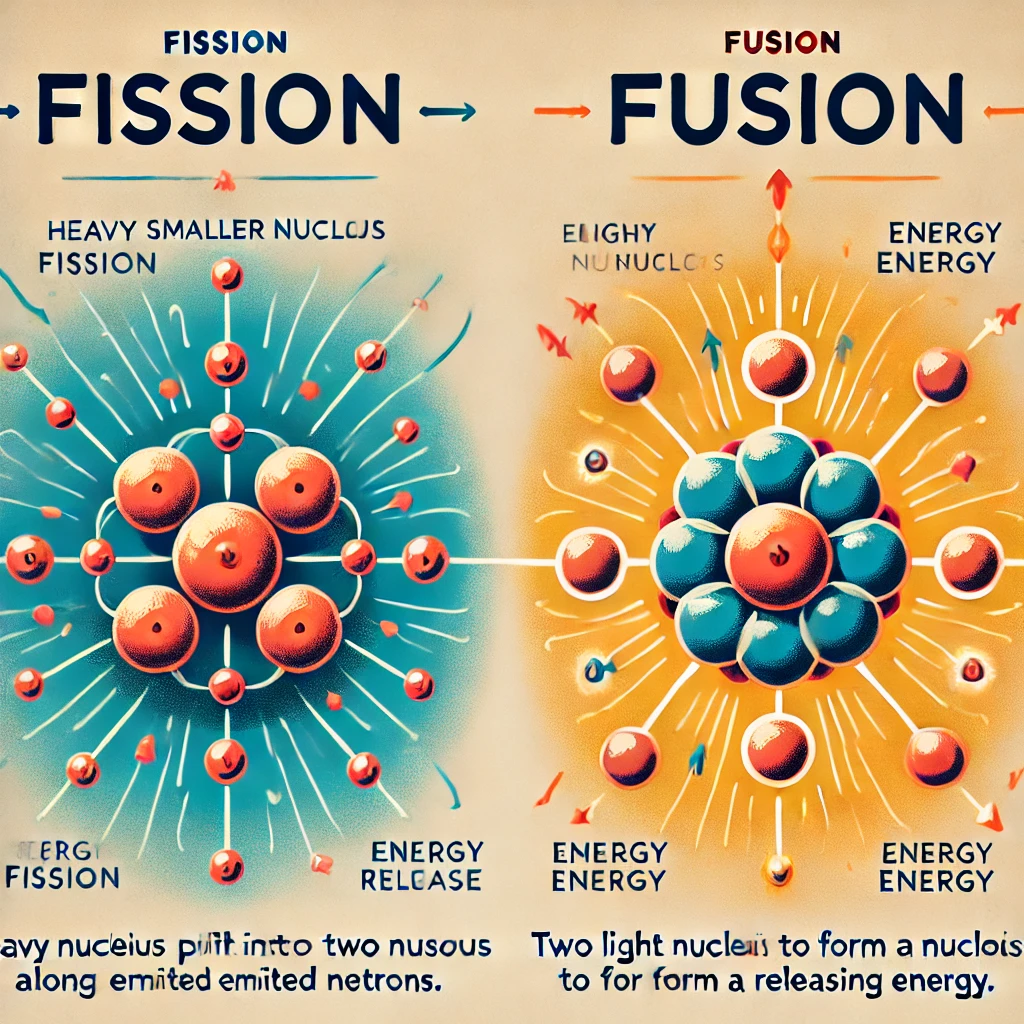
Okay, let's not dwell on the scary stuff. Both fission and fusion can be harnessed to create electricity, which, let's be honest, is pretty darn important. Fission is already used in nuclear power plants around the world. It involves splitting heavy atoms like uranium to release energy that heats water, creates steam, and spins turbines to generate electricity. It's like a giant, atomic-powered tea kettle!
Fusion, on the other hand, is still mostly experimental, but it holds the promise of being a cleaner and more sustainable energy source. Imagine mimicking the process that powers the sun right here on Earth! It's like having a miniature star in a box – a ridiculously powerful, and hopefully very safe, box.
Where They Diverge: Size Matters!
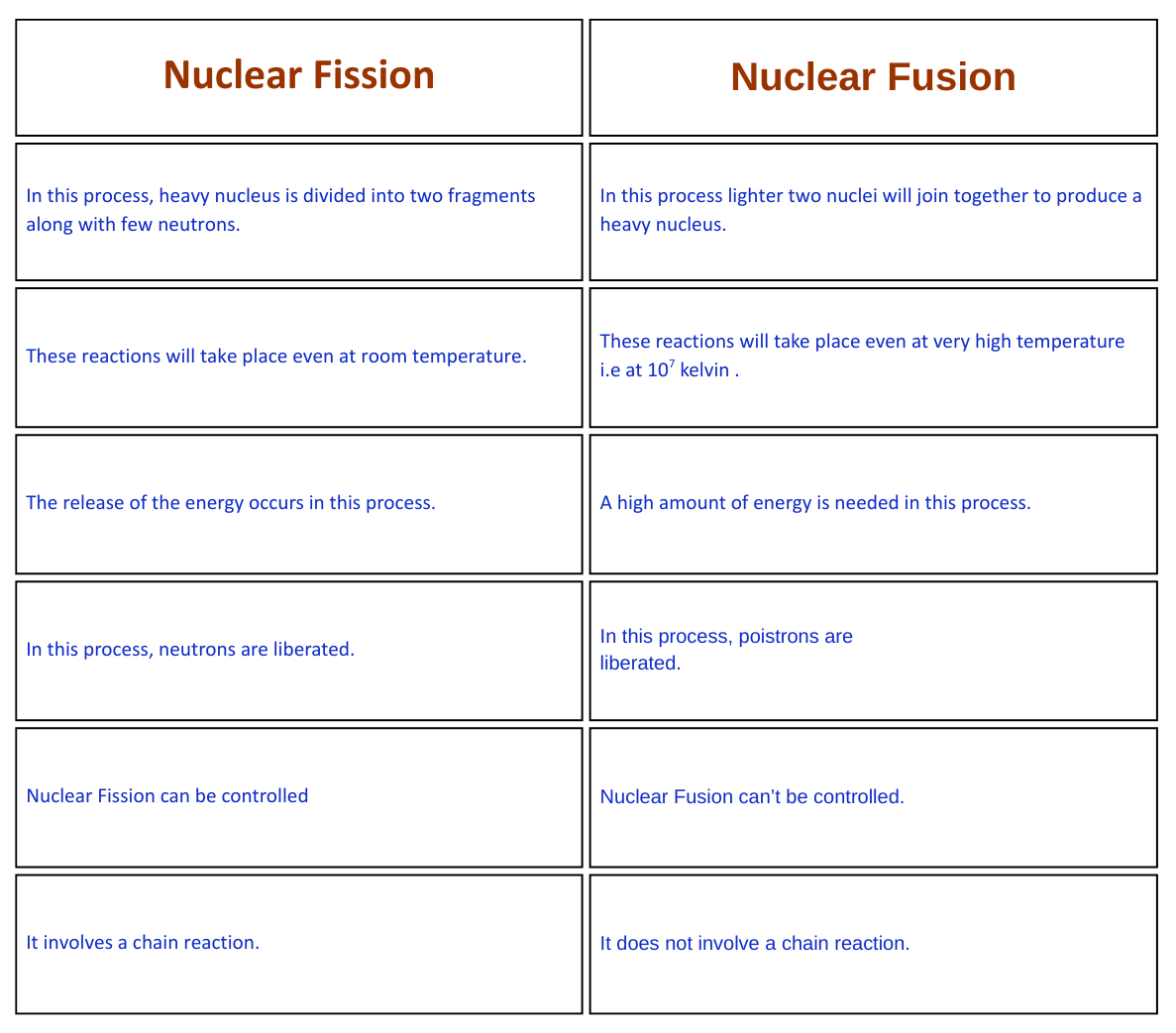
Now, here's the main difference: Fission is all about splitting heavy atoms, like uranium, into smaller ones. Fusion, on the other hand, is about fusing light atoms, like hydrogen, together to form heavier ones. It's like the difference between taking a sledgehammer to a boulder and trying to glue two ping pong balls together.
Fusion also requires incredibly high temperatures and pressures – think millions of degrees Celsius! That's why it's so difficult to achieve here on Earth. You need to create conditions similar to the core of the sun. So if your next DIY project involves creating a fusion reactor in your garage, you might want to double-check the instruction manual... and maybe call a physicist.
So, there you have it. Fission and fusion: two sides of the same atomic coin. Both involve rearranging atomic nuclei, both release mind-boggling amounts of energy, and both have the potential to power our world. They’re like the ultimate “before and after” in the world of atomic transformations.
