
Shielding Gas For Mig Welding
Alright, let's talk about something super cool, but often totally overlooked in the world of welding: shielding gas. Sounds a bit boring, right? Like something a scientist in a lab coat would drone on about. But trust me, this stuff is the invisible superhero of MIG welding, and it's surprisingly fun!
Imagine you're trying to cook a gourmet meal, but every time you open the oven, someone blasts it with a leaf blower. Your soufflé would be toast, literally! That's kind of what welding without shielding gas is like. It's a messy, spattery, ugly disaster. But with our gas? Chef's kiss!
The Invisible Bouncer for Your Weld Pool
So, what is this magical gas? When you're MIG welding, you've got this awesome, super-hot arc melting your metal and your filler wire together. This creates a little puddle of molten metal, called the weld pool. Now, this molten metal is super vulnerable. It hates oxygen and nitrogen from the air. Like, really hates them.
Must Read
If oxygen and nitrogen get into that hot, gooey puddle, they cause all sorts of problems. We're talking porosity (tiny holes), weak welds, and a finish that looks like it lost a fight with a popcorn machine. Not pretty, folks!
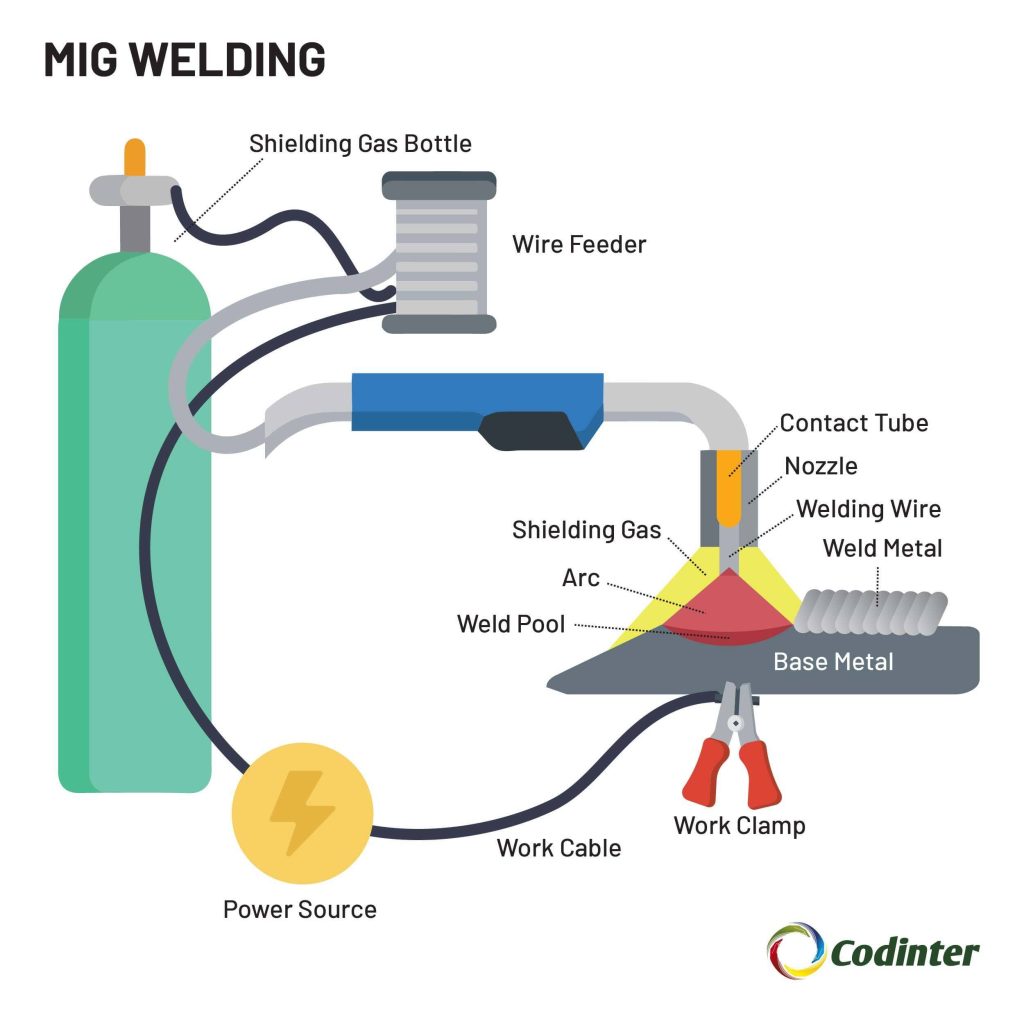
That's where shielding gas swoops in. It flows out of your MIG gun, creating an invisible protective bubble around your weld pool. It literally pushes the nasty atmospheric gases away, letting your molten metal chill out and solidify in peace. It's like a bodyguard for your metal!
What's In That Tank, Anyway?
Okay, so it's a gas. But what kind? This is where it gets a bit like choosing your favorite soda. There are a few main players, each with its own personality and perks:
Argon: The Smooth Operator
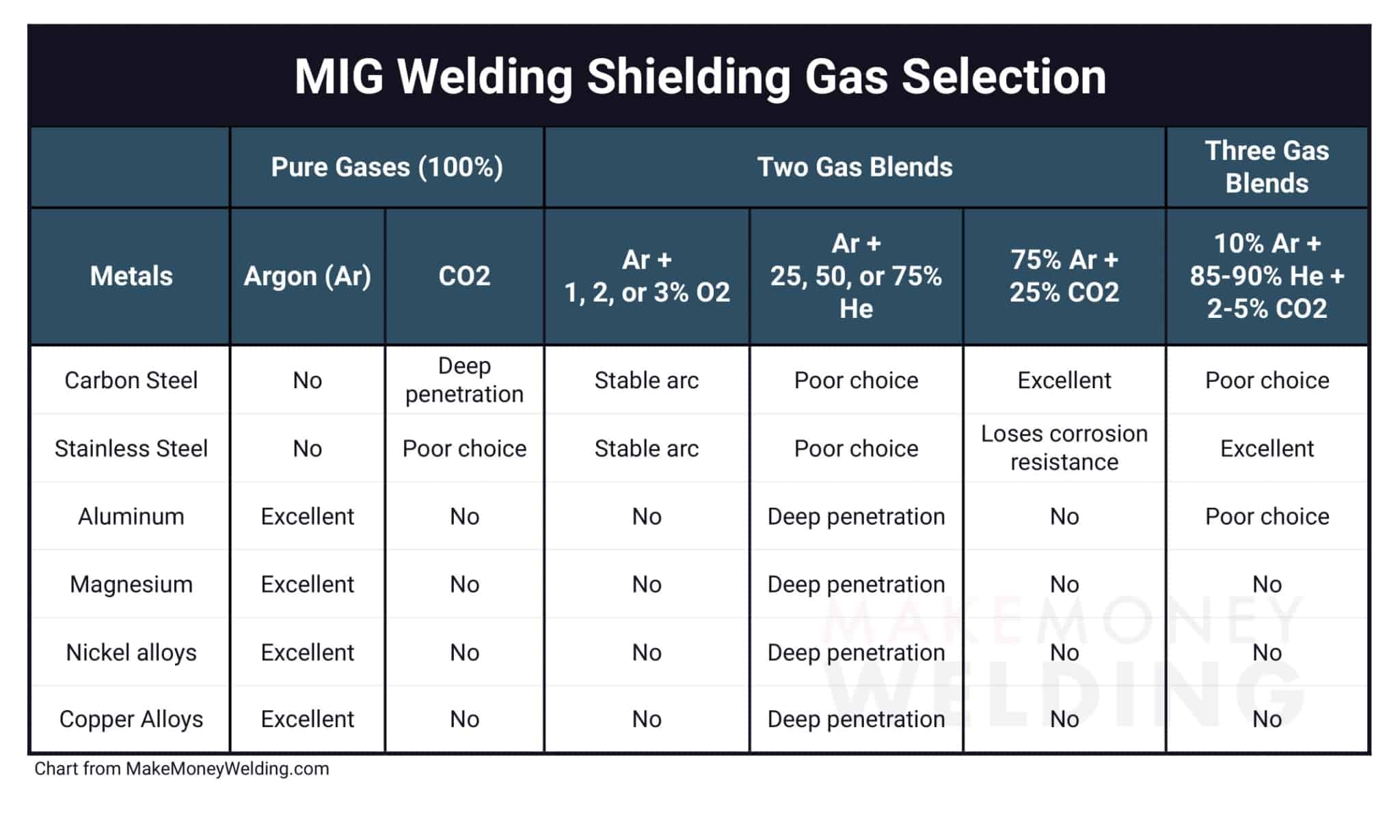
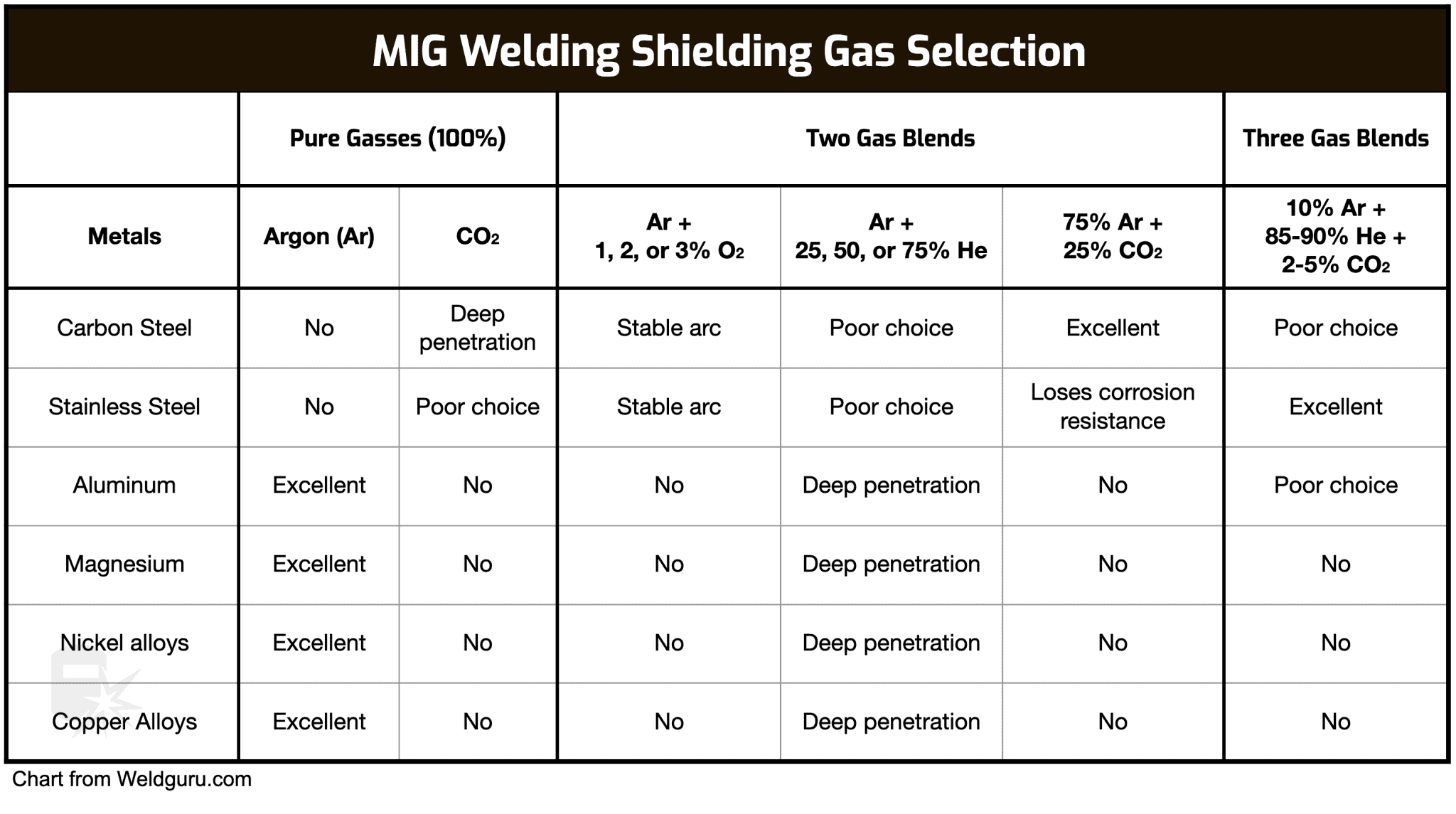
First up, we have Argon. This noble gas is a real smooth talker. It's inert, meaning it doesn't react with anything. It creates a very stable arc, beautiful bead appearance, and minimal spatter. It's fantastic for thinner materials and non-ferrous metals like aluminum. Think of it as the zen master of shielding gases.
CO2: The Punchy Performer
Then there's Carbon Dioxide (CO2). This one is a bit more aggressive. It's a reactive gas, which means it participates in the welding process. CO2 produces a hotter arc, deeper penetration, and is generally more forgiving if your metal isn't perfectly clean. It's also usually cheaper! The downside? More spatter. It's the energetic but messy friend of the group.
Mixes: The Best of Both Worlds
And often, welders use a mix! The most common is 75% Argon, 25% CO2 (often called "C25"). This blend tries to get the best qualities of both: the stability and smooth finish of Argon, with the deeper penetration and cost-effectiveness of CO2. It's like finding the perfect cocktail – just the right balance! There are other mixes too, with oxygen, helium, or even more argon for specific applications. It’s all about finding the right blend for the job.
Why Does It Matter So Much? (Besides Being Fun)
Seriously, without the right shielding gas, MIG welding just wouldn't be MIG welding. You'd have ugly, weak welds that would likely break. It's not just about looking pretty; it's about making strong, reliable connections.
Did you know that the type of gas you choose can affect the shape of your weld bead? Or how deeply the weld penetrates the metal? Different gases react differently with various metals and thicknesses. It's a whole science!
Imagine trying to make a perfect grilled cheese. If you don't have butter, the bread sticks to the pan and burns, right? Shielding gas is kind of like that essential ingredient that ensures the process goes smoothly and the end product is delicious (or, in this case, strong and beautiful!).
So, What's the Takeaway?
Shielding gas isn't just some boring, technical detail. It's the unsung hero of MIG welding, making sure your welds are strong, clean, and look fantastic. It's the invisible force protecting your precious molten metal from the big bad air.
Next time you see a welder at work, give a little nod to that tank of gas nearby. It's doing some heavy lifting, even if you can't see it. It's a crucial part of the magic, and honestly, that's pretty cool to think about. Who knew gas could be so dramatic?