
Salt Dissolving In Water Is A Physical Change.

Ever sprinkled salt into water? Poof! It vanishes. Magic? Nope. Just plain old physics, my friend!
We're talking about a physical change. What does that even mean? Let's break it down, without the science-y snoozefest.
What’s the Deal with Dissolving?
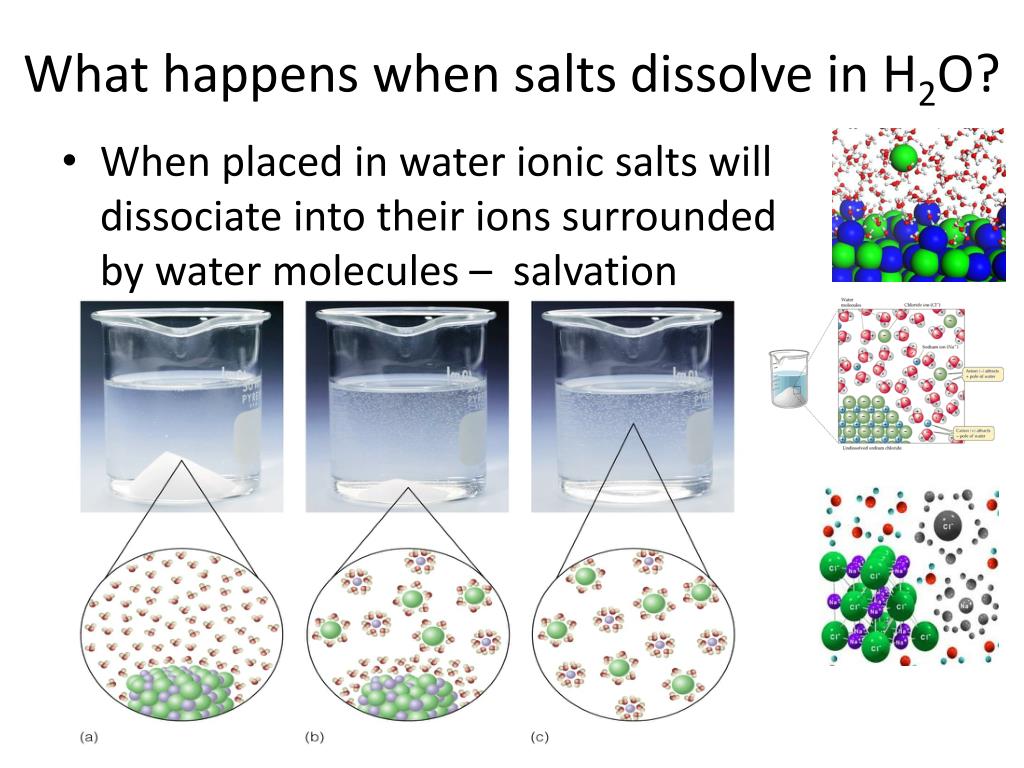
Imagine salt as tiny little LEGO bricks. Water is like a bunch of super-friendly kids. When you toss the LEGOs (salt) into the playground (water), the kids (water molecules) swarm them.
Must Read
They pull the LEGOs apart and surround each individual brick. The salt crystals, once visible, spread out until they're completely hidden. That's dissolving! It's a separation, not a transformation.
Think of it like this: you’re taking apart a pre-built Lego castle. The individual bricks are still there, just not in castle form. You can rebuild it (evaporate the water and get the salt back) if you want to.
Physical vs. Chemical: The Showdown!
Okay, so dissolving is physical. But what's the opposite? A chemical change! This is where things get really interesting.

A chemical change is like… baking a cake. You mix flour, eggs, sugar. You bake it. BOOM! A cake! You can't un-bake a cake (easily). You can't get the flour back to its original state. The ingredients have been transformed.
Rusting iron? Chemical change. Burning wood? Chemical change. Digesting your lunch? Yep, you guessed it: chemical change!
Salt dissolving? Just a temporary separation. No new substances are formed. That makes it firmly in the physical change camp.

Why Should You Care?
Besides being ridiculously cool? Understanding physical changes helps you understand the world around you!
From making a perfect cup of tea (sugar dissolving) to understanding why ice melts (a phase change, also physical), it's all connected.
Plus, it’s great for impressing your friends at parties. "Oh, that? That's just salt undergoing a physical change, darling." Cue sophisticated eyebrow raise.
Salty Facts (Because Why Not?)
* The Dead Sea is so salty, you can practically float on your back and read a book. That's a LOT of salt dissolved in water! * Did you know that salt is essential for human life? We need it for nerve function and muscle contraction! But don't go overboard – too much salt is bad. * Table salt isn't just sodium chloride (NaCl). It usually has iodine added to prevent iodine deficiency. How cool is that? * There are different types of salt! Sea salt, kosher salt, Himalayan pink salt… They all dissolve in water, but some have different trace minerals that affect their flavor.The Evaporation Trick
Want to prove to someone that the salt is still there? Evaporate the water! Seriously. Pour some saltwater into a shallow dish and let it sit in a sunny spot.
The water will slowly turn into vapor and disappear. And guess what's left behind? Beautiful, sparkling salt crystals! It's like a science experiment and a mini art project all in one.
Think About It!
What else dissolves in water? Sugar? Kool-Aid? Think about what happens when you mix things together. Are you creating something new, or just separating existing parts?
Consider the possibilities. What other physical changes are hiding in plain sight? Melting chocolate? Crumpling paper? The world is your physical science playground!

So, What's the Takeaway?
Salt dissolving in water isn't just some boring science fact. It's a tiny window into how the world works. It's about understanding the difference between temporary changes and permanent transformations.
It's about being curious and asking "Why?" (or even "Why not?!"). It's about realizing that even the simplest things can be incredibly fascinating.
Now go forth and dissolve some salt! (Responsibly, of course.) And maybe, just maybe, you'll see the world in a whole new (slightly salty) light.
And remember, keep asking questions! The universe is full of awesome stuff waiting to be discovered. And a lot of it involves chemistry and physics. Cheers!