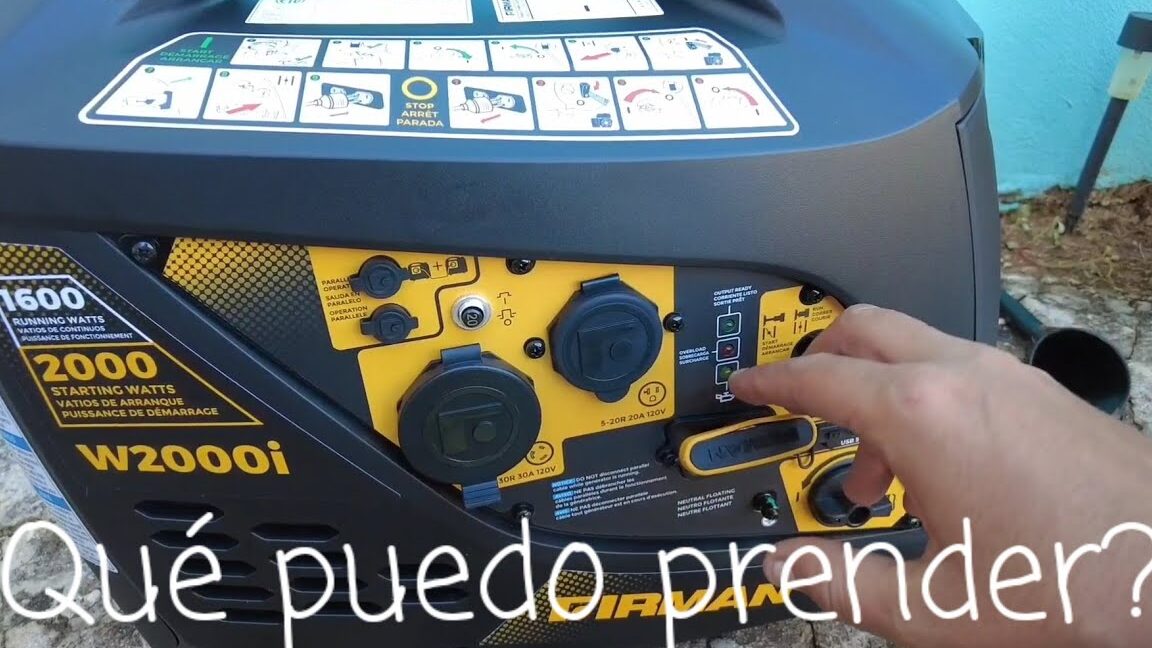
Que Puedo Conectar En Un Generador De 1200 Watts
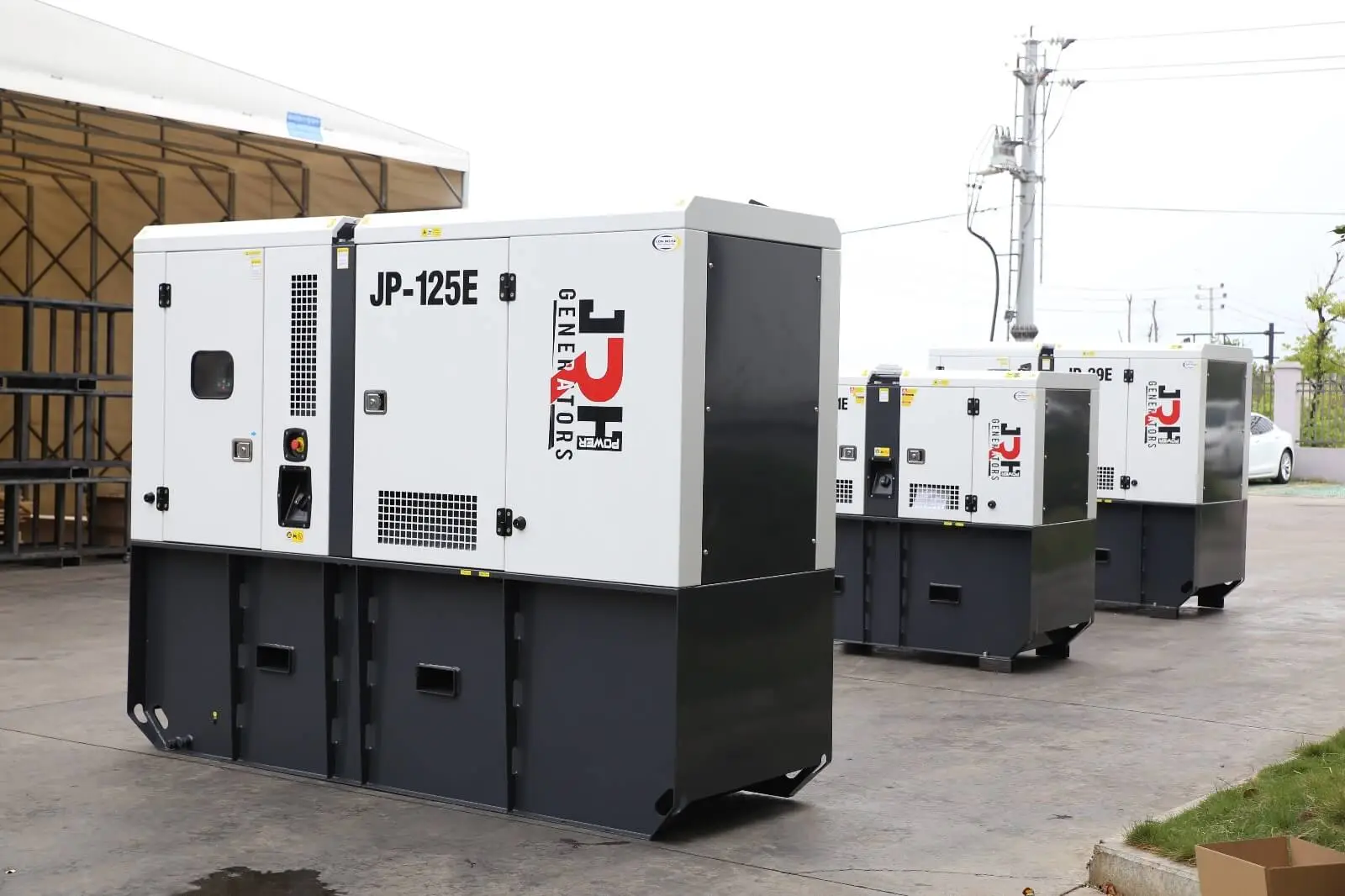
So, you've got a shiny new (or maybe slightly dusty) 1200-watt generator. Good for you! You're probably picturing yourself as a modern-day MacGyver, ready to power through any blackout, camping trip, or spontaneous backyard disco. But before you start plugging in everything from your fridge to your blender, let's talk about what that little powerhouse can actually handle. Think of it as your electrical wingman, but a wingman with limits. We wouldn't want to overload him, would we?
First, let’s tackle the basics. 1200 watts sounds like a lot, but in the world of electricity, it's more like a polite amount. It's enough to be helpful, but not enough to, say, power a small village (unless that village is populated solely by hamsters with tiny lights). So, what can you realistically plug in without causing sparks to fly (literally or figuratively)?
The Essentials – Keepin' it Cool (and Warm-ish)
One of the most common uses for a generator is keeping the bare essentials running during a power outage. Think about it: you want to keep the fridge humming along so your ice cream doesn't turn into a sad, melty puddle. A standard refrigerator usually pulls around 600-800 watts to start, and then settles down to a lower running wattage. So, that's doable! Just make sure you’re not trying to run the microwave at the same time you turn on the fridge, or you might find yourself wishing you'd invested in more candles.
Must Read
Need some light? Absolutely! LED lights are your friends. They sip power like a hummingbird sips nectar, using only a handful of watts. You can probably power several LED lamps with ease, turning your blackout from a scary situation into a cozy, atmospheric one. String lights? Go for it! It's like a surprise party for your neighborhood (the parts that still have power, anyway).
And what about staying connected? Laptops and phone chargers are generally low-wattage devices, so feel free to keep your devices juiced up. Sharing cat videos on social media during a power outage? Totally justifiable. It's a public service, really.
The "Maybe" Pile – Proceed with Caution
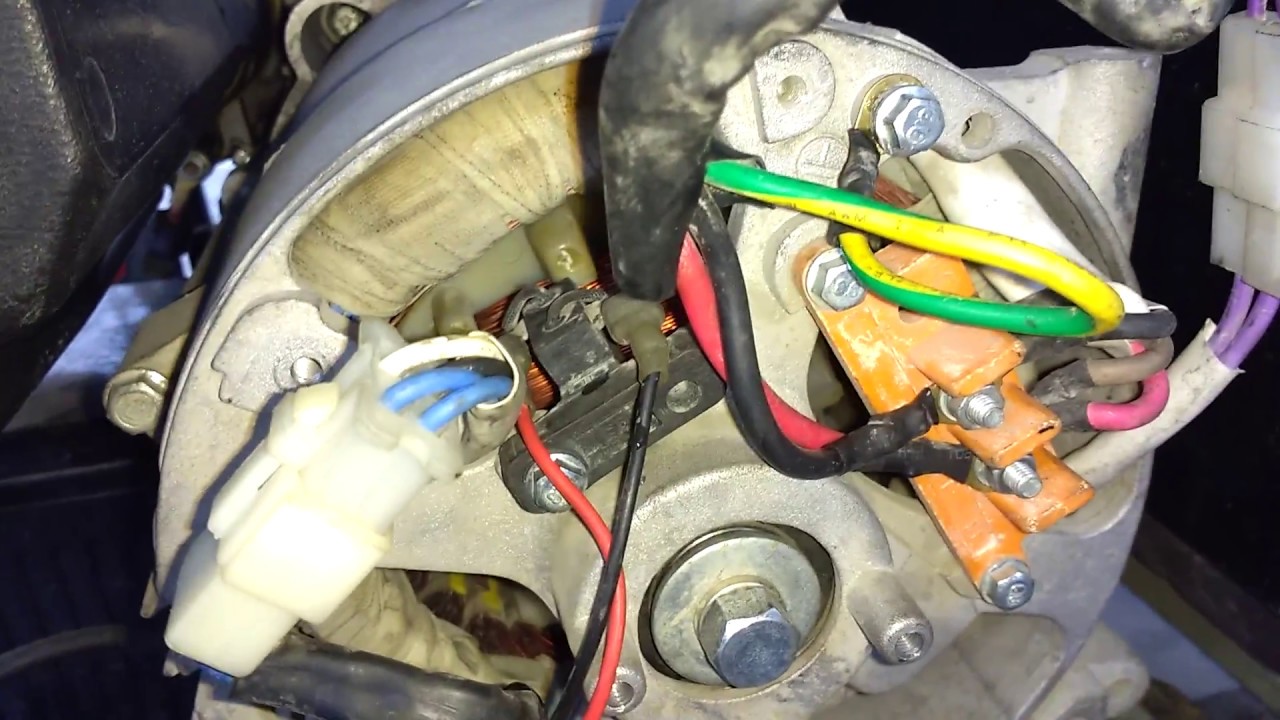
This is where things get a little trickier. A window air conditioner, while tempting during a summer blackout, is usually pushing it. Most window AC units, even smaller ones, require more than 1200 watts to start. Remember that surge of power when something first kicks on? Yeah, that’s the killer. Portable heaters are also power hogs. While a small one might work, it’s best to check the wattage before plugging it in. You don’t want to risk turning your generator into a very expensive paperweight.
Power tools fall into the "maybe" category as well. A small drill or sander might be okay, but anything heavy-duty is likely to overwhelm your generator. Think about what you're trying to accomplish. Building a whole deck during a blackout? Probably not the best idea. Fixing a loose screw? Potentially doable. Use your best judgment, and remember to check the wattage rating on your tools!

The "Absolutely Not" Zone – Avoid at All Costs
Anything with a heating element that's large and powerful is a definite no-no. Electric stoves, ovens, and central air conditioners are way beyond the capabilities of a 1200-watt generator. Don't even think about it. You’ll just end up frustrated (and possibly with a blown fuse… or worse!). Also, multiple high-wattage appliances at the same time are a bad idea. No running the fridge, microwave, and hair dryer simultaneously. Unless you're aiming for a chaotic explosion of electrical energy, stick to one or two essential items at a time.
Think of your generator as a picky eater. It prefers small, easily digestible meals. Avoid feeding it anything too big or too rich. By being mindful of what you plug in, you can keep your 1200-watt generator running smoothly and reliably, turning those inconvenient blackouts into manageable (and maybe even slightly fun) experiences. After all, who doesn't love a good power outage adventure... as long as the ice cream survives?
Remember: Safety First! Always follow the manufacturer's instructions, and never overload your generator. And when in doubt, consult a qualified electrician.