
Pros And Cons Of Wave Energy
Hey there, ever just sit by the ocean and watch the waves crash? There's something incredibly mesmerizing, almost hypnotic, about that constant, powerful motion. It’s like the sea is constantly flexing its muscles, right? Well, what if we could harness all that awesome, rhythmic power? What if those crashing waves weren't just a pretty sight, but a potential source of clean energy?
That’s the big idea behind wave energy, and it’s been sparking a lot of curiosity lately. It’s not quite as well-known as solar panels on roofs or giant wind turbines, but it’s an equally fascinating branch of renewable energy. Let's dive in and paddle around the pros and cons, shall we?
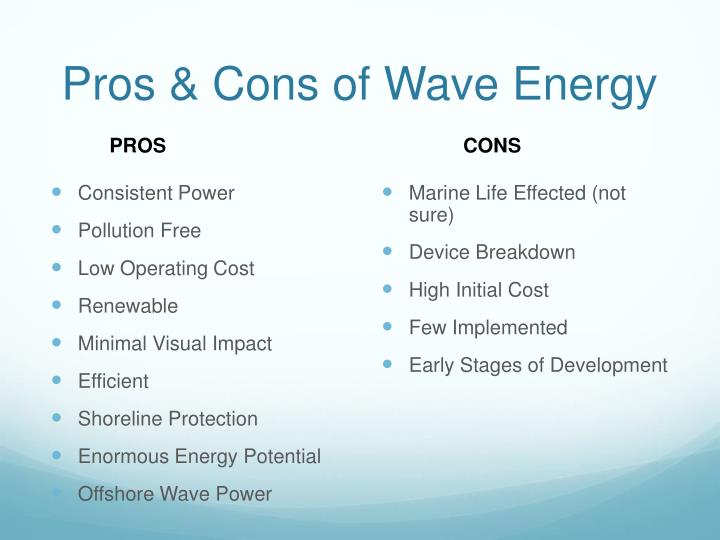
Why Wave Energy Makes a Splash (The Pros!)
First off, let’s talk about why this idea is so cool. Imagine an energy source that's always there, just doing its thing, day and night.
Must Read
1. It's Super Renewable and Abundant:
The ocean isn’t going anywhere, and neither are its waves. As long as the wind blows and the moon pulls, those waves will keep rolling in. It's like an infinite treadmill of energy, constantly in motion. We're talking about a truly limitless resource here, unlike fossil fuels which are, you know, finite.2. More Predictable Than You Think:
While weather can be finicky, ocean waves are often more consistent than wind or solar power. You can usually predict wave patterns days in advance, thanks to weather forecasts. This means we could potentially know how much energy we'll generate, making it a more reliable grid contributor than, say, a cloudy day shutting down solar panels.
3. Environmentally Friendly (Mostly):
Once these devices are in the water, they don't produce any greenhouse gas emissions. No burning coal, no smoke stacks. Just clean, quiet power generation. That's a huge win for our planet and combating climate change.4. Can Power Coastal Communities:
For towns and cities right on the coast, wave energy could be a game-changer. Imagine generating power right where you need it, reducing the need for long, expensive transmission lines. It's like having a local, natural power plant just off your shore.
Riding the Rough Waves (The Cons to Consider)
Okay, so it sounds pretty amazing, right? But like anything innovative, wave energy has its fair share of challenges and potential drawbacks. It’s not all smooth sailing just yet.
1. It's Pricey to Get Started:
Building robust equipment that can withstand the incredible power of the ocean isn't cheap. We're talking about massive structures, sophisticated engineering, and materials that can resist saltwater corrosion and immense forces. The initial investment costs can be eye-wateringly high, and that often includes the development costs of new technologies.2. The Ocean is a Harsh Environment:
Ever been caught in a big wave? Now imagine sensitive machinery out there, enduring storms, huge waves, and the constant wear and tear of saltwater. Maintenance is a huge challenge, and repairs can be difficult and costly. The ocean can be pretty unforgiving!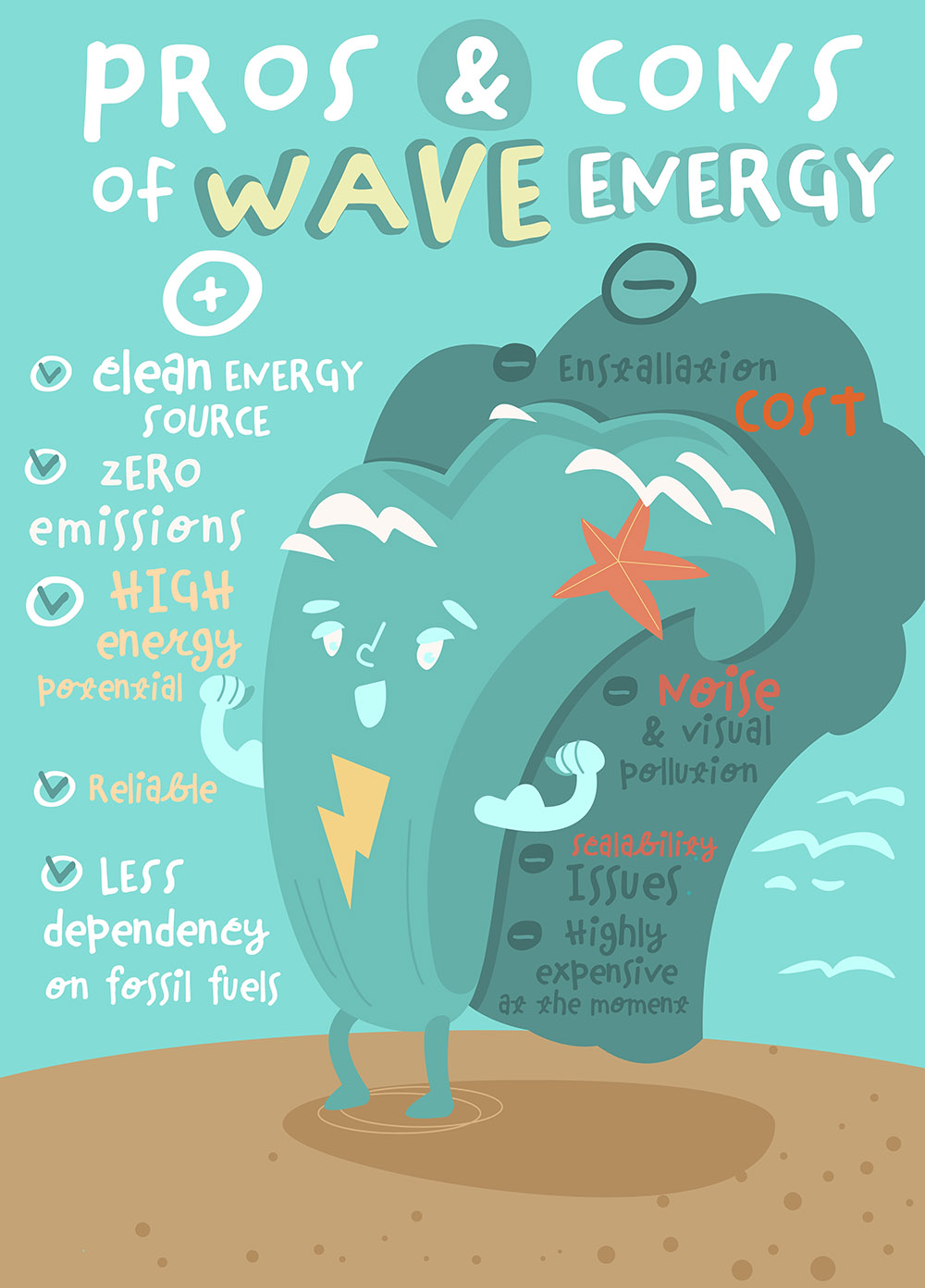
3. Potential Impact on Marine Life:
Any human-made structure in the ocean has the potential to affect its inhabitants. There are concerns about noise pollution from the devices, their physical presence altering habitats, or even marine creatures getting tangled. Scientists are working hard to design wave energy converters that are as fish-friendly as possible.4. Visual and Navigational Concerns:
Depending on their design and location, wave energy devices might be visible from the shore. While some might find them interesting, others might see them as an eyesore. They could also potentially interfere with fishing routes, shipping lanes, or recreational activities like surfing. Finding the right balance is key!
5. The Technology is Still Maturing:
Wave energy is still relatively young compared to wind and solar. There are many different types of devices being tested, and we haven't yet landed on a universally agreed-upon, super-efficient, and cost-effective design. It's like the teenager of renewable energy – full of potential but still finding its way.So, What's the Verdict?
Wave energy is one of those exciting ideas that reminds us just how much power nature holds. It offers a glimpse into a future where our electricity might come directly from the rhythmic pulse of the ocean itself. While there are definitely some big waves to navigate, from high costs to environmental considerations, the potential for clean, predictable energy is just too significant to ignore.
It's a field brimming with innovation, and engineers and scientists are constantly working to make these devices more efficient, affordable, and environmentally harmonious. Who knows, one day, the humble wave might just be powering your home. Pretty cool thought, isn't it?