
Properties Of Nonmetals Metals And Metalloids
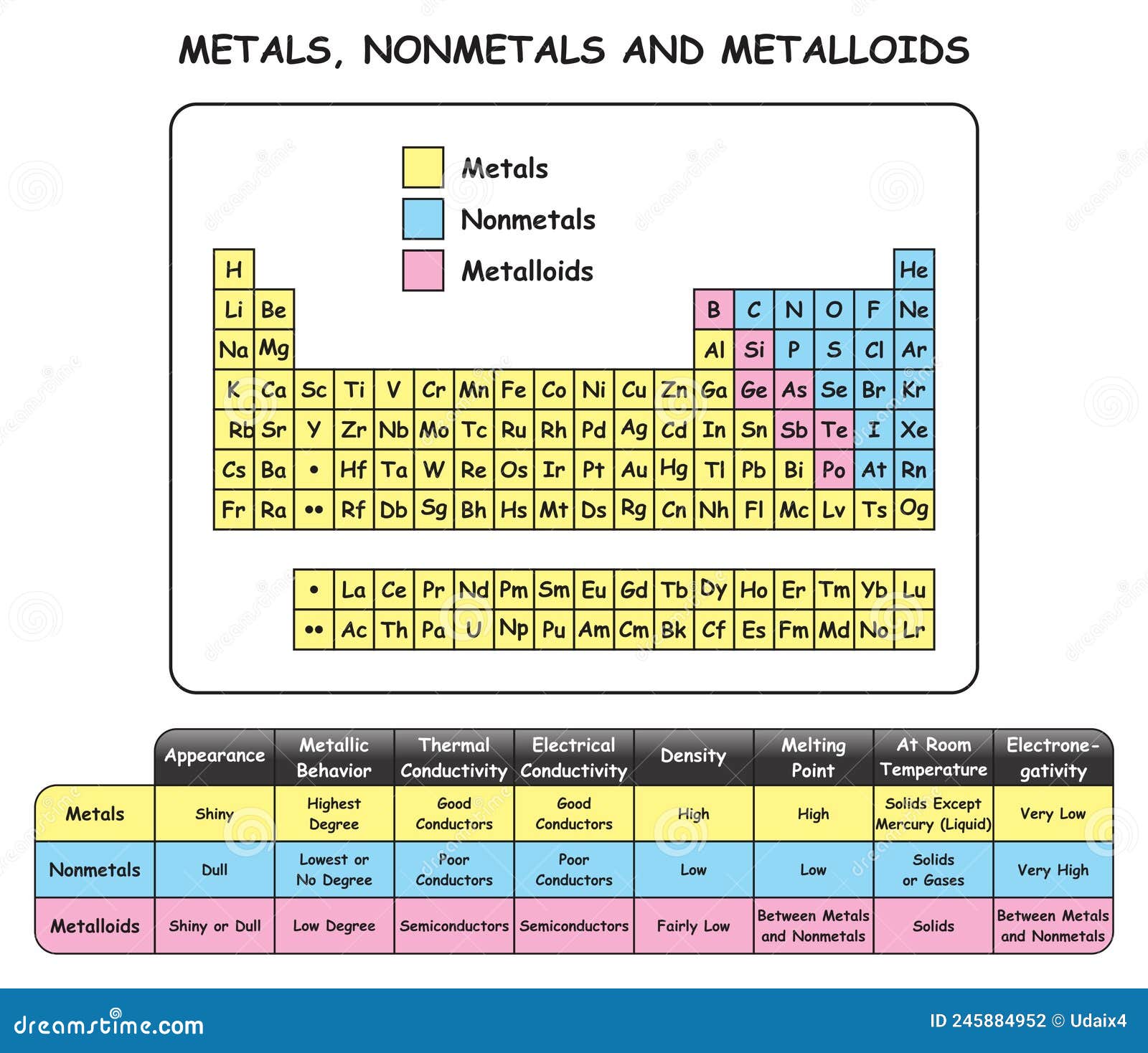
Imagine the world as a giant talent show. On stage, we have three amazing groups: the metals, the nonmetals, and the often-overlooked metalloids. Each group has unique talents and quirks that make them indispensable.
The Rockstars: Metals
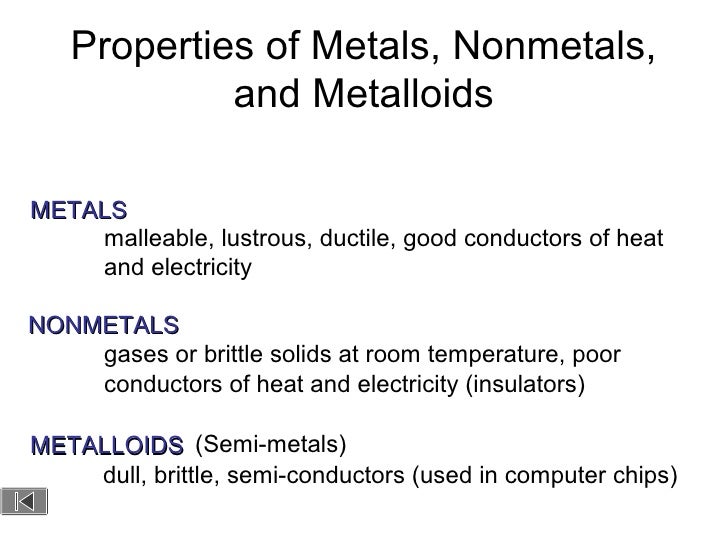
First up, let's talk about the metals! They're like the rockstars of the periodic table, always shining and conducting the energy like pros.
Think of gold earrings or a copper wire carrying electricity. That’s metals doing what they do best: being shiny, bendable (malleable), and great at conducting heat and electricity. They are truly the backbone of many things.
Must Read
Shiny Superstars
Ever noticed how shiny metals are? That's because of their electrons getting excited and bouncing light back at us. Imagine a disco ball – that’s kind of how metals work, reflecting light every which way!
This is why we use metals for jewelry, silverware, and those cool metallic paints on cars. They're all about the sparkle!
Team Players
Metals are generally friendly and like to team up with other elements to form compounds. Sodium, a highly reactive metal, finds its calm in the table salt, sodium chloride.
It’s like that wild friend who mellows out when they find the right partner.
The Conductors
Metals are amazing conductors, letting heat and electricity flow through them with ease. This makes them perfect for pots, pans, and wiring your house.
Imagine trying to cook with a wooden spoon on a campfire – not very efficient, right? Metals save the day by distributing the heat evenly.
The Introverts: Nonmetals
Next, we have the nonmetals. They're more like the introverts of the group, often hiding in the shadows but with essential qualities.
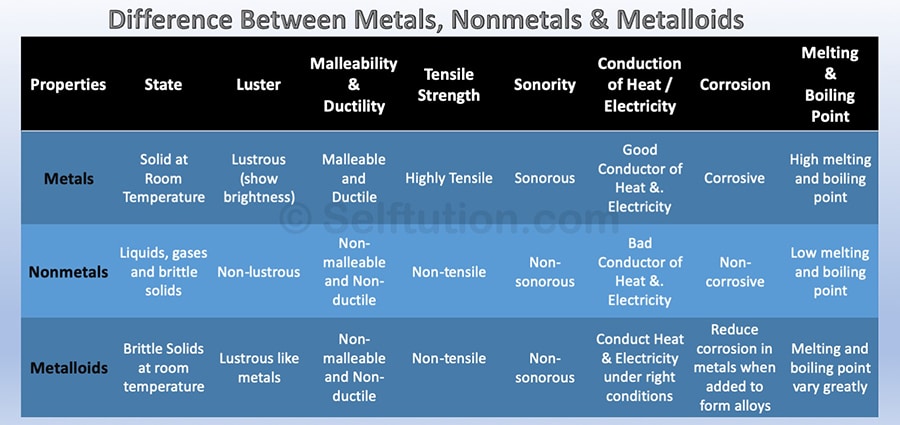
Think of the air you breathe (mostly nitrogen and oxygen), or the charcoal in your grill (carbon). Nonmetals aren’t as flashy as metals, but they are crucial for life.
Variety is Their Spice
Nonmetals are a diverse bunch. They can be gases like oxygen, solids like sulfur, or even liquids like bromine. No shiny surfaces here!
This variety makes them essential for different things, from supporting life to making plastics.
The Insulators
Unlike metals, nonmetals are poor conductors of heat and electricity. This makes them great insulators, preventing electricity from going where it shouldn’s.
Think of the rubber coating on electrical wires – that’s a nonmetal keeping you safe from shocks.
Bonding Buddies
Nonmetals like to bond with other elements to form a vast array of compounds. They are masters of sharing and creating diverse substances.
Water (H₂O), the elixir of life, is a perfect example of nonmetals combining to form something truly magical.
The Ambiguous Ones: Metalloids
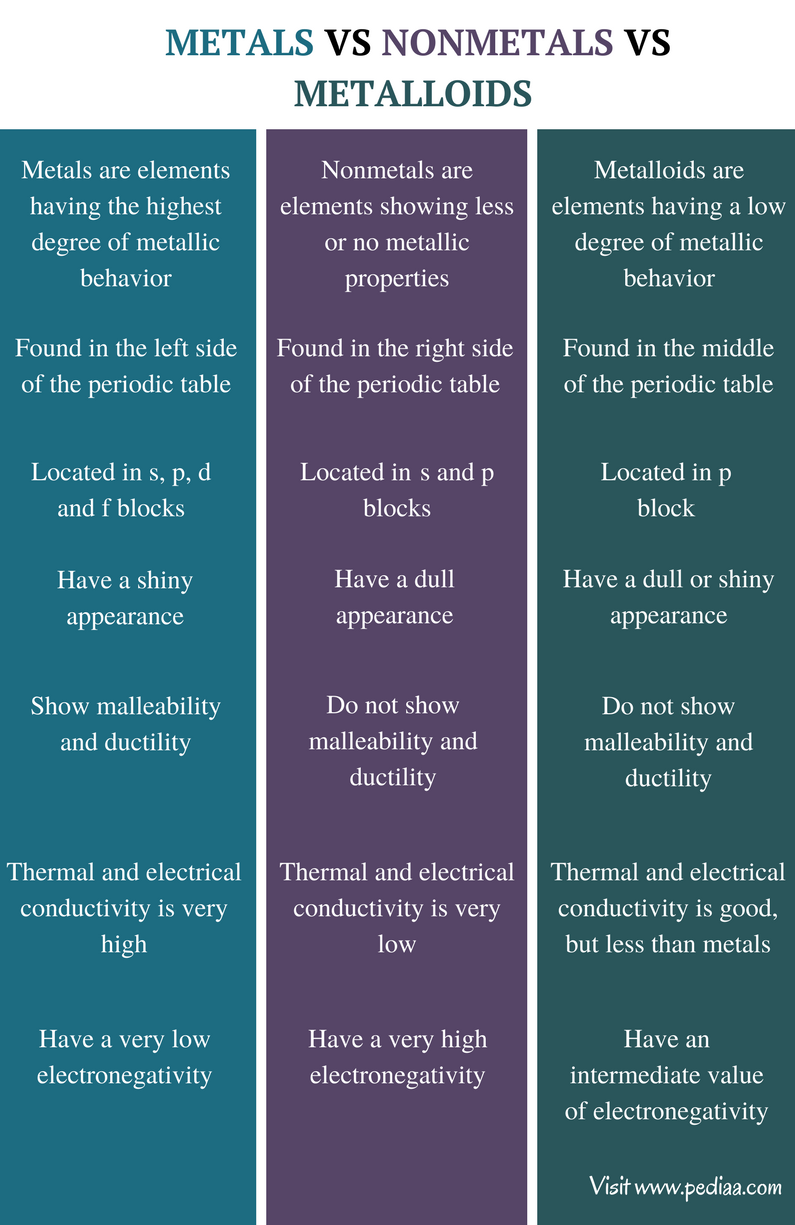
Now, let's introduce the metalloids. They're like the multi-talented individuals of the periodic table, borrowing traits from both metals and nonmetals.
They’re not quite metals and not quite nonmetals, existing in a delightful in-between space.
The In-Betweeners
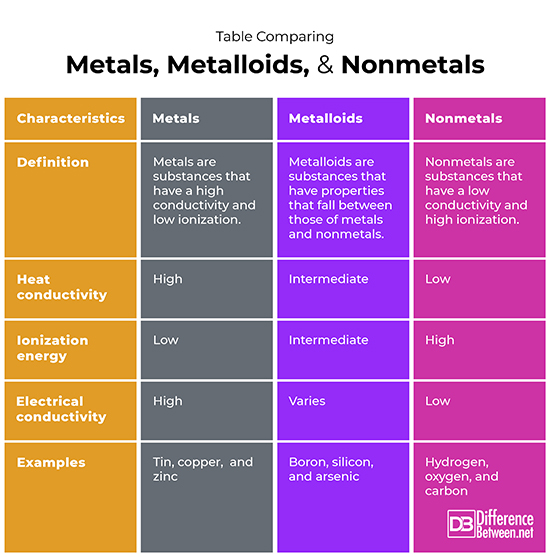
Metalloids, such as silicon and germanium, have properties of both metals and nonmetals. This makes them incredibly useful in electronics.
They can conduct electricity under certain conditions, earning them the nickname "semiconductors."
The Semiconductor Stars
The semiconducting nature of metalloids like silicon is the backbone of modern electronics. They control the flow of electricity in computers, smartphones, and other gadgets.
Without metalloids, we'd be stuck in the dark ages, technologically speaking. They are vital!
The Subtle Shiners
Metalloids often have a metallic appearance but behave more like nonmetals. They have a subtle shine that hints at their metallic side.
It’s like they are winking at you, letting you know they have a secret.
The Elemental Symphony
Think of metals, nonmetals, and metalloids as instruments in a symphony. Each plays a unique role, and together they create something beautiful and essential.
Metals provide structure and conductivity, nonmetals offer diversity and insulation, and metalloids bring control and precision. Together, they make our modern world possible.
Surprising Combinations
The way these elements combine can lead to surprising and wonderful results. Consider diamonds, which are pure carbon, a nonmetal!
Under immense pressure, carbon atoms form a crystal structure that makes them the hardest naturally occurring substance. It’s a testament to the unexpected potential of these elements.
The Story of Salt
Sodium (a metal) is explosive when it reacts with water, and chlorine (a nonmetal) is a poisonous gas. But when they combine, they form sodium chloride, or table salt!
It's a reminder that elements can come together to create something completely different and essential for life.
The Heartwarming Power of Oxygen
Oxygen, a nonmetal, is essential for respiration. Every breath you take is powered by the interactions of oxygen within your body.
It’s a heartwarming reminder of the vital role nonmetals play in sustaining life.
Appreciating the Elements
So, the next time you see a shiny metal object, breathe the air, or use your smartphone, remember the amazing properties of metals, nonmetals, and metalloids.
They are the unsung heroes of our world, each with its unique talents and quirks. They are truly essential for living.
By understanding their properties, we can better appreciate the complexity and beauty of the world around us. They are all parts of one magnificent story.
Let's celebrate these three groups for making our existence more vibrant, functional, and fun! Every element has its importance.