Properties Of Metal Non Metal And Metalloids
Ever wondered why your phone feels cool to the touch, but your oven mitt doesn't? Or why some things shine brilliantly while others are dull and crumbly? The answer lies in the fascinating world of elements, specifically metals, non-metals, and metalloids! Learning about their properties isn't just some dry science lesson; it's like unlocking a secret code to understanding the stuff all around us. It's surprisingly fun and super useful!
So, who can benefit from knowing this stuff? Well, for beginners just starting out in science, understanding these basic categories helps make sense of the periodic table. It's like learning the alphabet before reading a book! For families, knowing the difference can lead to interesting discussions – why do we use copper wires for electricity? Why is grandma's silver so shiny? And for hobbyists, like those into jewelry making or electronics, understanding the properties of these materials is crucial for choosing the right materials for your projects.
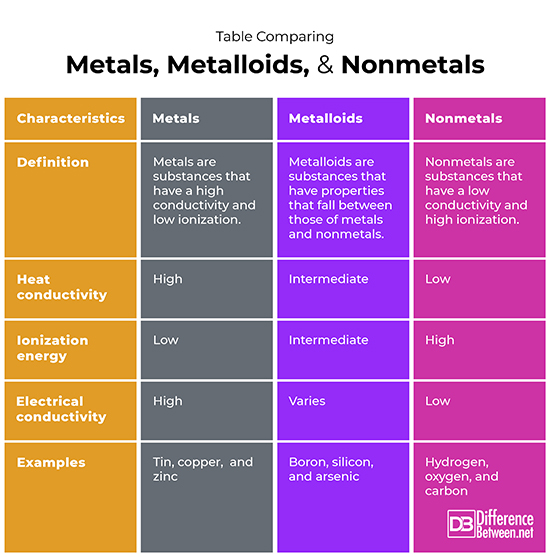
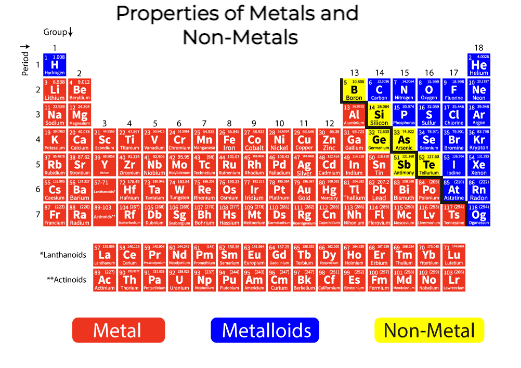
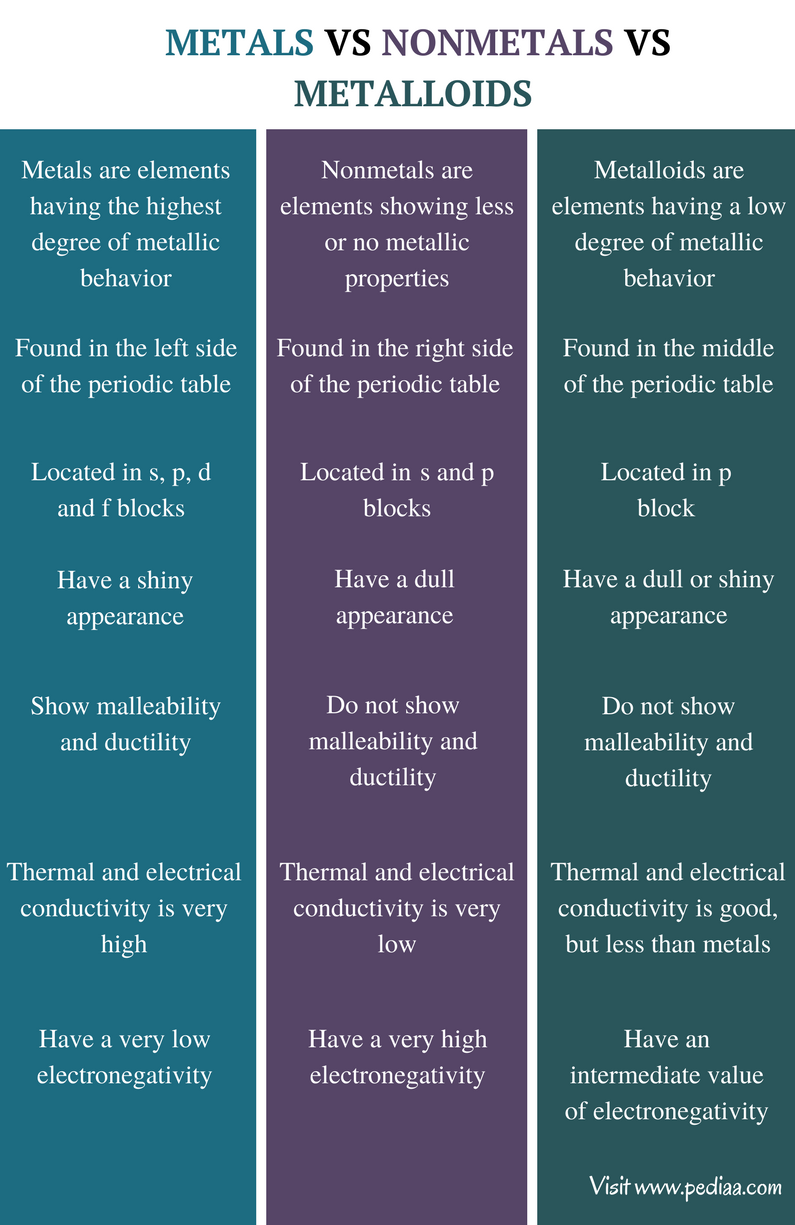
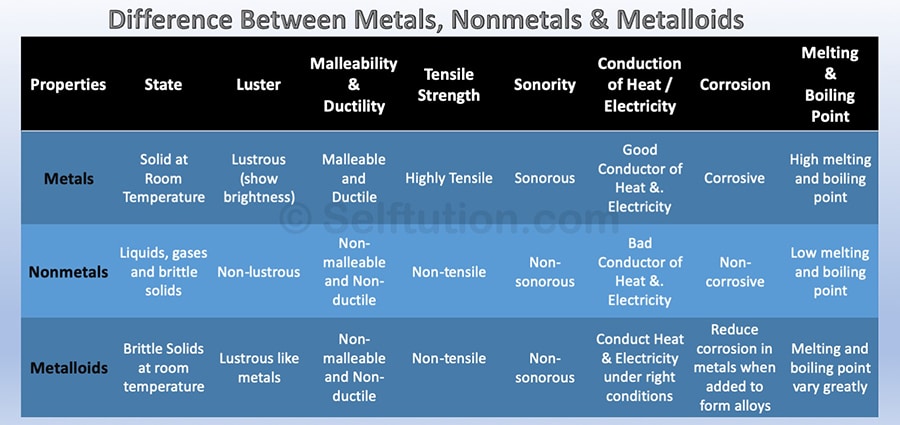
Let's break it down. Metals are generally shiny (think gold, silver, or steel), good conductors of heat and electricity (like copper wiring), and malleable (meaning they can be hammered into shapes) and ductile (meaning they can be drawn into wires). Examples are iron, aluminum, and zinc. Think of building materials, pots and pans, and even the fillings in your teeth!
Must Read
Non-metals, on the other hand, are often dull, poor conductors of heat and electricity, and brittle (meaning they break easily). Think of sulfur, phosphorus, or carbon in the form of graphite (pencil lead). Oxygen and nitrogen, which make up most of the air we breathe, are also non-metals! Variations in non-metals can be quite diverse; some are gases, some are solids, and some can even change forms.
Now for the tricky ones: Metalloids (sometimes called semi-metals). These elements have properties that are somewhere in between metals and non-metals. They can sometimes conduct electricity, but not as well as metals. This makes them incredibly useful in electronics, especially in semiconductors. Silicon, used in computer chips, and germanium are prime examples. Because their conductivity can be controlled, metalloids are essential for modern technology!
Want to get started exploring these materials? Here are a few simple tips: * Look around your house! Identify items made of different metals, non-metals, and (if you're feeling ambitious) metalloids. * Do a simple conductivity test. Use a battery, a light bulb, and some wires to see which materials conduct electricity. (Adult supervision required!) * Research different elements online. There are tons of websites and videos that explain the properties of metals, non-metals, and metalloids in a fun and engaging way. * Visit a museum or science center. Many of these institutions have exhibits that showcase the properties of different materials.
Exploring the properties of metals, non-metals, and metalloids is more than just memorizing facts; it's about understanding the world around you. It's about appreciating the amazing variety of elements and how they shape our lives. So go ahead, dive in, and discover the fun and value of understanding these fundamental building blocks of matter!