
Properties Of Alkali And Alkaline Earth Metals
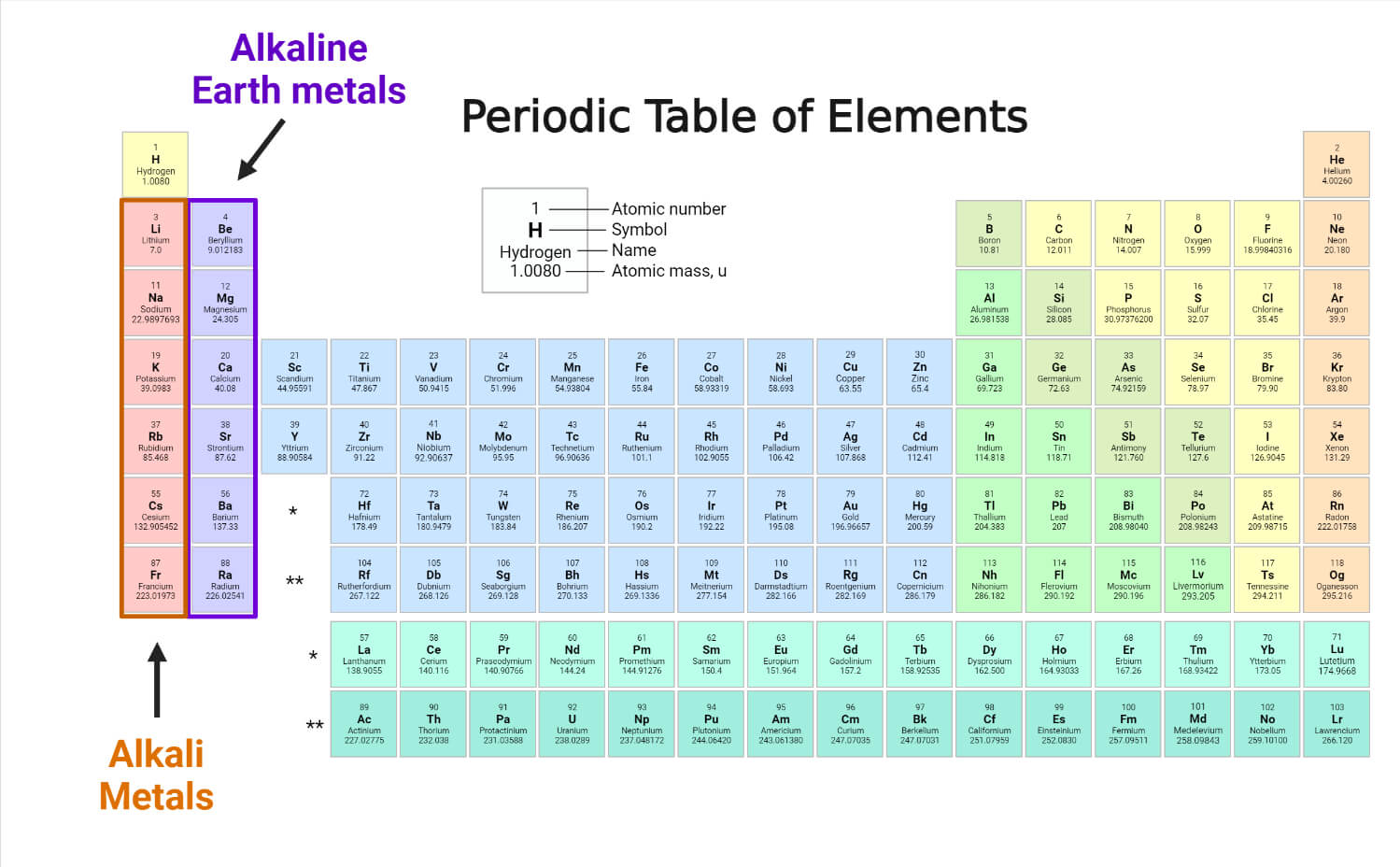
Ever wondered what makes fireworks so colorful or why your milk is fortified with calcium? Well, you're about to dive into the fascinating world of alkali and alkaline earth metals! These elements, found on the left side of the periodic table, are more than just names in a science textbook; they're the unsung heroes of our everyday lives.
The Alkali Metal Crew: Reactive Rockstars
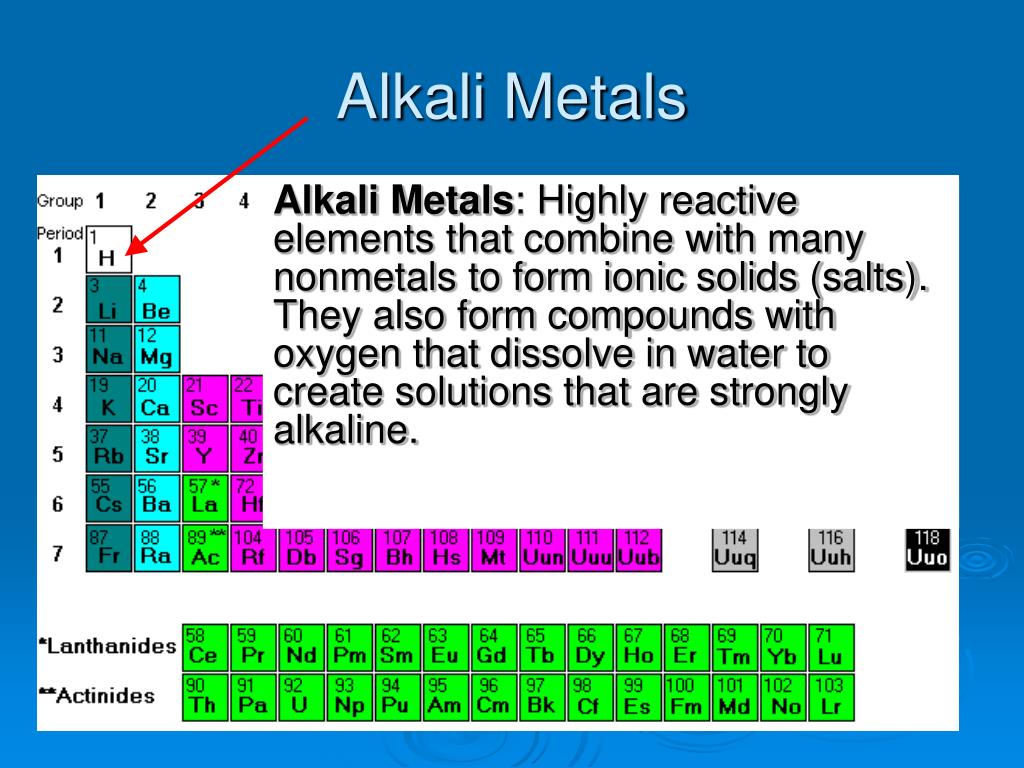
Let's start with the alkali metals. Think of them as the really enthusiastic folks at a party. They’re always eager to mingle, or in chemical terms, they're highly reactive. These guys include lithium, sodium, potassium, rubidium, cesium, and francium. They only need to lose one electron to be happy, making them desperate to bond with other elements.
Imagine sodium (Na), the star of table salt (sodium chloride, or NaCl). It's so reactive that it's never found in its pure form in nature. If you dropped a chunk of pure sodium into water, it would fizz and pop and maybe even burst into flames! Not exactly something you want to try at home. It's a bit like that friend who gets a little too excited at karaoke night.
Must Read
Potassium (K) is another vital alkali metal. You need it for nerve function and muscle control, and you get it from bananas, potatoes, and other tasty foods. Think of potassium as the steady drummer in the band of your body's functions, keeping everything in rhythm.
Lithium (Li) is also important. Its uses in batteries for our phones and laptops. Think about it, without lithium, you wouldn't be able to scroll through social media, so it's pretty vital to modern life!
Alkaline Earth Metals: Strong and Stable
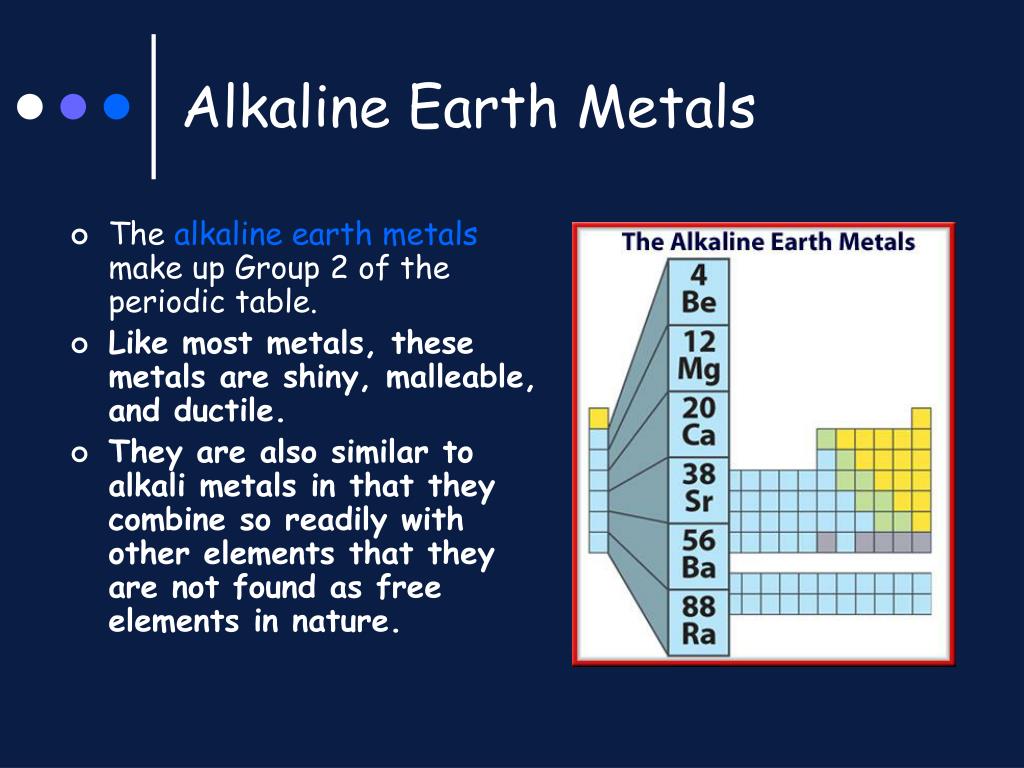
Now, let's meet the alkaline earth metals: beryllium, magnesium, calcium, strontium, barium, and radium. These metals are slightly less reactive than their alkali metal cousins, but they're still quite active. Think of them as the dependable, strong types who are always there for you.
Magnesium (Mg) is an awesome example. Remember those Epsom salts you soak in after a tough workout? That's magnesium sulfate, and it helps soothe sore muscles. Plus, magnesium is crucial for plant life. It’s in the center of the chlorophyll molecule, the green pigment that helps plants make food. Without magnesium, our salads would be pretty sad!
And then there's calcium (Ca), the king of strong bones and teeth. We all know we need calcium for healthy growth, and it's found abundantly in milk, cheese, and leafy green vegetables. Think of calcium as the construction worker building the strong foundation of your body. It's also involved in muscle function and nerve transmission - a real multi-tasker!
Strontium (Sr) might not be as well-known, but it's responsible for the brilliant red color in fireworks. Imagine a 4th of July display without that vibrant red - much less exciting, right? So, next time you see a firework, thank strontium for the spectacle.

Why Should You Care?
Okay, so why should you care about these metals? Because they're essential to life as we know it! They play crucial roles in our bodies, our technology, and the world around us.
- Health: From nerve function to bone strength, alkali and alkaline earth metals are critical for our health.
- Technology: Lithium batteries power our phones, and magnesium alloys make lighter and stronger materials.
- Everyday Life: Table salt, fireworks, milk, and green plants all rely on these elements.
These metals show up in a lot of our everyday lives. They demonstrate how fundamental chemistry is to all we see and do. Knowing a bit about them gives you a peek under the hood of the universe, making the ordinary seem extraordinary. Understanding alkali and alkaline earth metals brings the chemical world to life.
So, the next time you're enjoying a banana, taking your vitamins, or watching fireworks, remember the amazing alkali and alkaline earth metals working behind the scenes. They might not be the flashiest celebrities, but they're definitely the hard-working backbone of a healthy, happy, and colorful world!
