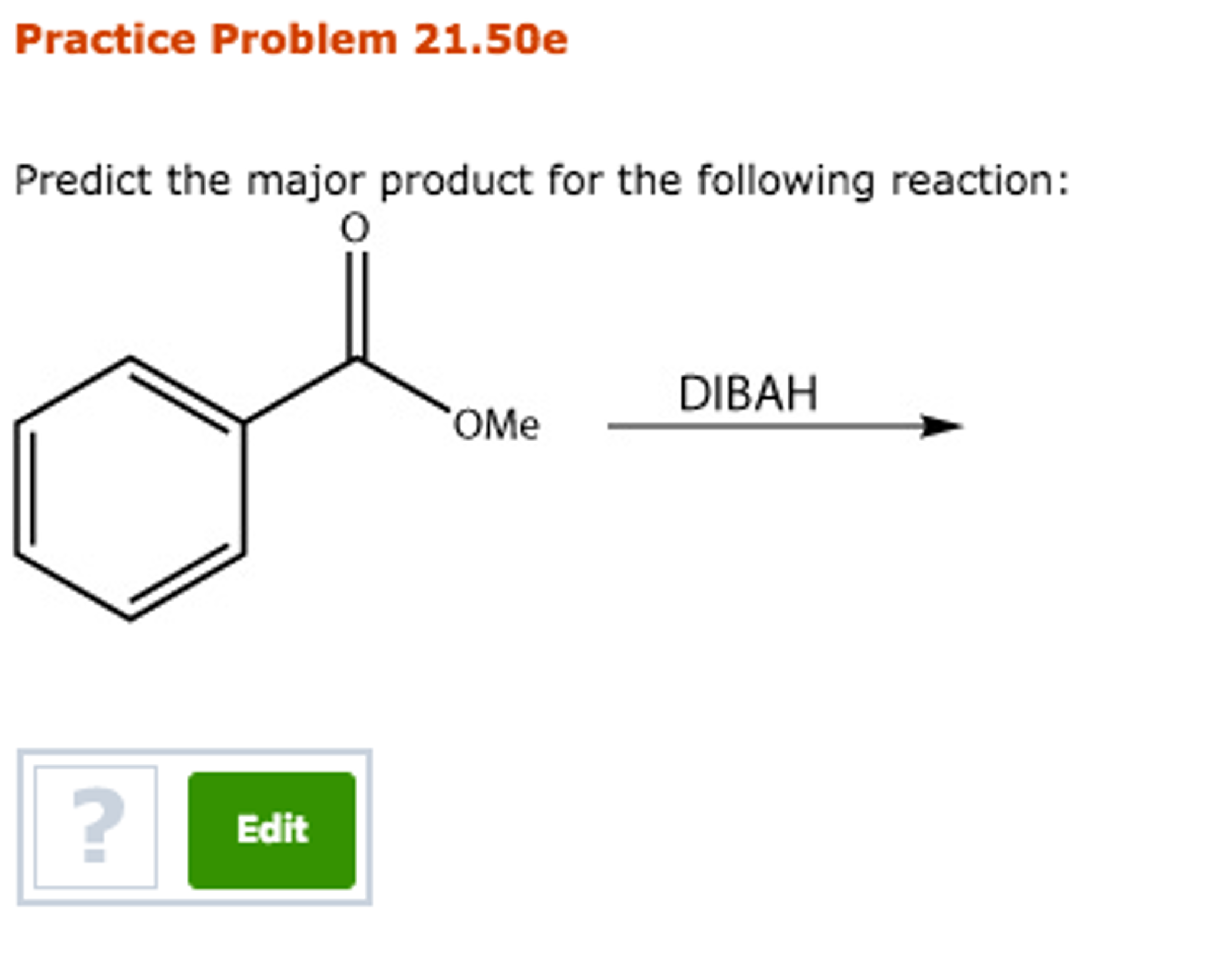
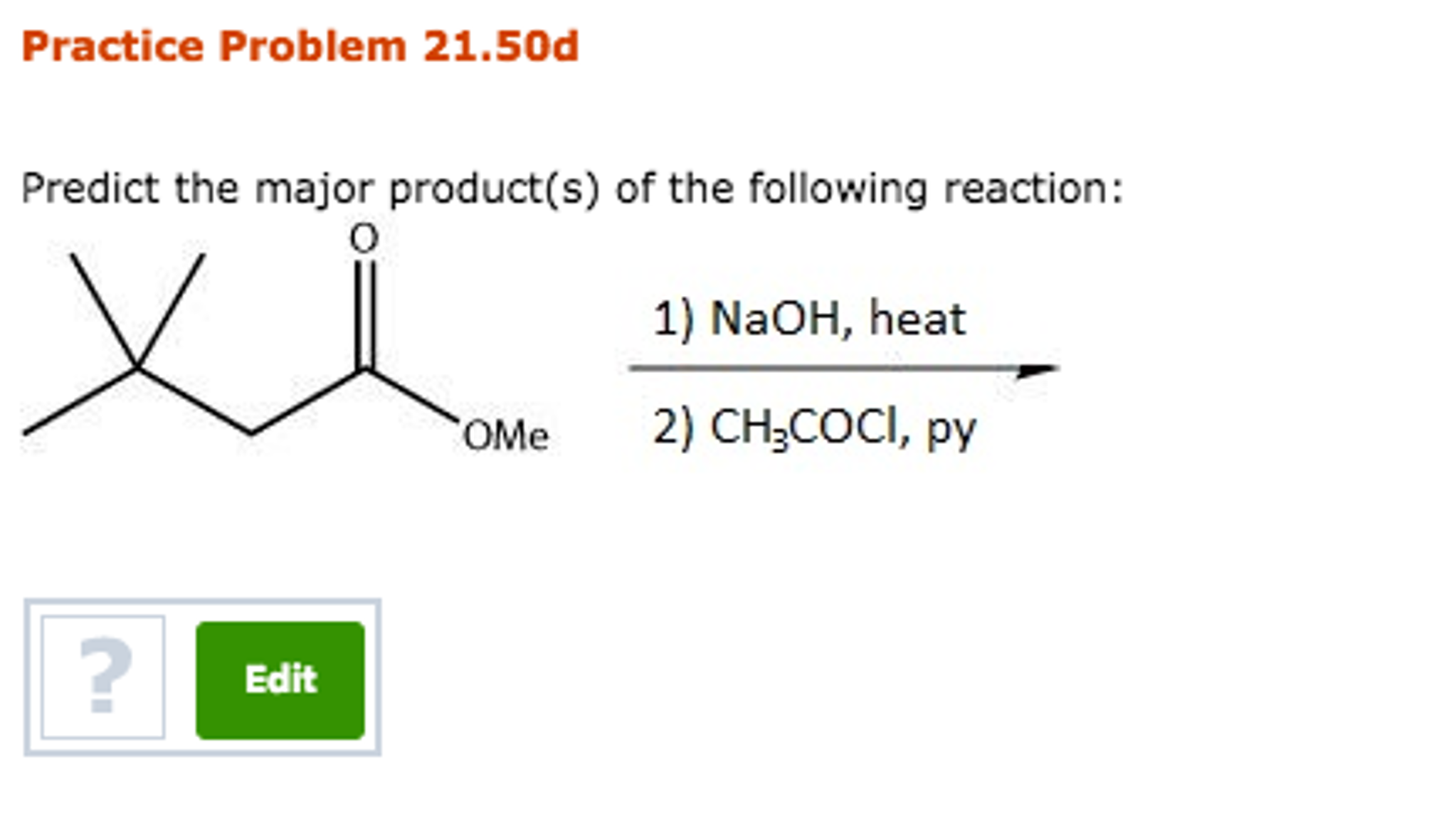
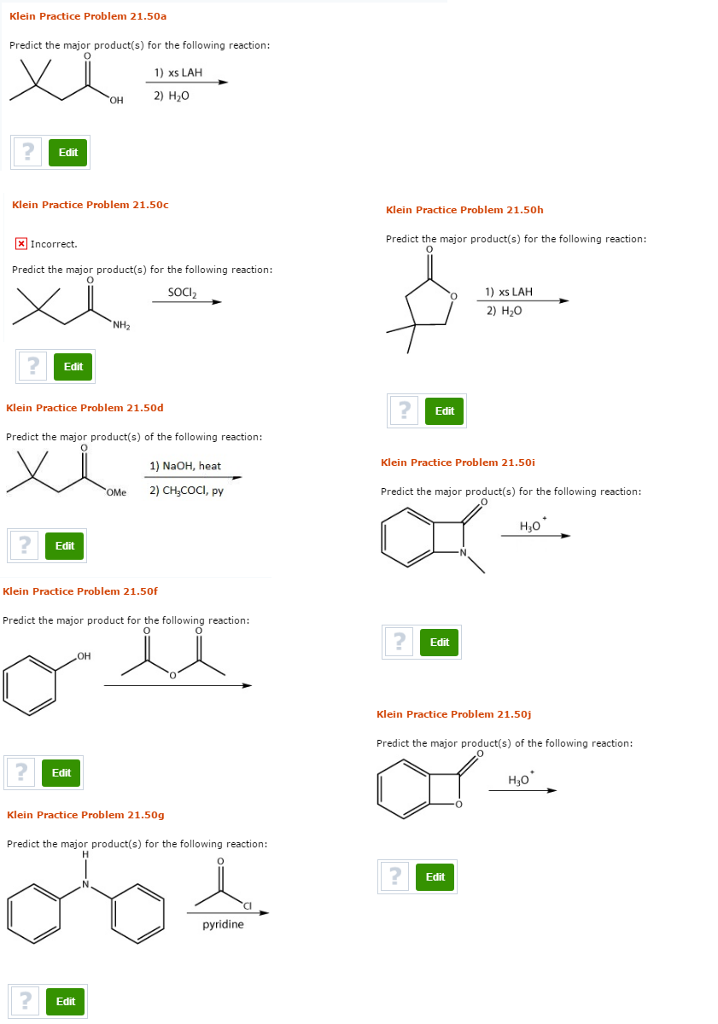
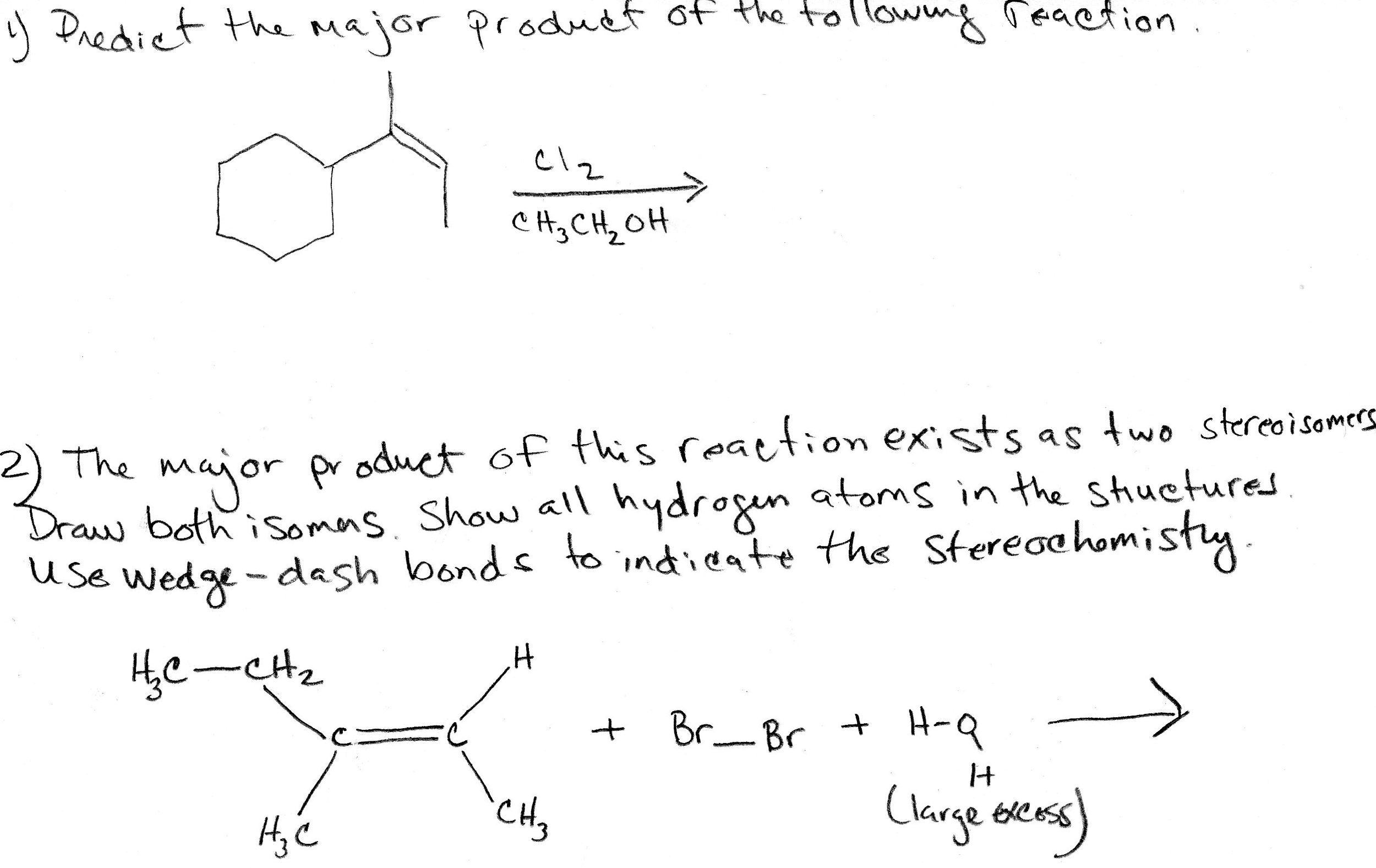
Predict The Major Product For The Following Reaction.
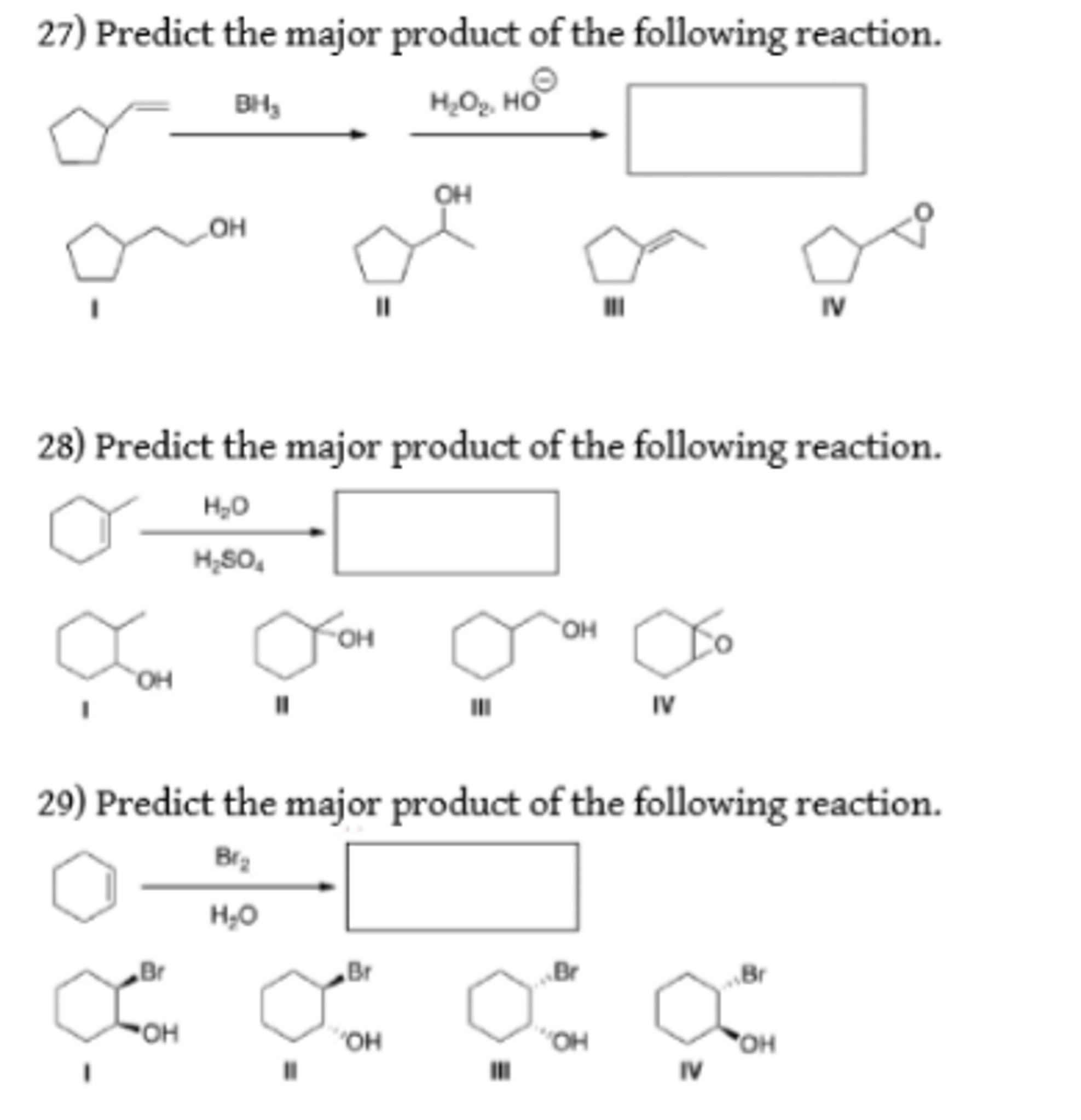
Ever looked at a complex chemical equation and felt a thrill of... artistic inspiration? Okay, maybe not initially. But the seemingly esoteric world of organic chemistry holds a surprising amount of creative satisfaction, especially when you dive into the challenge of predicting the major product of a reaction. It’s like a puzzle, a logic game, and a recipe all rolled into one, and it’s becoming increasingly popular among curious minds eager to understand the building blocks of our world.
Why should artists, hobbyists, and even casual learners care about predicting chemical products? The benefits are multifold! For artists, understanding chemical reactions can unlock a deeper appreciation for the materials they use. Knowing how pigments interact, how paints age, or how different solvents behave empowers artists to make informed choices and potentially even create their own unique mediums. For hobbyists, predicting reaction outcomes adds a layer of intellectual stimulation to activities like soap making, home brewing, or even gardening (understanding soil chemistry is key!). And for the casual learner, it's simply a fantastic way to sharpen your problem-solving skills and gain a better understanding of the world around you. Imagine being able to look at an ingredient list and have a rudimentary understanding of how those chemicals might interact!
Let's look at some simplified examples. Imagine a basic reaction between an alcohol and an acid. The major product might be an ester, which, incidentally, is a type of compound often responsible for pleasant smells in fruits and flowers! Or consider a reaction involving an alkene and hydrogen. The major product would be an alkane, a saturated hydrocarbon found in fuels. Predicting the product requires you to understand the reactivity of the starting materials and the stability of the potential products. There are countless variations depending on the specific functional groups involved and the reaction conditions (temperature, pressure, catalyst). You can explore reactions involving alcohols, halides, alkenes, aromatics, and so much more – the possibilities are virtually endless!
Must Read
So, how can you try this at home (safely, of course – stick to the theoretical!)? There are fantastic online resources and textbooks available. Start with basic functional groups and their common reactions. Use flowcharts to guide you through the possible pathways. Practice, practice, practice! Start with simple reactions and gradually work your way up to more complex ones. Websites like Khan Academy and Chemistry LibreTexts offer excellent introductory materials and practice problems. Remember to focus on understanding the underlying principles rather than just memorizing reactions.
Ultimately, predicting the major product of a chemical reaction is enjoyable because it's an exercise in intellectual curiosity. It's about taking something complex and breaking it down into its component parts. It's about applying logic and reasoning to arrive at a solution. And it's about gaining a deeper appreciation for the beautiful and intricate world of chemistry that surrounds us. The satisfaction of correctly predicting the outcome of a reaction, even on paper, is surprisingly rewarding. So, embrace the challenge, dive into the world of organic chemistry, and prepare to be amazed by the power and elegance of chemical reactions!