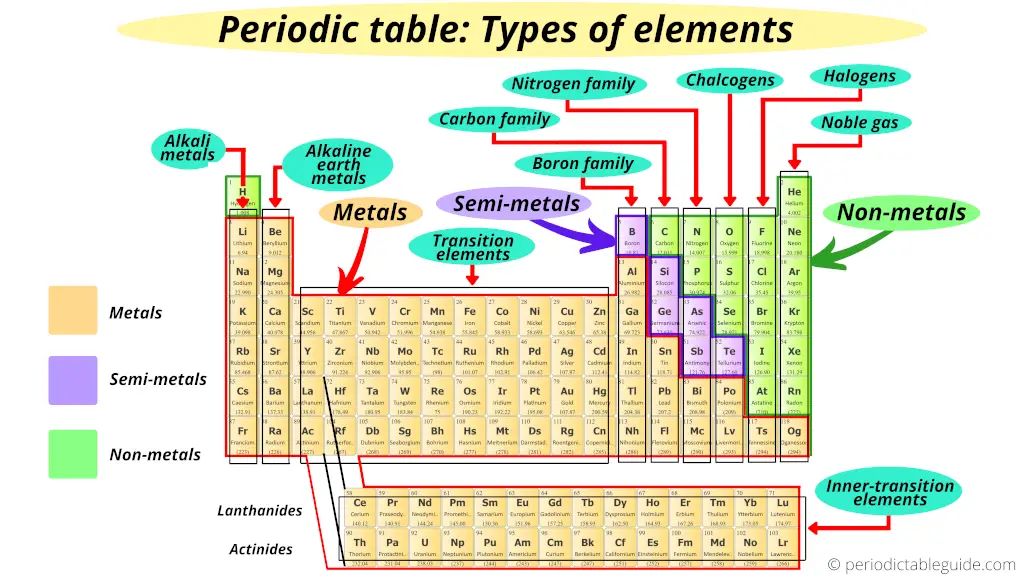
Periodic Table Of Elements With Types Of Metals

Ever stared at that colorful chart in your science classroom, the one that looks like a futuristic city skyline, and thought, "What on Earth is that thing?" Well, my friend, that's the Periodic Table of Elements! It's basically the recipe book for the entire universe, listing all the ingredients – the elements – that make up everything around us, from your phone to the stars.
And guess what? A huge chunk of that recipe book is dedicated to…metals! Shiny, strong, and often surprisingly quirky, metals are the rockstars of the element world. Let's dive into the mosh pit and explore some of these metallic maestros.
The Almighty Alkali Metals: Energetic Explosions (Don't Try This At Home!)
First up, we have the alkali metals. These guys are like the punk rockers of the periodic table. They're located in the first column (except for hydrogen, which is a bit of a weirdo), and they are extremely reactive. Think Liam Gallagher throwing a tambourine into the crowd – but with more fire. Okay, a lot more fire.
Must Read
Sodium (Na), for example, is an alkali metal. Ever seen sodium in its pure form? Probably not, because it's usually hanging out in compounds like table salt (NaCl). But if you were to, say, toss a tiny piece of pure sodium into water (again, don't), you'd get a sizzling, popping reaction. Lithium (Li), another alkali metal, is used in batteries, so it is responsible for powering your phone! These metals are highly reactive because they are desperate to get rid of one electron.
Alkaline Earth Metals: Not as Crazy, Still Pretty Wild
Right next to the alkali metals, we have the alkaline earth metals. These are like the slightly more mature, slightly less explosive siblings of the alkali metals. They're still reactive, but they're not quite as eager to cause a chemical ruckus. Think of them as the cool older brothers who still know how to party, but maybe not quite as hard as their younger siblings.
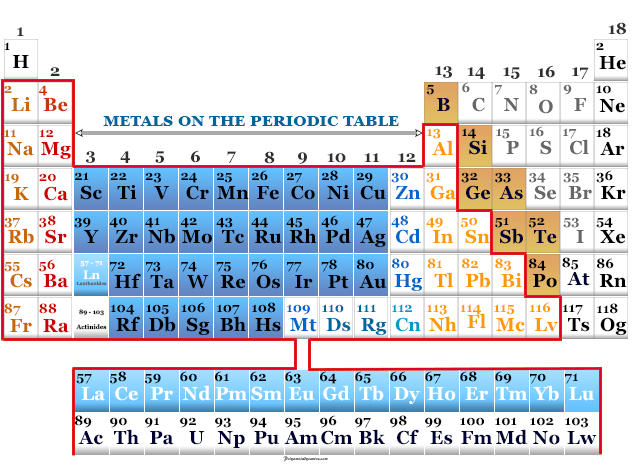
Calcium (Ca) is an alkaline earth metal. You know, the stuff that makes your bones strong? And magnesium (Mg)? It's used in everything from Epsom salts to fireworks. These metals are reactive too, but they are reactive because they want to give away two electrons instead of one.
Transition Metals: The Workhorses of the Metallic World
Now, let's move to the big group in the middle: the transition metals. These are the workhorses of the metallic world, the metals that get the job done. These are the actors that show up and consistently get the job done to the best of their abilities. They're strong, versatile, and often have beautiful colors. Think of them as the reliable, dependable members of the band who can play any instrument and always show up on time.
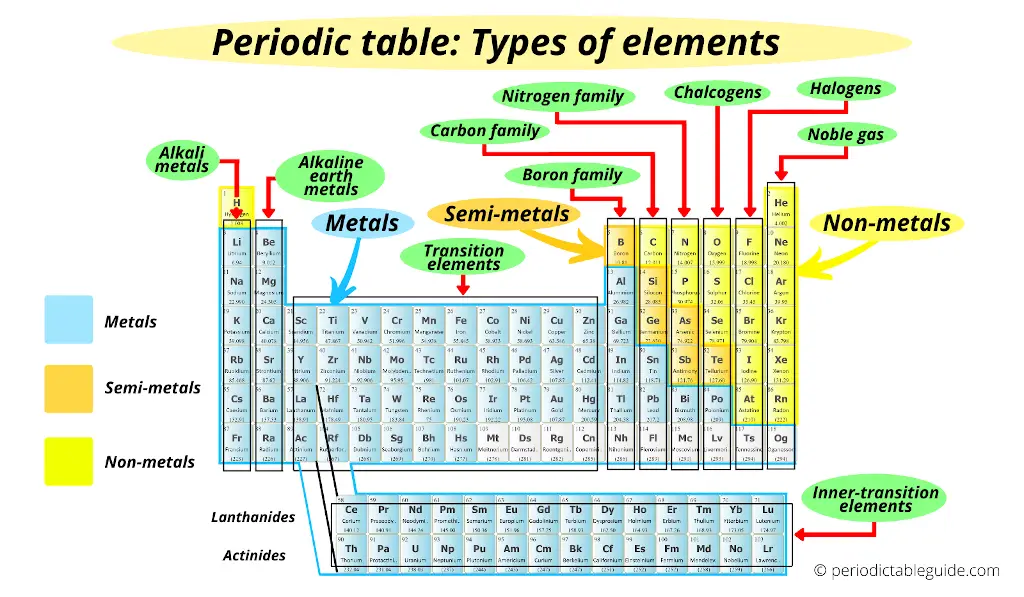
Iron (Fe) is a transition metal. It's the backbone of steel, which is used to build skyscrapers and bridges. Copper (Cu) is another one. It's a great conductor of electricity, so it's used in wires. Gold (Au) and silver (Ag)? Well, they're just plain pretty and valuable! Transition metals do not have a set number of electrons that they need to share, this makes them extremely versatile!
Other Metals: A Hodgepodge of Metallic Marvels
Finally, we have the "other metals." This is kind of a catch-all category for metals that don't quite fit into the other groups. They have a range of properties and uses, and they're often overlooked, but they're still important.
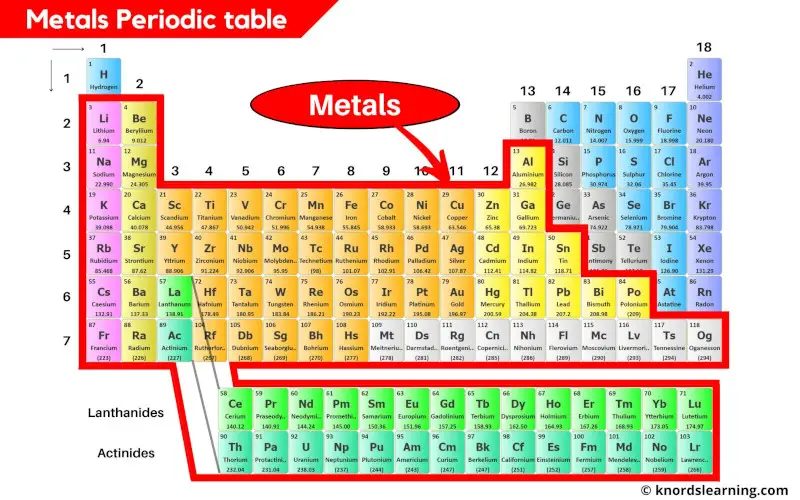
Aluminum (Al) is one of these. It's lightweight and strong, so it's used in everything from airplanes to soda cans. Lead (Pb) used to be used in paint and gasoline, but we've since learned that it's not so good for us. We use tin (Sn) to plate other metals as protection from corrosion!
So, there you have it! A whirlwind tour of the wonderful world of metals. From the explosive alkali metals to the reliable transition metals, these elements are essential to our lives. Next time you see the periodic table, take a moment to appreciate the metallic diversity and the amazing things they can do.
And remember, even though some metals can be reactive and even a little dangerous, they're all part of the grand recipe that makes up our universe. So, let's give a big metallic round of applause to these elemental rockstars!