
Periodic Table Of Elements Rare Earth Metals
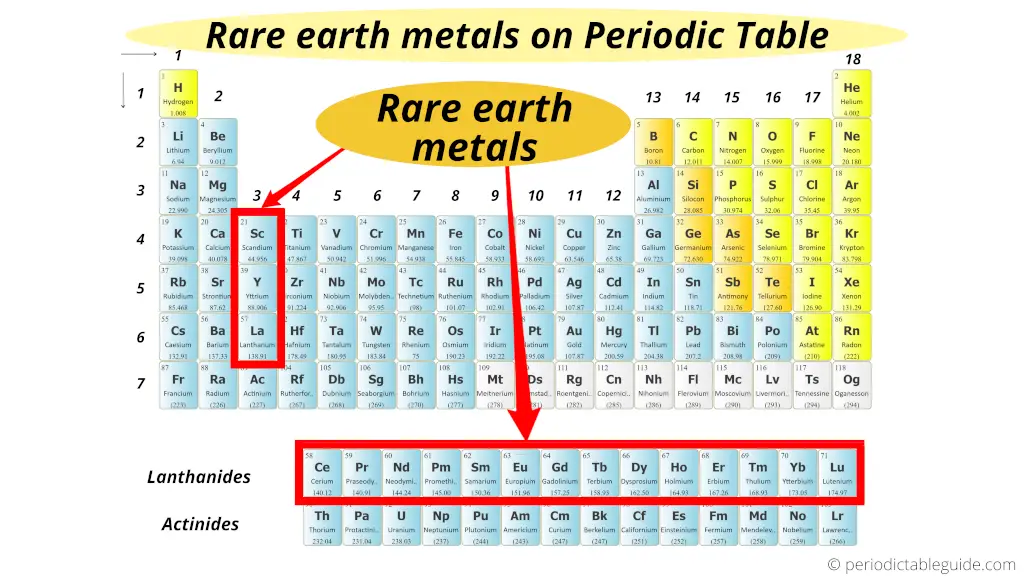
Ever peeked at the Periodic Table and felt a little… lost? It's like a giant, colorful puzzle. But don't worry! We’re diving into one of its most intriguing corners: the Rare Earth Metals.
What's the Big Deal with Rare Earths?
Okay, first things first: "rare earth" is kind of a misleading name. They aren't actually that rare. They’re just a bit scattered around the globe and can be tricky to extract.
Think of them as the shy celebrities of the element world. They're low profile but incredibly important.
Must Read
A Family Reunion in the Periodic Table
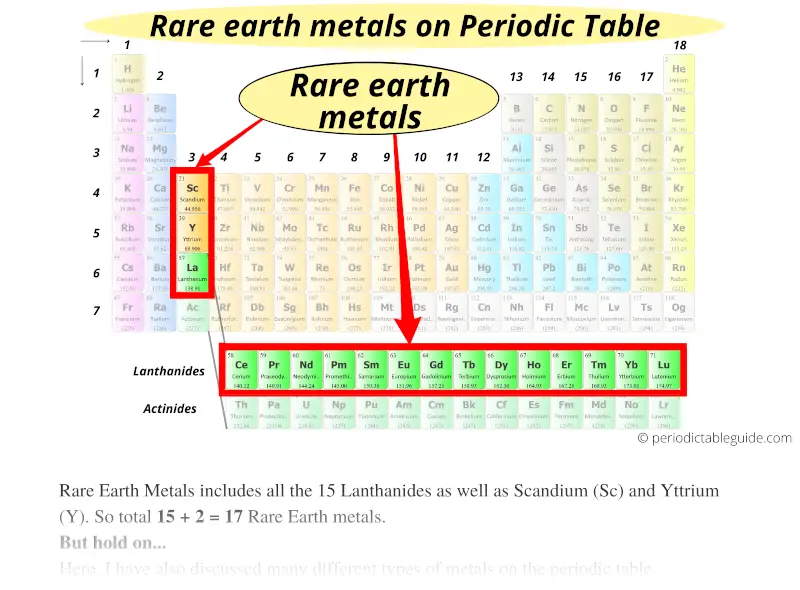
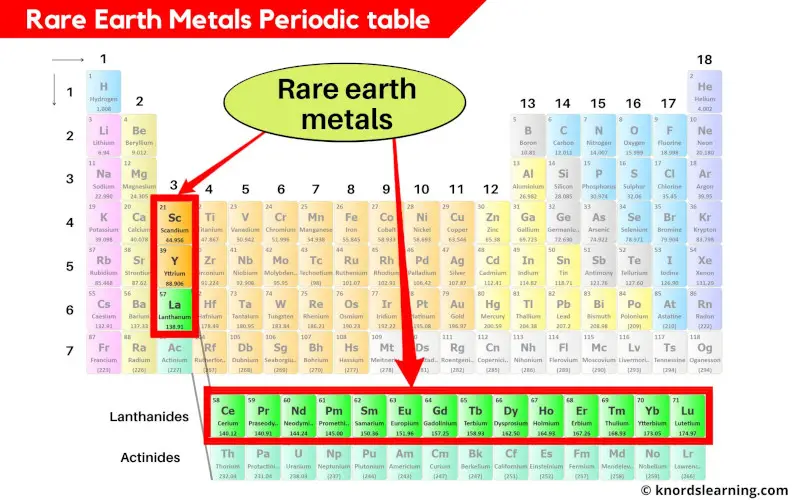
These metals are a family of 17 elements. Fifteen of them are called the Lanthanides. They're snuggled together in their own little section, usually at the bottom of the table.
Then there's Scandium and Yttrium. These two aren't Lanthanides, but they're included with the Rare Earths because they hang out with them and have similar properties.
It's like that friend group where two people aren't related, but they’re always part of the family gatherings.
Why Should You Care? (Spoiler: You Already Do!)
Here’s where things get really interesting. Rare Earth Metals are essential to modern technology. Think smartphones, laptops, and electric cars.
Without them, our world would look very different. It would be a lot less… shiny and connected. Imagine a world without smartphone? Scary, right?
From Your Phone to Space Exploration
Neodymium is used in the strong magnets that make your phone vibrate. Europium is crucial for those vibrant red colors in your TV screen.
And Dysprosium? It helps wind turbines generate electricity efficiently. These metals are everywhere, working behind the scenes.
They even play a role in medical imaging and cancer treatment. Rare Earths are a real superhero in the world of science and technology!
The Superpowers of Rare Earths
So, what makes these elements so special? It’s all about their unique electronic structures. Their atoms have special arrangements of electrons.
This gives them amazing magnetic and optical properties. It's like having a secret weapon at the atomic level!
Magnetic Marvels
Some Rare Earth Metals are incredibly magnetic. Samarium and Neodymium make super strong magnets. These magnets are way stronger than the ones you use to stick reminders to your fridge.
Think about the tiny but powerful magnets in electric car motors. Rare earth magnets are critical for electric vehicle innovation.
Light Fantastic
Others are masters of light. They can absorb and emit light in specific colors. This makes them perfect for lasers and displays.
Erbium is used in fiber optic cables. It helps transmit data quickly over long distances. So you can binge-watch your favorite shows without buffering.
The Not-So-Glamorous Side: Mining and the Environment
There's a catch, of course. Mining and processing Rare Earths can be tough on the environment. It can involve some harsh chemicals and create pollution.
Scientists and engineers are working hard to find cleaner, more sustainable ways to extract them. There's a push for better recycling and responsible mining practices.
The goal is to balance the benefits of these metals with the need to protect our planet.
Rare Earths: A Global Game Changer
Because of their importance in technology, Rare Earths are a hot topic in global politics and economics. Countries that have large deposits of these metals have a strategic advantage.
Securing a reliable supply of Rare Earths is a priority for many nations. They are critical for technological advancement and economic growth.

It's like a high-stakes game of resource management. This makes the search and trade of Rare Earths a topic of high importance.
The Future of Rare Earths
As technology advances, the demand for Rare Earth Metals will likely keep growing. We'll need more of them for everything from renewable energy to advanced electronics.
Scientists are exploring new ways to find and extract these metals. They're also looking for alternatives to reduce our reliance on them. There is a constant push for innovation.
The future of Rare Earths is full of possibilities. Expect new discoveries and technological breakthroughs.
Time to Explore!
So, the next time you glance at the Periodic Table, remember the Rare Earth Metals. They may be tucked away at the bottom, but they play a huge role in our modern world.
They're a fascinating group of elements with amazing properties and a complex story. Hopefully, this has piqued your interest and inspired you to learn more.
Go ahead, dive into the world of Rare Earths! You might just be surprised at what you discover. It's a journey into the building blocks of our world.

Digging Deeper: Resources for the Curious
Want to learn more? There are tons of great resources online. Check out educational websites, science museums, and even YouTube channels.
You can also find articles and documentaries that delve into the science, economics, and environmental aspects of Rare Earths. The possibilities for learning are endless.
Remember, science is all about exploration and discovery. The world of Rare Earth Metals is waiting to be explored!
In Conclusion: Rare Earths are Rock Stars
The Rare Earth Metals might not be household names. But they’re essential players in our technological world. They are often overlooked, but are a huge part of our world.
From the magnets in your headphones to the display on your phone, they are everywhere. They also have unique properties that make them indispensable.
So, next time you’re using your phone or driving an electric car, give a little nod to the unsung heroes of the Periodic Table! They deserve a little appreciation.