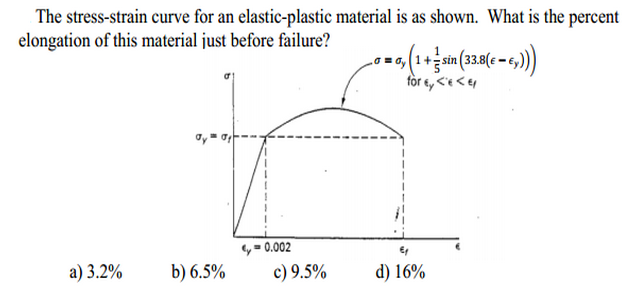
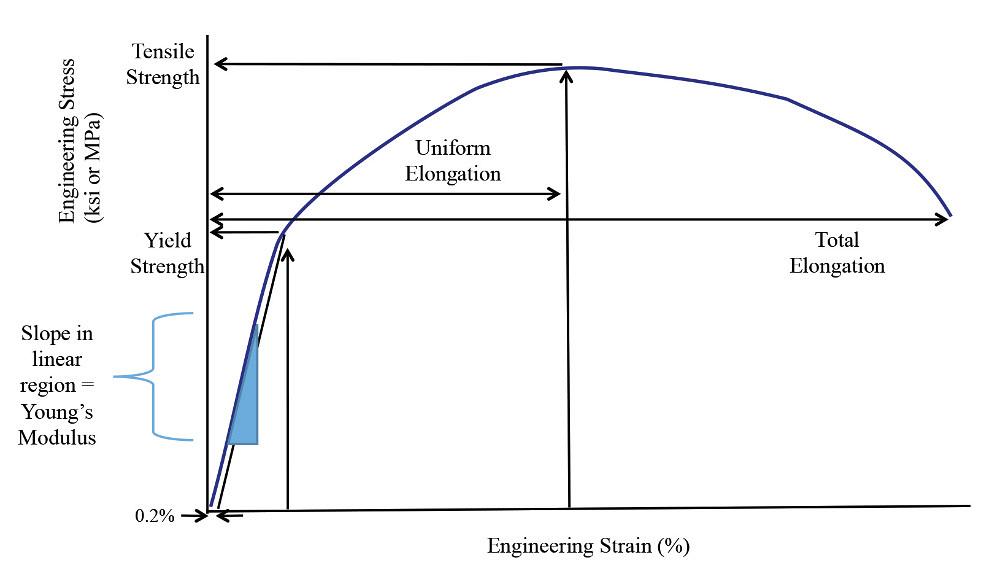
Percent Elongation From Stress Strain Curve
Ever stretched a rubber band to its limit, fascinated by how far it can go before snapping? That, in a nutshell, is what percent elongation, derived from a stress-strain curve, helps us understand! While it might sound like complex engineering jargon, it's actually a concept with surprisingly creative applications, especially for those who love making things.
For artists, hobbyists, and even casual learners, understanding percent elongation offers some powerful benefits. Think about it: are you sculpting with clay? Knowing how much it can deform before cracking can be invaluable. Are you designing jewelry with wire? Percent elongation helps you predict how much you can bend and shape it without breaking it. Do you enjoy crafting with fabrics? Understanding how much a material stretches informs your pattern making and ensures your creations fit and function as intended. Ultimately, it gives you more control over your materials and the final product.
Consider these examples. A sculptor using polymer clay might use elongation data to determine if a delicate arm can support the weight of a large head on a figurine. Jewelers working with silver wire need to know the maximum bend they can achieve when creating intricate filigree designs. Leatherworkers shaping a holster might use elongation data to understand how much they can stretch the leather to create the perfect contours. Imagine a costume designer needing to know how much a particular knit fabric stretches, crucial for creating form-fitting superhero costumes that allow for dynamic movement. Or a 3D printing enthusiast choosing between different filaments; a higher elongation percentage might suggest a more flexible and durable final print. These examples show how understanding material properties like percent elongation, helps improve the project.
Must Read
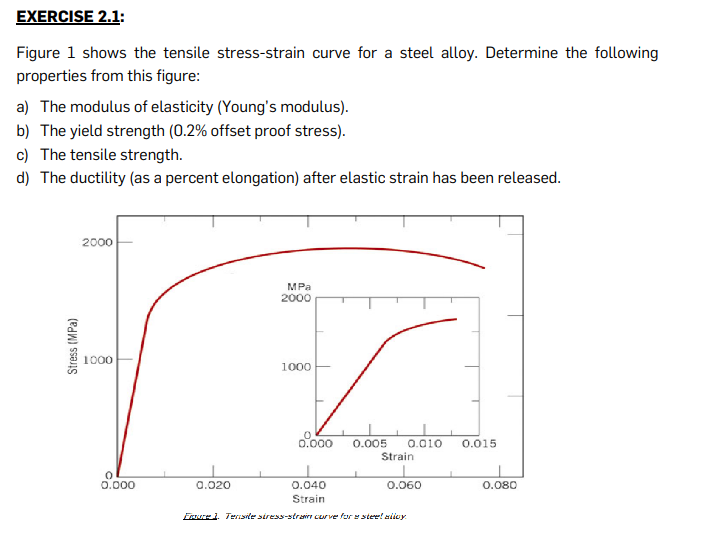
Want to experiment with percent elongation at home? It’s easier than you think! Start with readily available materials like rubber bands, Play-Doh, or even different types of tape. First, measure the original length of your sample. Then, carefully stretch it until it breaks or reaches its maximum deformation. Measure the final length. Calculate the difference between the final and original lengths, divide by the original length, and multiply by 100. This gives you the percent elongation! To create a rough stress-strain curve, consider adding weight to your material gradually, noting the amount of stretch for each weight increment. Remember to document your findings and compare the elongation of different materials. Be careful not to exceed the breaking point of the materials.
The beauty of exploring percent elongation isn’t just in the numbers; it's in the understanding it brings. It's about seeing the invisible properties of the materials around us and gaining a deeper appreciation for their behavior. This newfound understanding allows you to create more durable, aesthetically pleasing, and functional objects. So, grab a rubber band, get measuring, and discover the fascinating world of material science! It's enjoyable because it transforms everyday materials into sources of discovery and empowers you to bring your creative visions to life with greater confidence and skill.

![[University Material Testing - Stress Strain Diagram] Why is the](https://preview.redd.it/uc1cwzbsobi91.jpg?auto=webp&s=813816642516e19c736724d972ef3119a9eb33aa)