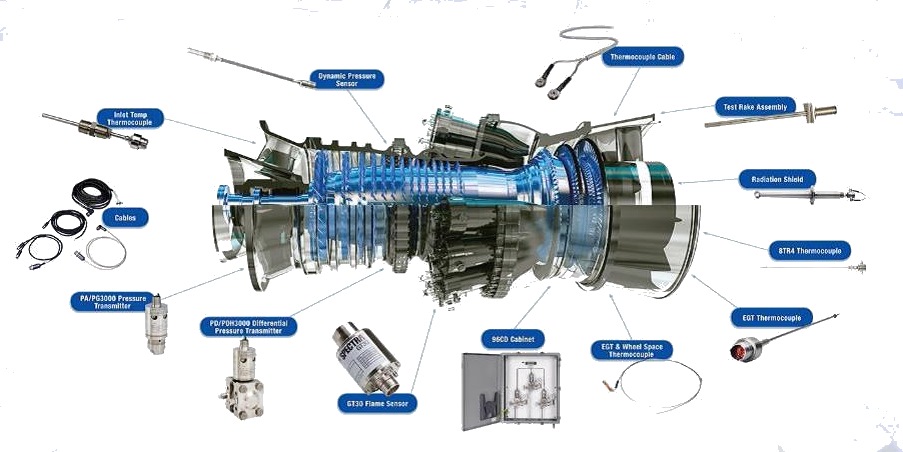
Parts Of A Gas Turbine Engine
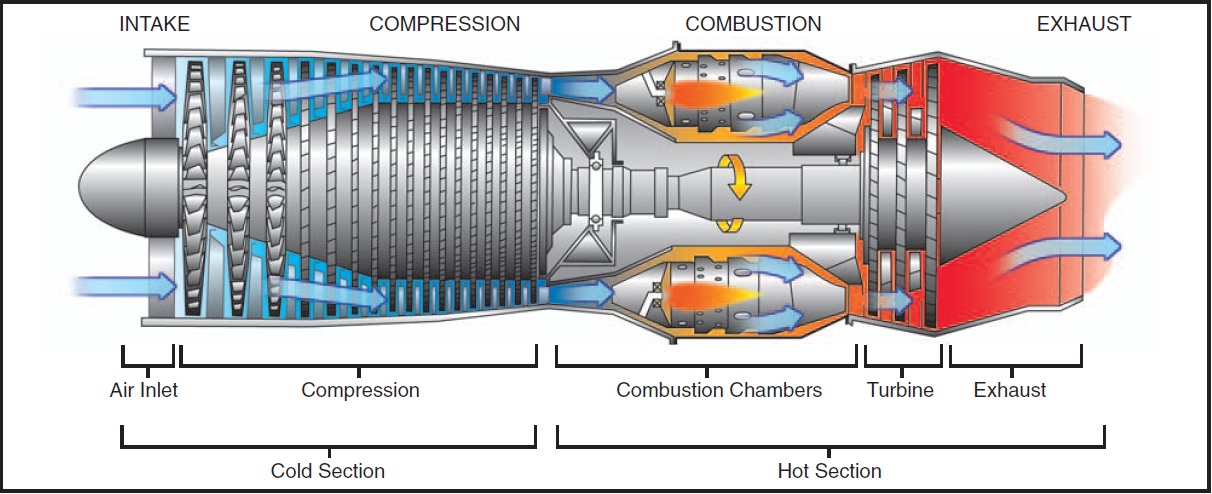
Alright, grab another coffee, because we're about to dive into something truly wild: the inner workings of a gas turbine engine. You know, those things that make airplanes fly and power giant ships? Yeah, those. And no, they're not just big hairdryers, although they do share a certain affinity for moving air really, really fast. Think of it less as a machine and more as a metallic beast with a serious addiction to controlled explosions. And like any self-respecting beast, it has its parts, each playing a crucial, often hilarious, role.
Imagine, if you will, that we're disassembling a dragon. A very, very loud, metal dragon. And it all starts at the front, with its big, hungry mouth.
The Inlet: The Dragon's Gaping Maw
First up, we have the Inlet. This is where all the magic (and frankly, all the air) gets sucked in. Think of it as the engine's gaping, hungry mouth. It's not just a hole, oh no. It's carefully shaped to make sure the air comes in smoothly, without getting all turbulent and huffy. If you’ve ever tried to drink from a firehose, you know how important a smooth flow is. Without a good inlet, the engine would be basically trying to inhale through a clogged straw while running a marathon.
Must Read
It’s all about getting that air nice and orderly before it gets the shock of its life. Like ushering a bunch of rowdy toddlers into a very important meeting – gotta calm them down first.
The Compressor: The Air Squeezer Extraordinaire
Once the air is behaving, it hits the Compressor. This is, hands down, the most visually impressive part if you ask me. Imagine a series of incredibly intricate fans, stacked one after another, each one pushing the air harder and harder. We're talking dozens of shiny blades, whirring around at speeds that would make your blender weep with envy. Its job? To take that nice, calm air and basically beat it into submission.
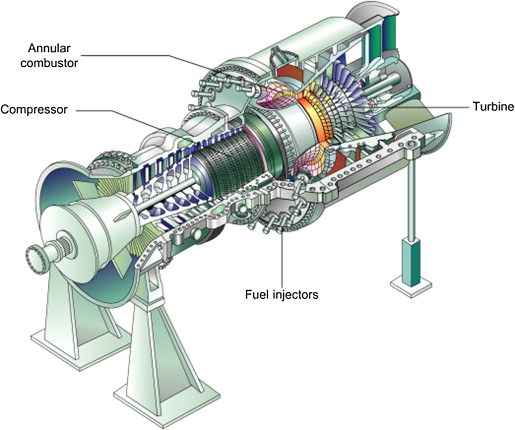
It squeezes the air until it's super dense and, here's the kicker, super hot. We're talking hundreds of degrees Celsius, just from being squished! It’s like putting a thousand pillows in a tiny room – they’re all fighting for space, and that friction generates heat. This isn't just a fan; it's a brute-force air concentrator. By the time the air leaves the compressor, it's ready for some serious action.
The Combustor: Where the Fire Party Begins!
Now, for the main event: the Combustor. This is the engine's fiery heart, where things get really exciting. Here, the super-hot, super-dense air from the compressor meets atomized jet fuel. And what happens when you mix highly compressed, hot air with highly combustible fuel? Well, you get a party. A very, very loud, intensely hot party. We're talking about a controlled explosion, folks, happening continuously. It's like having a tiny, contained sun burning right inside your engine.
![Gas Turbine Components and Principle [Complete Explained] - Engineering](https://engineeringlearn.com/wp-content/uploads/2021/04/Gas-Turbine-1024x539.jpg)
Engineers design these chambers to make sure the flame doesn't, you know, actually melt the engine. They've figured out ingenious ways to keep the metal from becoming molten lava, often by using a clever cooling film of air. It’s truly amazing; you've got temperatures that would incinerate anything, yet the metal casing stays intact. It's like having a barbecue inside a cardboard box, but the box doesn't burn down. Pretty neat trick!
The Turbine: The Spin Doctor
After the combustor, we come to the Turbine. This is where all that incredible heat and pressure from the burning gases get put to work. Imagine another series of blades, similar to the compressor, but these are designed to be pushed by the super-hot, expanding gases. These blades spin with immense force, like a gigantic, screaming pinwheel. And here’s the clever bit: the turbine is connected to the compressor by a central shaft.
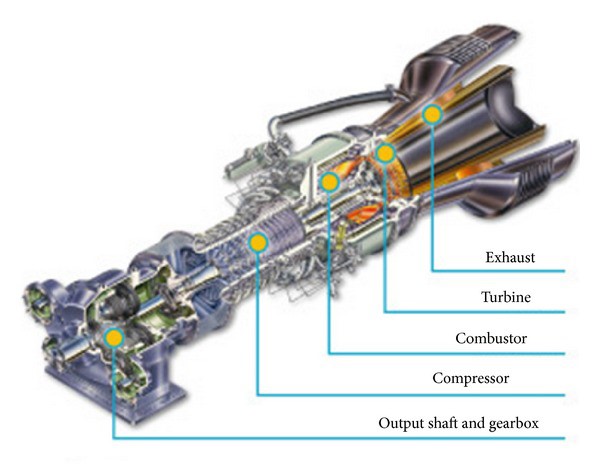
So, the hot gases push the turbine, which spins the shaft, which in turn drives the compressor at the front. It’s a beautiful, self-sustaining loop! Most of the energy generated here goes straight back to power the compressor, making the whole cycle continue. Any leftover energy? That's what pushes the plane forward. These turbine blades are absolute marvels of engineering, often hollow and cooled internally, because they're operating in conditions that would make Hades blush.
The Exhaust Nozzle: The Business End
Finally, we have the Exhaust Nozzle. This is the engine's "business end," where the now slightly-less-hot-but-still-blazing-fast gases are directed out the back. It's not just a fancy tailpipe; its shape is critical for optimizing thrust. By accelerating these gases out the back at incredible speeds, the engine generates the forward push we know as thrust. It’s Newton's third law in spectacular, noisy action: for every action, there is an equal and opposite reaction.
Think of it as the ultimate rocket exhaust, just without the initial fiery launch. It’s the final flourish, the last hurrah of those now slightly exhausted hot gases, pushing the whole contraption through the sky. So, there you have it – from hungry gulp to fiery whoosh, the humble-yet-heroic parts of a gas turbine. Pretty wild stuff, right? Now, who's up for another coffee?