
Negative Environmental Impacts Of Wind Turbines
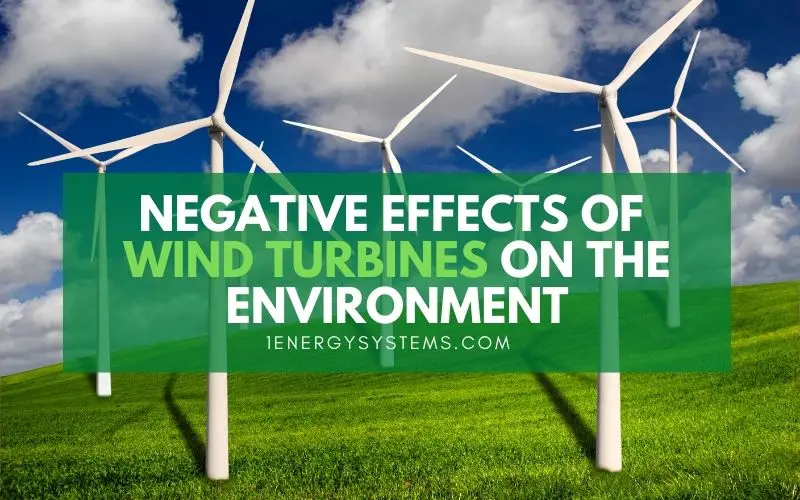
Okay, let's talk wind turbines. Those big, elegant windmills that are supposed to be saving the planet... kinda like that kale smoothie you swore would make you a supermodel but mostly just makes you slightly gassy. They seem perfect, right? Clean energy, whirring away, doing their bit. But, like discovering your favorite jeans shrunk in the dryer, there's a downside.
The Not-So-Silent Symphony (of Noise)
Ever lived near an airport? Or maybe had a neighbor who thought 3 AM was the perfect time to practice the tuba? That low, whooshing, rhythmic sound can get under your skin. Wind turbines, bless their spinning hearts, can be noisy. It's not a deafening roar, more of a constant, low-frequency hum. Imagine listening to a slightly out-of-tune fridge all day, every day. Not exactly the soundtrack to your zen meditation, is it?
And it’s not just the audible noise. There's this whole thing called "infrasound," sounds too low for us to consciously hear. Some folks are more sensitive to it than others, and it can reportedly cause headaches, dizziness, and general grumpiness. Think of it like that subtle feeling of dread you get when your phone battery is at 1%. You can't see it, but you feel it.
Must Read
Birds, Bats, and Blades (Oh My!)
This is the one everyone talks about. You see a majestic bird soaring through the sky, and then… whack. Not a pretty picture. Bird and bat collisions with turbine blades are a real problem. It's like trying to cross a busy highway blindfolded. Some species are more vulnerable than others, and the impact can be significant on local populations.
Think of it this way: you're trying to enjoy a nice picnic, and suddenly, a rogue Frisbee comes out of nowhere. Except, the Frisbee is the size of a small car and spins at a horrifying speed.

Scientists are working on ways to mitigate this, like using different turbine designs, painting blades certain colors, or even shutting down turbines during peak migration periods. It’s an ongoing battle, a constant balancing act between clean energy and protecting our feathered (and furry) friends.
The Landscape Gets a Makeover (Whether It Wants One or Not)
Let's face it, wind turbines are HUGE. They dominate the landscape. Imagine replacing your quaint little cottage with a gleaming, ultra-modern skyscraper. That's kind of what happens when a wind farm pops up. Some people find them beautiful, symbols of progress and sustainability. Others… not so much.

Visual pollution is a real thing. It can impact property values and even affect tourism in scenic areas. It's like putting a giant neon sign in front of the Mona Lisa. It's distracting and kind of clashes with the natural beauty of the surroundings.
Resource Depletion and Disposal (The Afterlife of a Turbine)
Building these things requires a lot of resources: steel, concrete, rare earth minerals for the generators... it all adds up. It's like baking a giant cake; you need a ton of ingredients. And what happens when the cake is gone? You have to wash all those dishes!

Speaking of the aftermath, what happens when a wind turbine reaches the end of its lifespan? Disposing of those massive blades is a huge challenge. They're made of composite materials that are difficult to recycle. Many end up in landfills. It’s a bit ironic, isn’t it? A green technology creating a not-so-green waste problem.
In Conclusion (with a Sigh and a Smile)
Look, wind energy is a valuable part of our clean energy future. But let's not pretend it's perfect. Every energy source has its drawbacks. The key is to be aware of these negative impacts and to work towards minimizing them. It's about finding that sweet spot where we can generate clean energy without completely sacrificing the environment or driving our neighbors crazy with infrasound. We need to keep innovating, keep improving, and keep striving for a truly sustainable future. And maybe, just maybe, find a way to make those blades a little quieter. Please.
