
Natural Gas Where Is It Found
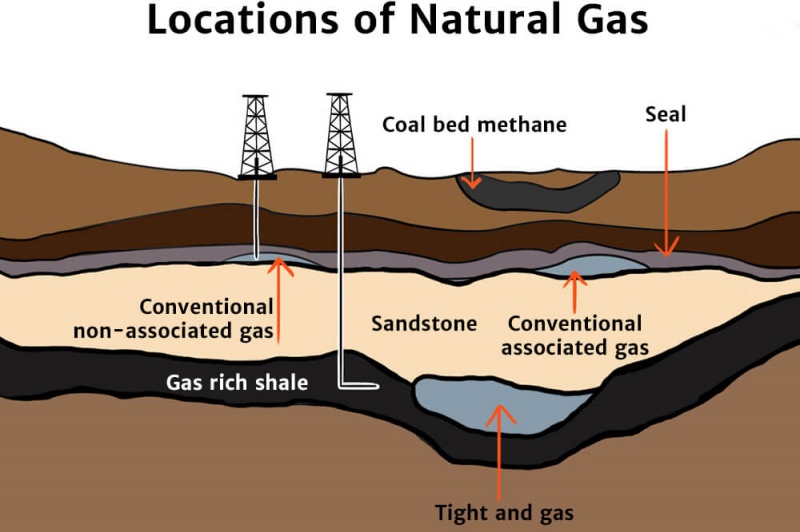
Natural Gas: Where's the Secret Stash?
Alright, gather 'round, folks! Let's talk about natural gas. It warms our homes, cooks our dinners, powers our electricity. We hear it's "found", but honestly? I've got a slightly unpopular, very playful opinion. I don't think natural gas is found at all. I think it's hidden. And it’s really, really good at it!
Imagine playing hide-and-seek with the best hider ever. That's natural gas. It doesn't just sit in a big, open underground cave, waiting to be tripped over. Oh no, that would be far too easy! Instead, it’s tucked away, deep below our feet, in places you'd never guess.
Not Just a Hole in the Ground
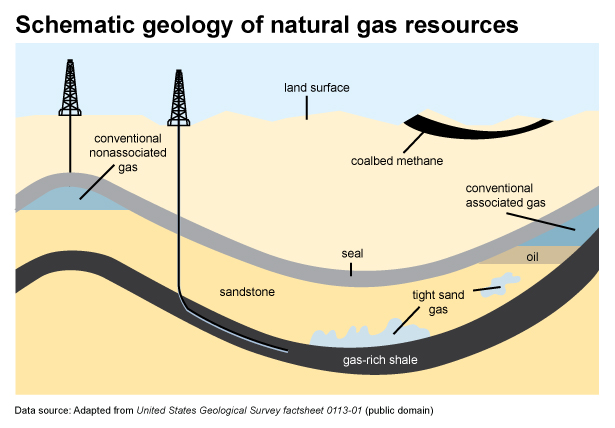
When you hear "found underground," you might picture someone digging a big hole and scooping out gas. Nope! It's much more sneaky than that. Think of it like a gigantic, natural sponge. Not the kind you use for dishes, but rock that's full of tiny, tiny holes. We call these rocks porous. Rocks like sandstone or limestone are often the perfect hideouts.
Must Read
It's not a lake of gas; it's more like gas soaking a colossal underground biscuit!
So, the gas isn't in a cavern. It's actually trapped within these microscopic pores in the rock, kind of like water in a wet sponge. Billions and billions of tiny gas bubbles, all snuggled together in the rock.

The Great Escape Artist's Lid
Now, if gas is in a porous rock, why doesn't it just float up? Ah, because our clever hider has a lid! Above the porous rock is usually a layer of non-porous rock. Think of it as a giant, impermeable blanket or a sealed jar lid. This is called the "cap rock". It's often dense shale or salt. This cap rock keeps the gas from escaping. It’s the ultimate secret keeper!
So, we have gas-filled sponge-rock, with a gas-proof lid on top. But wait, there's more to the hiding game!
The Best Hiding Spots: Nature's Traps
Even with the sponge and the lid, natural gas needs a special kind of underground structure to really stay put. These are called traps. They're like natural geological prisons for gas, built over millions of years.
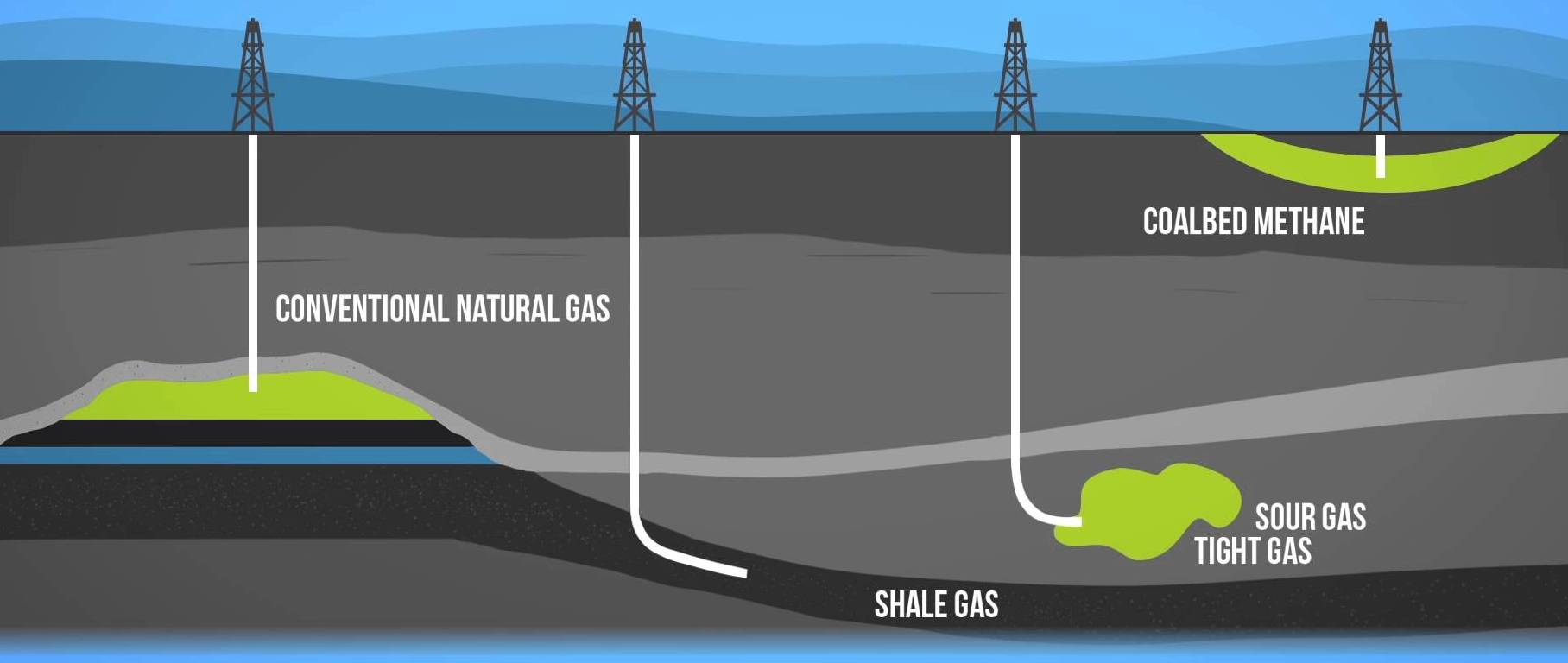
1. The Upside-Down Bowl (Anticline Trap)
This is the classic hideout. Imagine rock layers bending upwards into an arch, like an upside-down bowl. The gas, being lighter than water (which is often also in these rocks), floats to the highest point under the cap rock. It gets stuck at the very top of that arch. It’s like finding all the air bubbles trapped under an upturned glass in water.
2. The Earth's Shifting Puzzle (Fault Trap)
Sometimes, the Earth's crust moves, and rock layers break and shift. This creates a fault. If a non-porous rock layer slides next to a porous, gas-filled one, it can create a barrier. Presto! Another hiding spot. It's like a geological traffic jam, trapping the gas.

3. The Disappearing Act (Stratigraphic Trap)
These are a bit trickier. Here, the porous rock layer just kind of… ends. It might pinch out, or change into a non-porous rock type. So, the gas is moving along, hits a dead end in its permeable rock pathway, and suddenly it's trapped. No more road for you, gas! It's a geological cul-de-sac.
How Deep is This Hiding Game?
We’re not talking about a few feet down, like digging for treasure in your backyard. Oh no. Natural gas hides miles below the surface. We're talking about depths of 1,000 feet to over 20,000 feet! That’s deeper than the highest mountains are tall. The pressure down there is enormous, and it’s often incredibly hot. It’s a very exclusive, very secure hiding spot.
The Ancient Secret of its Birth
So, where did all this gas come from? It's a secret going back millions of years. It started as tiny sea plants and animals that died and sank to ancient ocean bottoms. Over eons, sediment piled on top, burying them deeper. Intense heat and pressure slowly cooked those organic remains, transforming them into oil and then, you guessed it, natural gas.
It's basically the Earth's super slow-cooker turning ancient critters into fuel!
So, when we say natural gas is found, what we really mean is that clever scientists and engineers use amazing technology. They locate these incredibly deep, perfectly sealed, naturally occurring hiding spots. They use seismic waves – like a giant underground ultrasound – to "see" rock layers thousands of feet below. It's less like finding a lost sock and more like being a detective cracking a geological cold case.
So next time you turn on your stove, remember that the gas isn't just "found." It's been on an epic, millions-of-years-long hide-and-seek adventure, tucked away by nature itself. And we, the humans, are just really, really good at finding its secret stash. But let's give credit where credit is due: natural gas is a master of disguise!