
Names Of The Scale Degrees

Okay, so picture this. You’re at a super sophisticated café, right? Latte in hand, vaguely judging everyone’s life choices (as one does). Suddenly, you hear a snippet of conversation about…scale degrees. Your eyes glaze over. Scales? Ugh, music theory! But wait! I'm here to tell you that scale degrees are actually kind of hilarious, once you get to know them. Forget the snooty vibes; this is gonna be fun.
So, what are scale degrees? Well, basically, they're just the names we give to each note in a musical scale. Think of it like naming your pets. Instead of “Fluffy” and “Spot,” you get “Tonic” and “Dominant.” Okay, maybe not that exciting, but stick with me.
The Main Players: The Big Three
First, we have the rockstars of the scale, the Tonic, the Dominant, and the Subdominant. These are the power players of harmony. They’re like the holy trinity of chords. If you only remember three, remember these.
Must Read
The Tonic is degree number one. It’s the home base, the starting point, the note that everything else revolves around. It’s like the main character in a movie. You always end up back at the Tonic, like a boomerang made of sound. Try ending a song on a random note...doesn’t feel right, does it? That's because the Tonic wants you home.
Next up, the Dominant, scale degree number five. This guy is all about tension and drama! The Dominant begs to resolve back to the Tonic. It's like that friend who always causes trouble but you secretly love anyway. Think of it as the cliffhanger at the end of a TV episode. It leaves you wanting more… specifically, wanting the Tonic.

And then there’s the Subdominant, degree number four. Less dramatic than the Dominant, but still important. Think of it as the supportive friend who’s always there to lend an ear (or a note, in this case). It often acts as a bridge between the Tonic and the Dominant, creating a smooth musical journey. It's the responsible adult in the room, quietly keeping things in order.
The Supporting Cast: The Rest of the Crew
Alright, now for the other scale degrees, the supporting cast. Don’t underestimate them! They add flavor and personality to the scale.
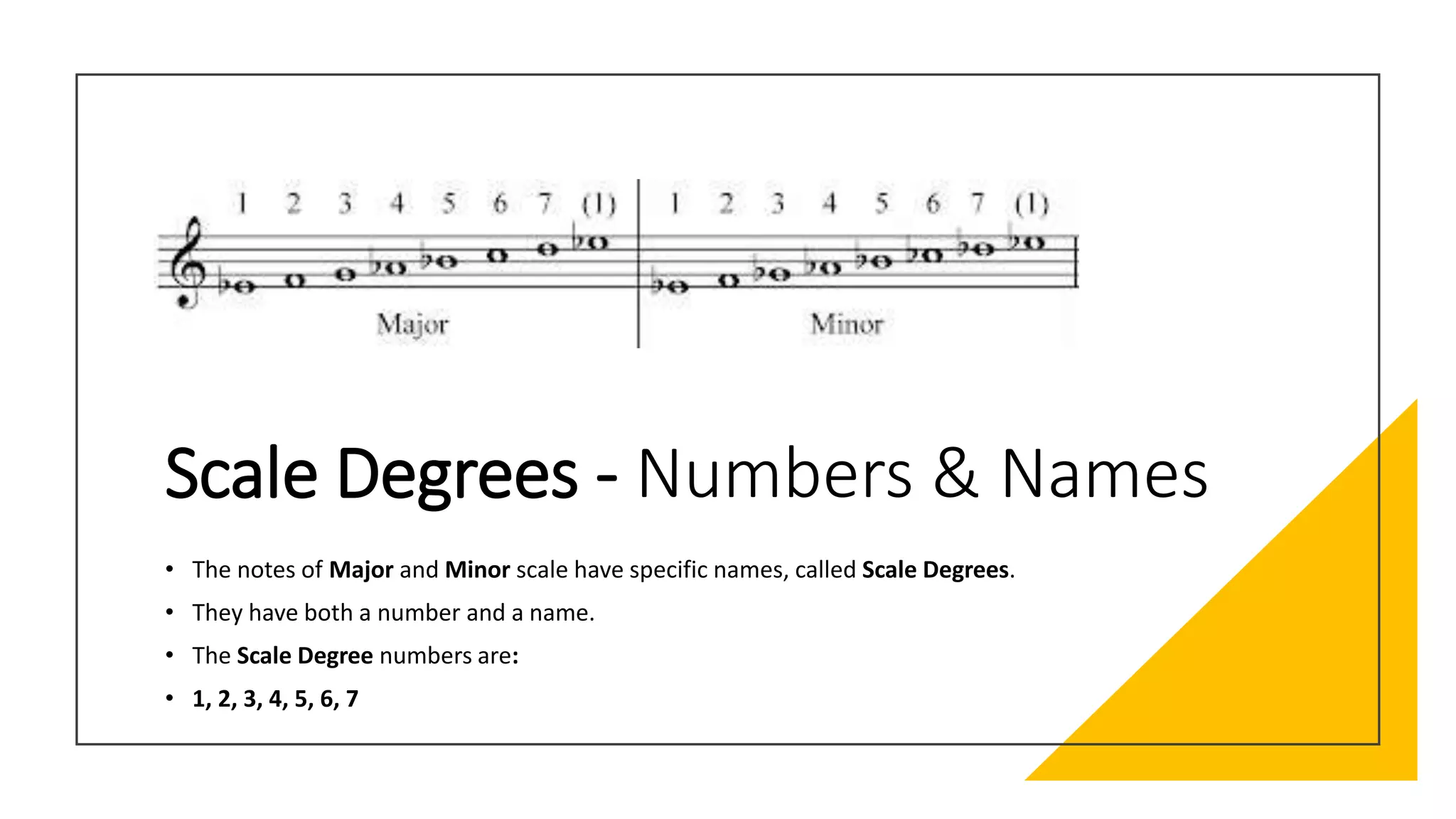
The Supertonic, degree number two, is a bit of a wannabe Dominant. It often leads to the Dominant, so it's like the understudy waiting in the wings, hoping for its big break. It’s got potential, just needs a little more confidence.
Then we have the Mediant, degree number three. This one’s a bit of a chameleon. Its function changes depending on the context. Sometimes it bridges the Tonic and Dominant, other times it adds a unique color to the harmony. It’s the versatile actor who can play any role.
And now, the Submediant, degree number six. It’s located halfway between the Tonic and the Subdominant (hence, Submediant). Often provides a melancholic or reflective feel. Think of it as the introspective artist, lost in thought.

Finally, the Leading Tone, degree number seven (only in major scales, mind you!). This one really wants to be the Tonic. It's just a half-step away, practically vibrating with anticipation. In major scales, it leads directly back to the Tonic (hence the name!). It’s the overeager puppy, tail wagging furiously, desperate for attention.
A fun fact: In minor scales, we often raise the 7th degree (making it the Leading Tone) to create a stronger pull towards the Tonic. Without it, you just get the Subtonic, which is a whole step away from the Tonic, and doesn't have the same dramatic oomph. Think of it as adding a turbocharger to your musical engine!

Why Bother Learning These Names?
Okay, so you might be thinking, “Why do I need to know all this fancy terminology?” Well, for one thing, it makes you sound super smart at parties (especially if those parties involve music theorists… proceed with caution). But more importantly, understanding scale degrees helps you understand how music works. It gives you a framework for analyzing harmonies, composing melodies, and even improvising. It's like having a secret decoder ring for music!
So, the next time you hear someone talking about the Dominant or the Subdominant, don’t run for the hills. Instead, smile knowingly, take a sip of your latte, and think, “Ah yes, the fifth degree. The purveyor of tension and resolution.” You’ll be the coolest cat in the café, guaranteed.
And remember, music theory isn't about being stuffy and academic. It's about unlocking the secrets of sound and having fun while you do it. Now go forth and conquer those scales!