My Ac Is Not Cooling In My House

Alright, picture this: You walk into your house, expecting that sweet, sweet chill. Instead? A blast of warm air. Or worse, no air at all! Your heart sinks faster than a lead balloon in a kiddie pool. Your AC, your mighty fortress against the summer swelter, has decided to take an unscheduled vacation. It's a tale as old as time, or at least as old as air conditioning itself (which, by the way, was invented in 1902, originally to control humidity in a printing plant – who knew?!). But fear not, fellow heat-sufferer! This isn't just a breakdown; it's an opportunity for a little detective work, a sprinkle of DIY magic, and maybe, just maybe, a laugh or two.
The Great Thermostat Mystery
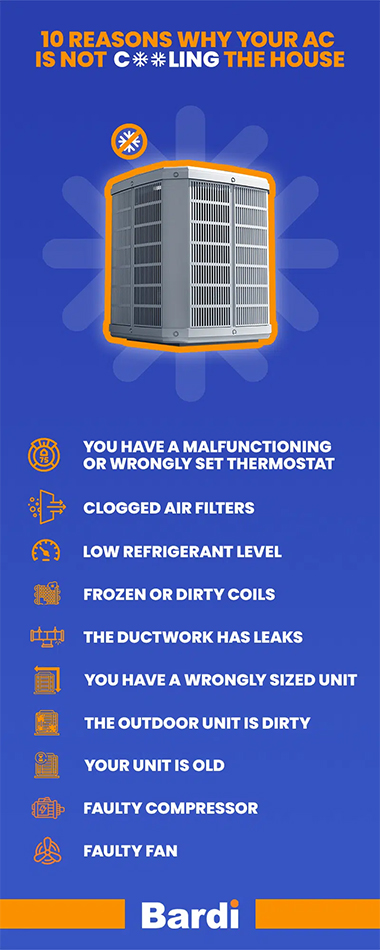
Let's start with the absolute basics, the forehead-slapping moment we've all had. Is your thermostat actually on? And set to cool? And is the temperature setting lower than the current room temp? Sometimes, it's just a rogue finger, a curious pet, or even a ghost messing with your settings. Don't forget the batteries! A dead thermostat is like a conductor without an orchestra; nothing's happening. It sounds silly, but trust me, checking this first can save you a whole lot of head-scratching and imaginary repair bills.
The Clogged Filter Fiasco
Ah, the air filter. The unsung hero, the silent sentinel... until it gets absolutely packed with dust bunnies, pet hair, and God-knows-what-else. Think of it like trying to breathe through a very fluffy, very dirty blanket. Your AC can't pull enough air through, so it struggles, whines, and eventually gives up on cooling efficiently. This isn't just gross; it's a major energy hog! Changing your filter every 1-3 months is like giving your AC a spa day. It makes a huge difference, and honestly, the before-and-after pictures are often hilariously disgusting. It's truly a simple fix that often gets overlooked, turning your cooling unit into a wheezing, inefficient beast.
Must Read
The Icy Coil Conundrum
Ever peeked at your indoor unit (the one in your furnace or attic) and seen it looking like a winter wonderland? Frosty coils might seem picturesque, but they're actually a big red flag. This usually happens because of restricted airflow (hello again, dirty filter!) or low refrigerant. When air can't flow properly over the evaporator coil, the moisture on the coil freezes solid. An iced-over coil can't absorb heat from your indoor air, so your house stays warm while your AC unit is basically making a tiny, inefficient glacier. It's fascinatingly counterproductive, isn't it? If you see ice, turn the AC off and let it thaw completely before doing anything else. It's like pressing the reset button on a very cold, very grumpy appliance.
Refrigerant Rumbles (The Blood of Your AC)
No, not refrigerator rumbling, but refrigerant! This is the magical fluid that absorbs heat from inside your house and releases it outside. It's the circulatory system of your AC. If your AC is low on refrigerant, it’s usually because of a leak, not because it "uses it up" like gasoline. And trust me, trying to top off refrigerant yourself is a bit like performing open-heart surgery with a spork – not recommended. Refrigerant leaks are sneaky and require a professional touch. They'll find the leak, fix it, and then recharge your system. Sometimes, a tiny pinprick of a leak can drain your system slowly, turning your home into a sauna over weeks or months. It's a complex dance of chemistry and physics that's best left to the experts.

The Drain Pan Drama
Your AC doesn't just cool; it also dehumidifies. All that moisture has to go somewhere, right? It drains into a pan and then out a condensate line. But sometimes, this line gets clogged with algae, sludge, or even little insect parties. When that happens, the pan overflows, often triggering a safety switch that shuts your AC down to prevent water damage. It's a clever little self-preservation mechanism! A clogged drain line means no cooling, and potentially a soggy mess in your attic or basement. A quick pour of vinegar down the line can sometimes clear minor clogs, but if it's a stubborn blockage, a professional might need to vacuum it out. It's a surprisingly common culprit, often overlooked until you see water where it absolutely shouldn't be.
Outside Unit Shenanigans (The Condenser's Woes)
Now, let's venture outside to your condenser unit. This is the big, noisy box with a fan on top. It's like the bouncer of your AC system, kicking heat out of your house. Is it buried under leaves, grass clippings, or overgrown shrubs? Is there a curious cat napping on top, blocking airflow? Your condenser needs room to breathe! Make sure it's clear of debris and has at least two feet of clearance around it. And listen to it. Is it making strange grinding noises? Is the fan not spinning at all? A faulty condenser fan means heat can't be dissipated, and your AC will eventually overheat and shut down. Sometimes, it's just a stick that got jammed in the fan, other times, it's a motor issue. It’s the hardworking unsung hero that often takes a beating from the elements.

Fan-tastic Failures (Inside & Out)
Your AC system has a couple of very important fans. There's the blower fan inside (moving air through your ducts) and the condenser fan outside (expelling heat). If either of these guys takes a break, your cooling efforts will grind to a halt. If you hear your unit humming but no air is coming out of the vents, it could be the indoor blower fan. If the outdoor unit isn't spinning its top fan, well, that's the outdoor fan. These failures can sometimes be simple fixes, like a capacitor replacement (which helps start the motor), or more complex motor issues. But without the fans, your AC is just a very expensive paperweight.
When to Call in the Big Guns
You've checked the thermostat, changed the filter, looked for ice, cleared the outdoor unit, and still, your house feels like a desert. This is when you swallow your pride (and maybe some of that lukewarm water) and call a professional. AC technicians are like superheroes in disguise, wielding specialized tools and knowledge. They can diagnose refrigerant leaks, electrical issues, compressor problems (the heart of your AC!), and a myriad of other complex faults. Don't be shy; they've seen it all, from gecko-infested units to systems completely engulfed by spiderwebs. It’s their job to bring back that glorious, life-giving cool air. Sometimes, a problem is beyond simple DIY, and that's perfectly okay. It's better to get a pro than to accidentally turn your AC into a smoke machine!
Embrace the Chill (Eventually!)
So, the next time your AC decides to stage a silent protest, don't despair. See it as an exciting challenge, a chance to get to know your home's mechanical heart a little better. With a few simple checks, you might just be able to get that cool breeze blowing again. And if not? At least you'll have a few fun facts and quirky details to share with the technician while you wait for that blessed moment when your house finally feels like a refrigerator again. Stay curious, stay resourceful, and most importantly, stay cool!