
Modulus Of Elasticity From Stress Strain Curve
Ever felt like science is trying to intimidate you with fancy words? I get it. Today, let's tackle a seemingly scary term: Modulus of Elasticity. Don't run away! It's simpler than it sounds.
What’s This "Modulus" Thing Anyway?
Think of it as a material's "stiffness rating." It tells you how much something resists being stretched or squished. High modulus means super stiff. Like that awkward person who doesn't budge in a crowded elevator.
Imagine trying to stretch a rubber band versus a steel cable. The rubber band stretches like crazy, right? The steel cable? Not so much. That difference is all about the modulus of elasticity!
Must Read
The Stress-Strain Connection
Now, to find this "stiffness rating," we need a stress-strain curve. Sounds complicated, I know. But don't worry, we'll break it down.
Stress is basically how much force you're applying to an object. Think of it like how hard you're pulling that rubber band. The harder you pull, the more stress.
Strain, on the other hand, is how much the object deforms as a result of that force. It's how much the rubber band stretches. Got it? Stress causes Strain.
Plotting the Course: The Stress-Strain Curve
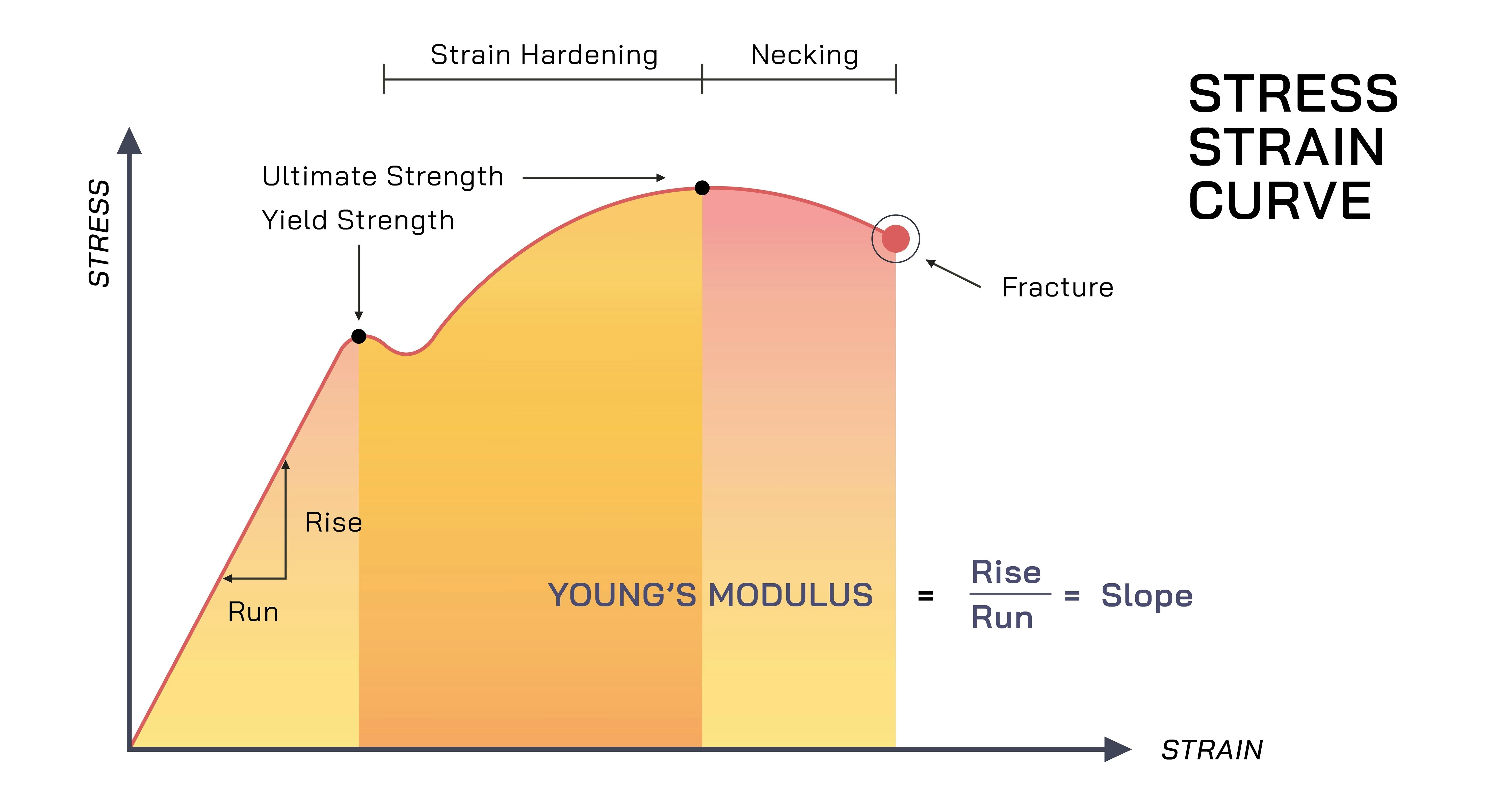
A stress-strain curve is just a graph. It plots stress (how hard you're pulling) against strain (how much it stretches). It's like a visual record of the material's behavior under pressure.
The first part of the curve is usually a straight line. This is the elastic region. This is where the material will return to its original shape after the force is removed. Like a well-behaved spring.
Beyond a certain point, the line curves. This is the plastic region. Now, the material starts to deform permanently. It's like bending a paperclip – it won't go back to its original shape.
Finding the Modulus: The Straight Line's Secret
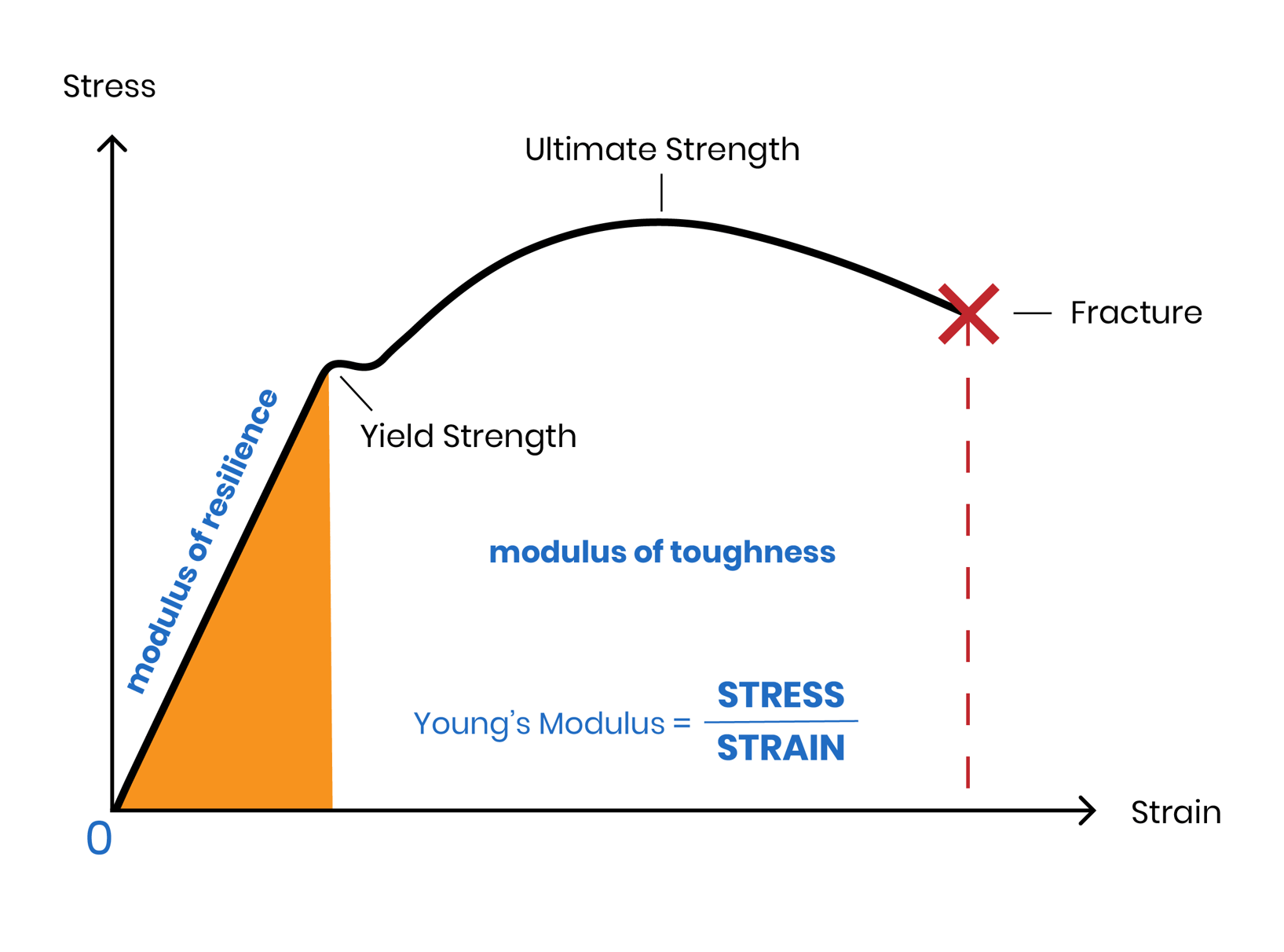
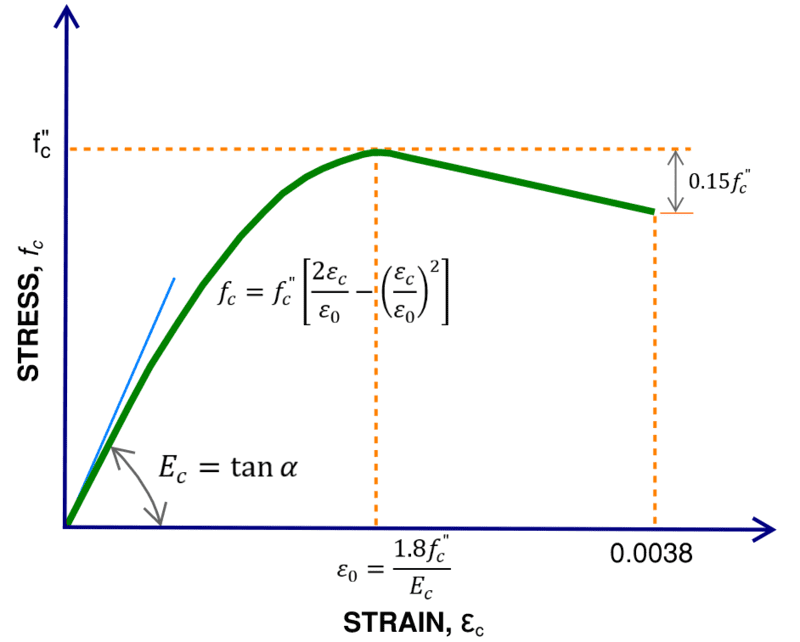
Here's the magic: the modulus of elasticity is the slope of that straight line in the elastic region. Remember high school math? Rise over run?
A steep slope means a high modulus. That material is super stiff! A shallow slope means a low modulus. More flexible!
So, the steeper the line, the harder it is to stretch the material. Think diamonds versus silly putty. You get the picture.
Unpopular Opinion: Modulus of Elasticity Isn’t Everything
Okay, here's where I might lose some people. While the modulus of elasticity is important, it's not the only thing that matters. Gasp!
Think about it. What about a material's strength? How much stress can it take before it breaks? The modulus doesn't tell you that.
What about its ductility? How much can it deform before breaking? Again, the modulus is silent. It's like judging someone solely on their IQ. There's more to the story!
Strength vs. Stiffness: A Crucial Distinction
Often, people confuse strength and stiffness. But they're different. Think of a thin piece of glass.
Glass is stiff. It has a high modulus. But it's not strong. It breaks easily.
Now consider a strong, flexible rope. It is strong, but not very stiff. It will stretch before breaking.
Beyond the Curve: Real-World Considerations
In the real world, things get even more complicated. Temperature affects the modulus. So does the rate at which you apply the stress.
A material might behave differently if you yank on it quickly versus slowly applying pressure. It's like trying to open a jar – sometimes a quick twist works better than a slow, steady force.
Also, the type of stress matters. Are you stretching it (tensile stress)? Squeezing it (compressive stress)? Twisting it (shear stress)? Each type of stress has its own modulus.

Design Decisions: The Ultimate Balancing Act
Engineers use the stress-strain curve, including the modulus of elasticity, to choose the right materials for a specific job. It's a crucial piece of the puzzle.
Building a bridge? You need something strong and stiff. Making a flexible phone case? You need something with a lower modulus and high ductility.
They must consider cost, weight, and environmental factors too. It's a balancing act!
Wrapping Up: Modulus Demystified
So, the modulus of elasticity is a measure of a material's stiffness, found from the slope of the initial linear portion of the stress-strain curve.
It's a valuable tool, but not the only thing that matters when choosing materials. Strength, ductility, and other factors are also crucial.
Hopefully, you now feel less intimidated by this seemingly complex concept. Science isn't so scary after all, right? Now, go forth and impress your friends with your newfound knowledge! Or, at least, don't be afraid to ask questions when someone throws around the term "modulus of elasticity."

Bonus: Real-World Examples
Think about car suspensions. They need to be stiff enough to handle bumps, but also flexible enough to provide a comfortable ride. It's a delicate balance!
Or consider the materials used in airplanes. They need to be lightweight, strong, and stiff to withstand the stresses of flight. The stress-strain curve is vital!
Even the clothes you wear are designed with material properties in mind. That stretchy yoga pants? Designed for flexibility and comfort, thus low modulus of elasticity is preferred. The rigid denim jeans? Something stiffer and tougher.
Final Thought: Embrace the Curve!
The stress-strain curve might seem intimidating, but it's just a way to understand how materials behave. Don't be afraid to explore and learn more!
After all, the world is full of fascinating materials with unique properties. Understanding these properties is key to building a better, stronger, and more comfortable world.
So, the next time you encounter a seemingly complex scientific concept, remember the rubber band and the steel cable. It might just be simpler than you think! You got this.