There's something uniquely satisfying about watching a skilled hand guide a welding torch, sparks flying, metal fusing, a new creation taking shape from raw materials. It’s a dance, a delicate balance of heat and precision, and at the heart of that magic often lies a tool that, in its own quiet way, is a marvel of teamwork: the Miller W-250 Tig Torch.
Now, you might think torch parts sound about as exciting as tax forms, but bear with me. These aren't just bits of metal and ceramic; they’re the unsung heroes of countless garages, workshops, and fabrication shops. They have personalities, a collective spirit, and if you listen closely enough, perhaps even a story or two to tell.
The Maestro's Brush: The Tungsten Electrode
Every masterpiece needs a brush, and for a TIG welder, that's the tungsten electrode. It’s the star of the show, the glowing tip that conducts the arc, creating that intensely focused heat. Imagine it as the lead singer of a very small, very hot band. It’s pointy, precise, and when it’s working just right, it sings a song of perfect penetration and smooth puddles. But it’s not just about raw power; there’s a surprising delicacy here. Sharpen it just so, and it becomes an artist's pen, drawing lines of molten beauty. Too blunt, and it splutters, a frustrated artist indeed! It's the part that truly feels alive, humming with potential.
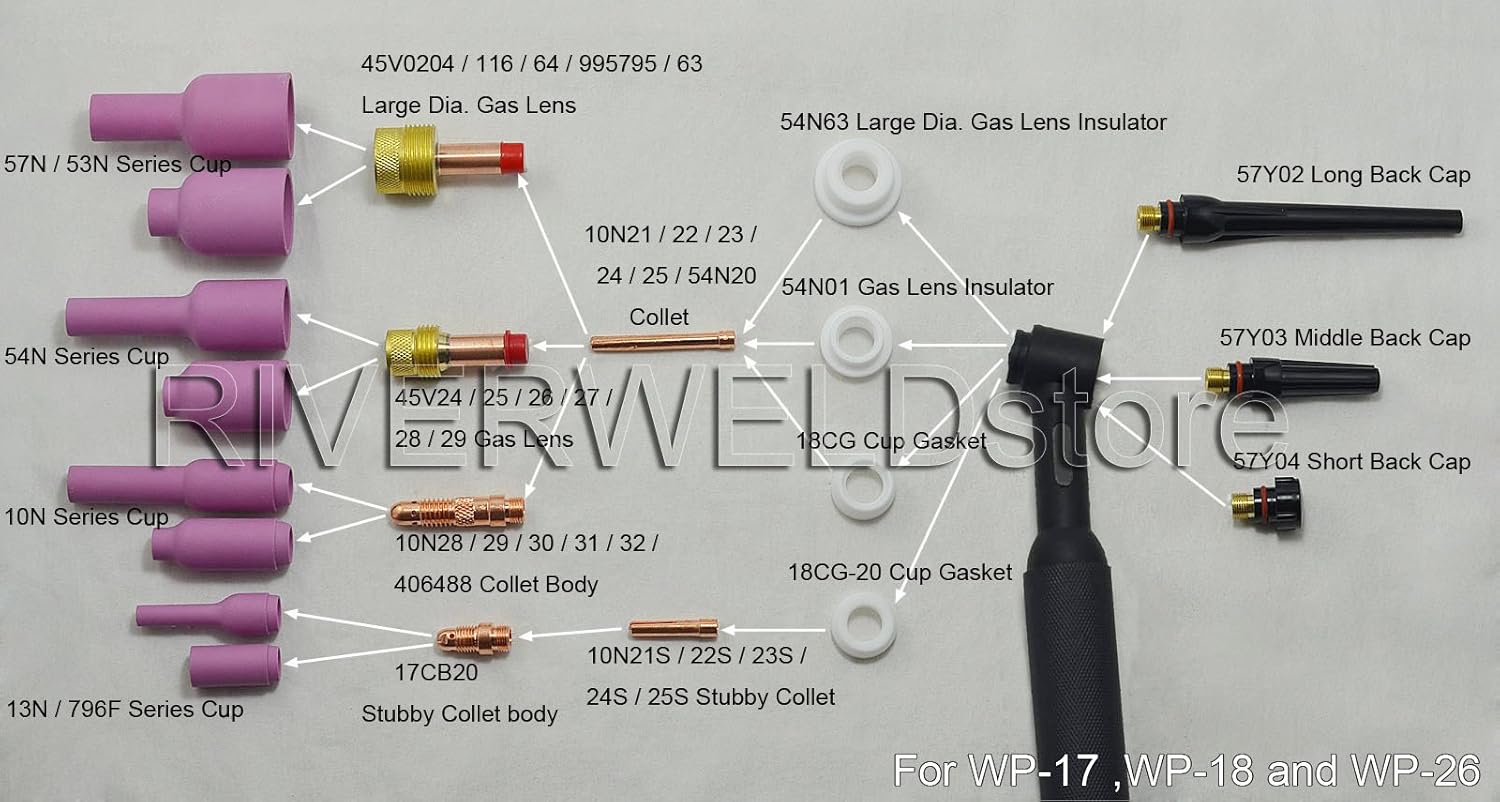
Behind every great performer is a solid support team, and for the tungsten, that’s the dynamic duo of the gas lens and the nozzle (often called the cup). The gas lens? It’s like the gentle bouncer at a very exclusive club, making sure the shielding gas flows out in a calm, laminar stream, perfectly protecting the weld from atmospheric nasties. No chaotic gusts here, just a smooth, invisible blanket. This little perforated ceramic or metallic wonder is surprisingly crucial. It's the silent guardian, the unsung hero that ensures your weld doesn't end up looking like a science experiment gone wrong.
Then there's the nozzle, or cup. This is the megaphone, directing that perfectly conditioned gas stream right where it needs to go. They come in all shapes and sizes, from dainty little ones for tight spots to big, bell-shaped beauties for broader coverage. You pick the right cup for the job, much like choosing the right-sized teacup for your preferred brew. There's a certain fondness you develop for your favorite cup, knowing it helps deliver those pristine, silver-sheen welds. It’s a humble part, but without it, the gas lens’s perfect stream would be lost to the winds.
Tig Torch Parts Diagram - Wiring Diagram Pictures
The Unsung Embrace: The Collet and Collet Body
If the tungsten is the star, and the gas lens and nozzle are its guardians, then the collet and collet body are the steadfast huggers, holding everything together with quiet confidence. The collet is a tiny, often split-finger gripper that holds the tungsten securely. It’s like a miniature hand, clasping the electrode firmly but gently. And the collet body? It’s the solid foundation, the strong arm that the collet slides into, ensuring that all remains steady. Together, they perform a simple, vital task: keeping the tungsten centered and stable, ready for action. You might not notice them much, but try welding with a loose collet, and you'll quickly appreciate their unwavering grip! It's the kind of dependable companionship we all wish for.
“It’s not just about the sparks; it’s about the silent ballet of components, each playing its part in a symphony of creation.”
Miller Weldcraft W-250 Torch Kit #300185 | Miller | TIG Gun | Torches
And let’s not forget the simple back cap. This might seem like just a lid, but it’s the sturdy end piece, often housing the mechanism that tightens the collet and keeps the tungsten at its desired stick-out length. It’s the reliable anchor, the finishing touch that seals the deal. Sometimes, the simplest parts are the most critical.
So, the next time you see a welder at work, or perhaps handle a Miller W-250 Tig Torch yourself, take a moment to appreciate the intricate dance of these often-overlooked components. From the fiery kiss of the tungsten electrode to the invisible embrace of the gas lens, the steady grip of the collet, and the quiet support of the nozzle, these parts aren't just functional. They are, in their own charming way, a testament to teamwork, precision, and the surprising soul found within the tools of creation. They empower welders to turn dreams into reality, one perfectly fused joint at a time.