There are days when you and your tools just click. The saw hums, the drill bites true, and your trusty MIG welder, let's call him Sparky, lays down perfect, shimmering beads like a seasoned pro. Then there are other days. Days when Sparky decides to throw a tantrum, leaving you scratching your head and wondering if your welding days are over, or if the universe is simply playing a very specific, metal-fusing prank on you.
My journey with Sparky has been one of great triumphs and, occasionally, equally great mysteries. Recently, we embarked on a small project: a whimsical garden sculpture of a grumpy gnome holding a tiny, equally grumpy fishing rod. It required delicate welds, a touch of finesse. I prepped everything, fired up Sparky, and… nothing. Or rather, something, but not the satisfying sizzle and pop I was accustomed to. Instead, there was a pathetic sputter, a hesitant fizz, like a soda going flat, but in a much more metallic, less refreshing way. The wire poked out, touched the metal, and then just… stopped, often sticking right there, mocking my efforts.
The Great Welding Mystery: When Tools Get Temperamental
I stared. Sparky stared back, or at least his front panel of knobs and dials seemed to, impassively. My first thought, as any good amateur does, was to blame the machine itself. "Has he finally given up the ghost?" I muttered, nudging his chunky frame. I checked the usual suspects: Was the power on? Yes. Was the gas flowing? I put my ear to the nozzle, hearing the faint hiss. Seemed okay. Was the wire feeding? It was, reluctantly. I tried adjusting settings, cranking up the wire speed, dialling down the voltage, then reversing it, then mixing it up again like a mad scientist trying to concoct a welding potion. Each attempt yielded the same sad, stick-and-sputter performance. My grumpy gnome was looking grumpier by the minute.
Days turned into a week. My workshop, usually a place of joyful creation, became a battleground of wills between man and machine. I showed Sparky my best "disappointed dad" look. I tried talking to him. "Come on, old friend," I’d plead, "we've built so much together!" He remained silent, stoic, and stubbornly uncooperative. I even started to suspect a grand conspiracy. Maybe my neighbor, Old Man Peterson, who always bragged about his perfect welds, had cast a hex. (Just kidding, mostly.)
It’s funny how quickly you go from logical deduction to wild, imaginative theories when a simple tool refuses to cooperate.
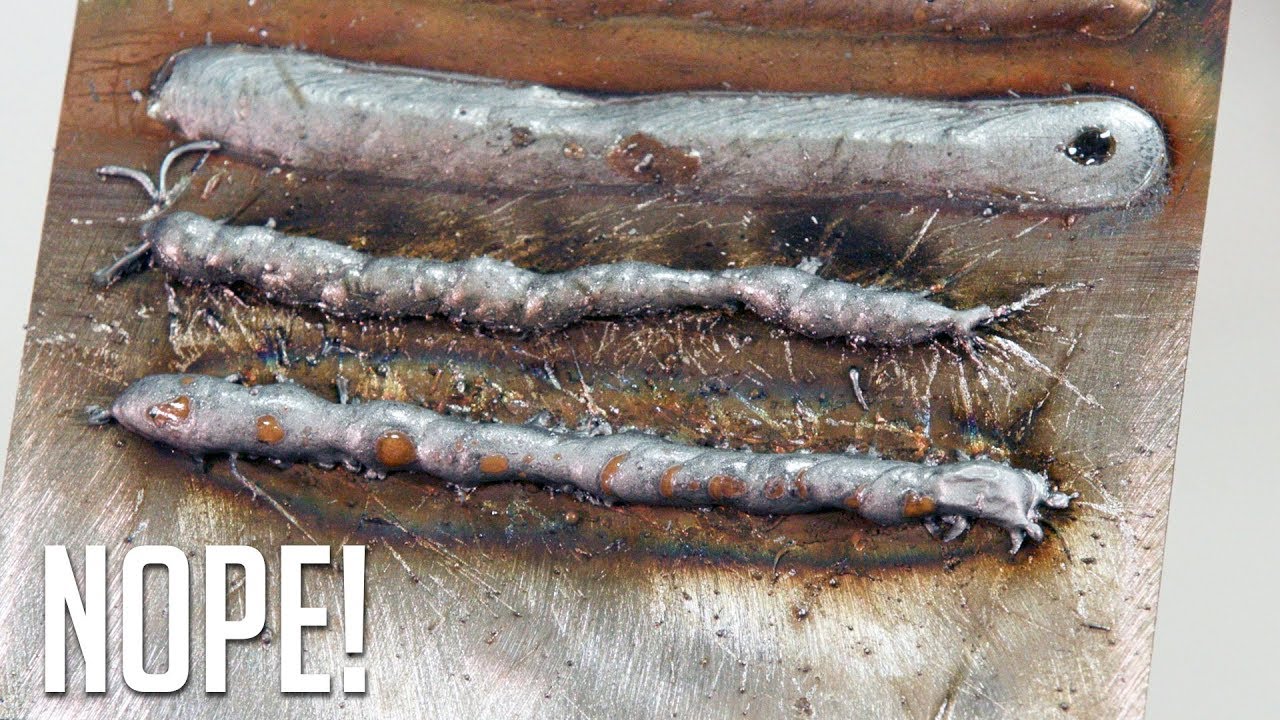
How NOT TO Weld: Most Common MIG Welding Mistakes - YouTube
I posted my woes on a friendly online forum for hobby welders. The responses poured in, a testament to the supportive community out there. Everything from "check your ground clamp" (done!) to "you might have a bad rectifier" (uh, a what?). I was on the verge of taking Sparky to a professional, mentally bracing myself for a bill that would make my gnome sculpture look like a solid gold artifact.
The Trivial Truth: Sometimes It's Just a Tickle
Then came a message from an old timer, a gentleman named Frank, whose avatar was a cheerful, slightly blurry picture of him holding a massive wrench. His advice was deceptively simple: "Have you checked your contact tip, son? Sometimes it just needs a good cleaning or a fresh one."
How NOT TO Weld: Most Common MIG Welding Mistakes - PERFECT POWER
The contact tip. That tiny, unassuming piece of copper at the very end of the MIG gun, where the wire exits. I'd glanced at it, but it looked fine. Or so I thought. I unscrewed it, and lo and behold, nestled inside, was a tiny, almost invisible speck of burnt wire, barely wider than a hair. It wasn’t a blockage, not really, but it was enough to ever so slightly impede the electrical connection, causing the wire to stick and sputter, preventing Sparky from truly singing his welding song.
It was like finding out your car won’t start because you forgot to take the parking brake off. All that agonizing, all the technical troubleshooting, all the wild theories, for a speck. A minuscule, insignificant speck. I laughed. A loud, slightly manic laugh of relief and utter disbelief. I popped on a new tip, a fresh piece of shiny copper. I aimed the gun, pulled the trigger, and Sparky roared to life, laying down a perfect, steady bead. The sizzle was back, the satisfying crackle that signifies metal joining metal, forever.
My grumpy gnome now sports a perfectly welded fishing rod, and I’ve got a newfound respect for the little things. It’s easy to get lost in the complexity of machines, to imagine grand, intricate failures. But sometimes, the greatest mysteries are solved by the simplest observations. Sparky wasn't broken; he just needed a little tickle, a quick change of his "shoes," and he was back to being the magnificent metal-joining maestro I knew and loved. And that, I think, is a rather heartwarming thought for any tool owner.


![How should a Good MIG Weld look like [2021]](https://vietmfg.com/wp-content/uploads/2020/11/Four-main-MIG-Welding-defects..jpg)