
Metallic And Nonmetallic Properties Of Elements

Hey there, science buddy! Ever wonder what makes your phone shiny or why your bike doesn't rust instantly in the rain? Well, buckle up, 'cause we're diving into the world of elements and their totally awesome properties – specifically, whether they're metallic or nonmetallic. Trust me, it's less boring than it sounds!
The Shiny Squad: Metallic Elements
Okay, first up, let's talk about the rockstars of the periodic table: the metals. Think iron, gold, silver, copper… basically, all the things pirates are obsessed with! (Yo ho ho, and a bottle of… copper? Probably not, but you get the idea.)
Metals are generally pretty easy to spot. They're usually:
Must Read
- Shiny: They reflect light like a disco ball. Seriously, who doesn't love a good shine?
- Good Conductors: Electricity loves flowing through them. That's why your wires are made of copper (and why you should never stick a fork in an outlet – leave the electricity-conducting to the pros!). They also conduct heat well, so metal pots are great for cooking. Just don't touch them when they're hot! Ouch!
- Malleable and Ductile: These fancy words basically mean you can bend them and stretch them without them breaking. Imagine trying to make a wire out of glass. Yeah, good luck with that! Metals are the flexible flyers of the element world.
Think of it this way: metals are like the popular kids in chemistry class. They’re attractive (shiny), helpful (conduct electricity), and can be molded into cool shapes. Plus, they are pretty reactive and love to bond with other elements.
The Not-So-Shiny Crew: Nonmetallic Elements
Now, let's meet the nonmetals. These guys are a bit more… diverse. Think oxygen, carbon, nitrogen, sulfur… the stuff that makes up a lot of, well, you!
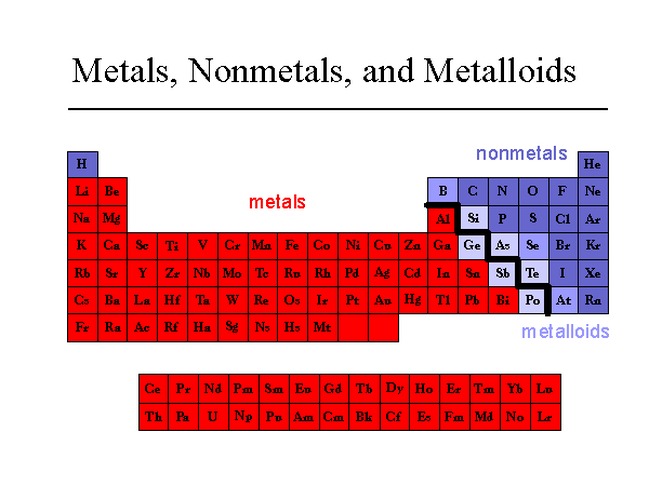
Nonmetals are typically the opposite of metals. They're often:
- Dull: No dazzling shine here. They prefer a more understated look.
- Poor Conductors: Electricity? Heat? Not their cup of tea. They're more like insulators, keeping things from flowing through. Think rubber or plastic.
- Brittle: Try bending a piece of charcoal (which is mostly carbon). It'll probably just crumble. Nonmetals aren't exactly known for their flexibility.
Some nonmetals exist as gases at room temperature (like oxygen, which you're breathing right now!), while others are solids (like sulfur, which has a rather…distinct smell). It's a real mixed bag!

So, nonmetals are like the quirky artists of the element world. They might not be flashy, but they're essential for life as we know it!
The Gray Area: Metalloids
Just when you thought you had it all figured out, BAM! There's a third category: metalloids. These are the elements that are like, "Eh, I can do a little bit of both." They have properties of both metals and nonmetals.
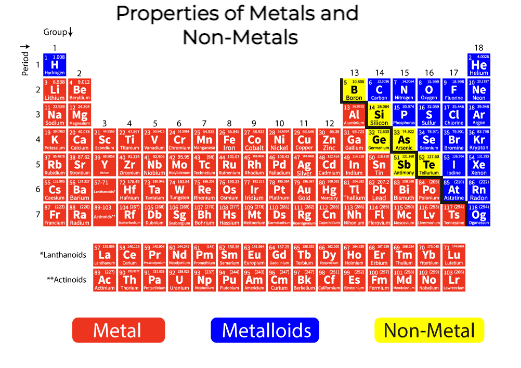
Think silicon, germanium, arsenic… These elements are often used as semiconductors in electronics. They can conduct electricity, but not as well as metals. It's like they're saying, "Okay, I'll help a little, but don't expect too much!"
Metalloids are like the swing voters of the element world, they can behave like metals or nonmetals depending on the circumstances.

Important Side Note: Everything in the universe is made up of these elements. Every single thing around you is a combination of metallic, nonmetallic, and sometimes metalloid elements that come together to form the world we live in. Pretty cool, huh?
So, there you have it! Metals are shiny, conduct electricity, and are bendy. Nonmetals are dull, don't conduct electricity well, and are brittle. And metalloids are the in-betweeners. You are now an expert on metallic and nonmetallic properties! Go forth and impress your friends with your newfound knowledge (but maybe don't start reciting the periodic table at parties… unless you really want to clear the room!).
Remember, everything is made of something, and that something is made of these elements. So, next time you look at your phone, or ride your bike, or even just take a breath, think about the amazing elements that make it all possible. Science is cool, and you are cool for learning about it!