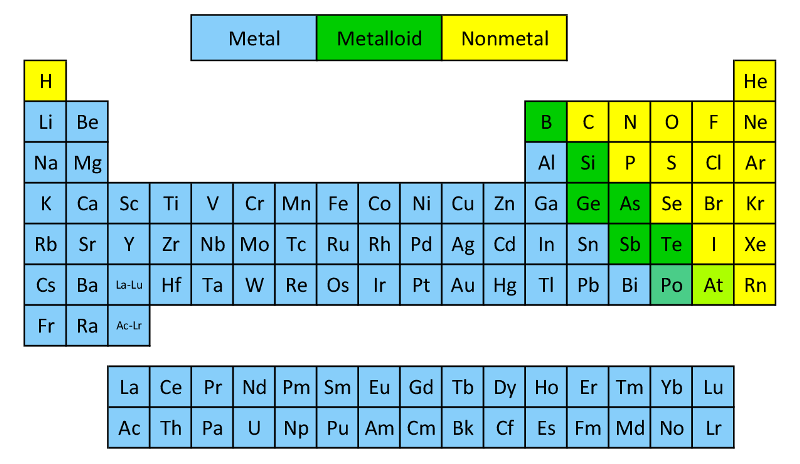
Metal Non Metal And Metalloid Periodic Table
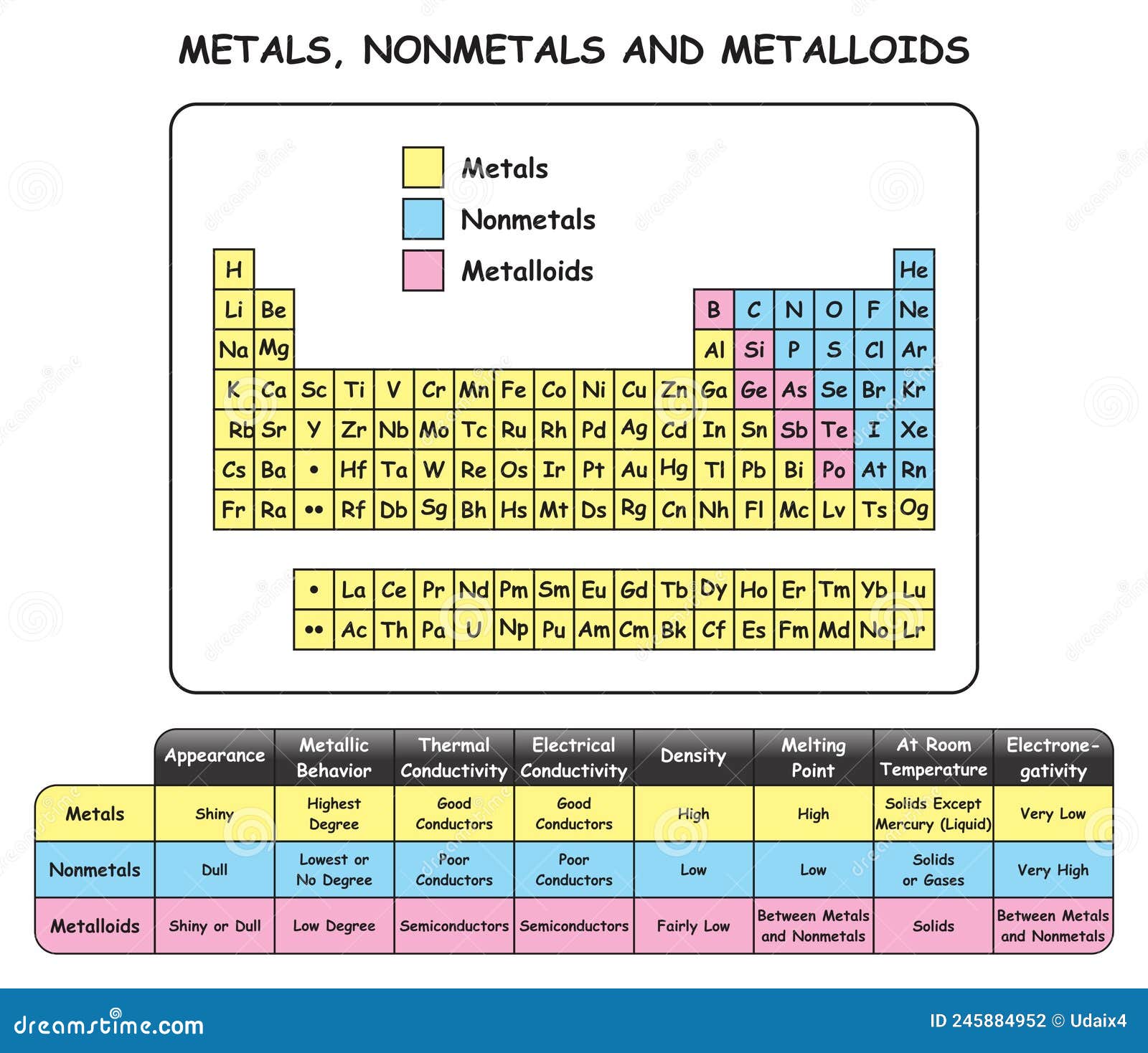
Alright, gather 'round, folks! Let's talk about the periodic table. I know, I know, sounds about as thrilling as watching paint dry. But trust me, this isn't your grandpa's chemistry lesson. We’re going on an adventure to explore the land of metals, nonmetals, and those quirky little metalloids in between. Think of it as a geological sitcom – with elements!
The Shiny Superstars: Metals
First up, we have the metals. Oh, these guys are showboats! Think of them as the rockstars of the periodic table. They're shiny (like a freshly polished guitar), they conduct electricity and heat like they’re trying to win a gold medal in the Physics Olympics, and they're generally malleable and ductile. What does that mean? It means you can flatten them into sheets (malleable) or stretch them into wires (ductile). Try doing that with a piece of chalk, I dare you!
Gold, silver, copper, iron – these are the household names. They're the foundation of our bridges, our jewelry, and even the wiring in your house that allows you to binge-watch cat videos at 3 AM. We literally couldn’t function without them! Iron, in particular, is the backbone of our modern world. And, fun fact, there’s enough iron in your body to make a small nail. So, technically, you are a cyborg... a very tiny, slightly rusty cyborg.
Must Read
But not all metals are created equal. You’ve got your super reactive alkali metals like sodium and potassium. These guys are so eager to react with other elements that they’re stored in oil, just to keep them from, you know, exploding. Seriously. Drop a chunk of sodium in water, and you'll get a firework display – without the pesky permit requirements! Please don't try this at home, folks.
Then you've got your alkaline earth metals like magnesium and calcium. Calcium is the superhero of bones, keeping them strong and able to withstand awkward dance moves. Magnesium is also involved in bodily functions and is often included in bath salts so you can relax and think about chemistry. Well, maybe not, but you could!
The Underdogs: Nonmetals
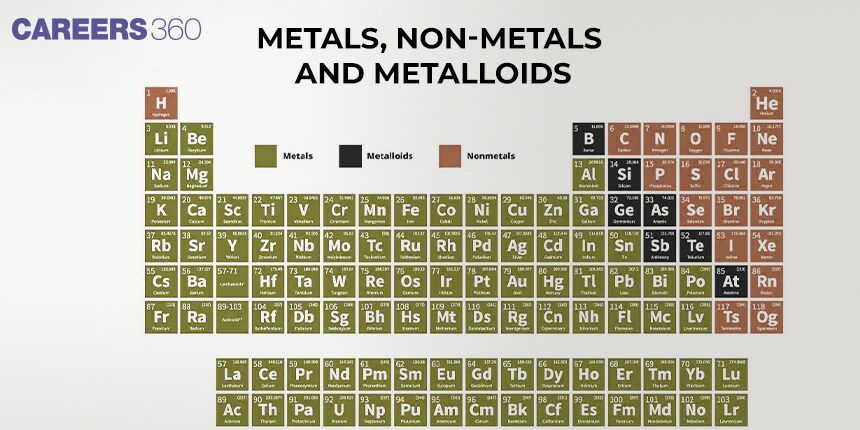
Now, let’s switch gears and meet the nonmetals. These guys are… well, the opposite of metals. They’re generally dull (unless they’re in a compound that gives them color), poor conductors of electricity and heat, and brittle. Think of them as the introverted poets of the periodic table – important, but not exactly throwing huge stadium concerts.
Oxygen, nitrogen, carbon, and sulfur are the heavy hitters in this category. Oxygen, the air we breathe, is essential for life. You know, that whole breathing thing we all do? Nitrogen makes up a huge chunk of our atmosphere. Carbon is the backbone of all organic molecules (including you!), and sulfur… well, sulfur smells like rotten eggs. Sorry, sulfur. You can't win them all.
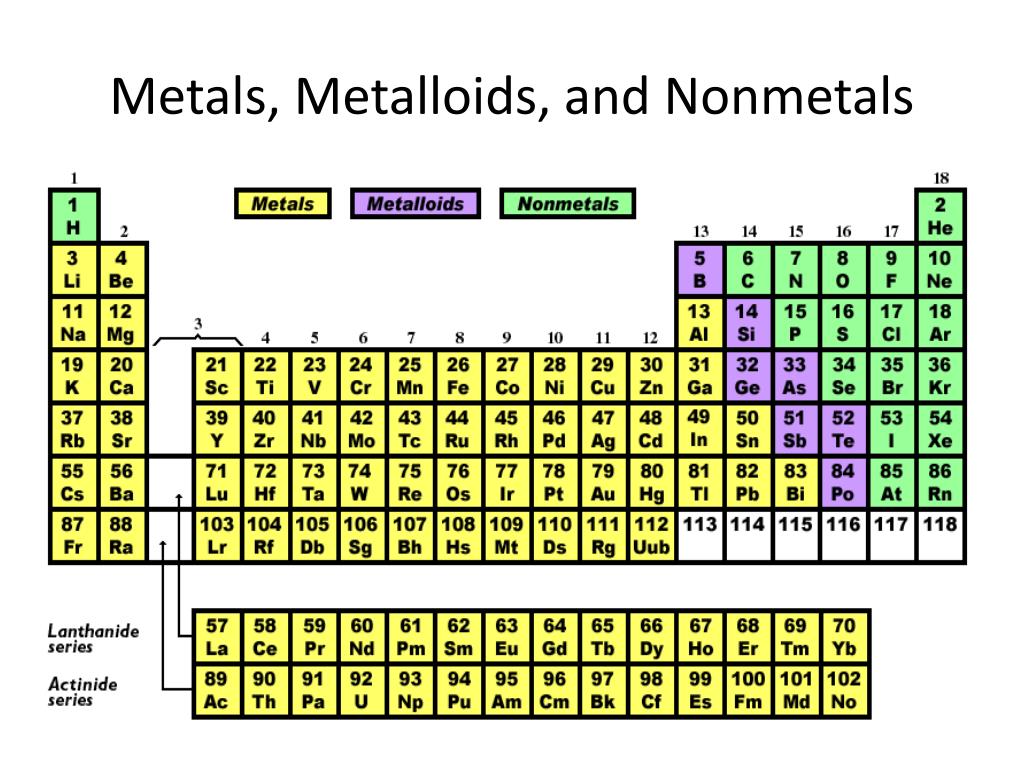
Nonmetals are incredibly diverse. Some are gases at room temperature (like oxygen and nitrogen), some are solids (like carbon and sulfur), and one is even a liquid (bromine!). They form a wide variety of compounds and are essential for everything from the proteins in your muscles to the plastics in your water bottle.
The Mysterious Middle Ground: Metalloids
Finally, we arrive at the intriguing metalloids. These are the rebels, the fence-sitters, the ones who can’t quite decide if they want to be metal or nonmetal. They’re like the Switzerland of the periodic table – neutral, versatile, and sometimes a little bit mysterious.

Silicon, germanium, arsenic, antimony, tellurium, and polonium are the usual suspects. They possess properties of both metals and nonmetals, making them incredibly useful in electronics. Silicon, in particular, is the star of the show. It's the key ingredient in computer chips, smartphones, and pretty much every electronic device you own. So, next time you’re scrolling through social media, take a moment to thank silicon for making it all possible.
Metalloids are semiconductors, which means they can conduct electricity under certain conditions but not others. This ability to control the flow of electricity is what makes them so valuable in transistors and integrated circuits. They’re the unsung heroes behind the digital revolution. Without them, we'd all be back to using abacuses and carrier pigeons. And nobody wants that, right?
So there you have it – a whirlwind tour of metals, nonmetals, and metalloids. They're all essential players in the grand chemistry play, each with their own unique properties and quirks. The periodic table isn't just some chart to memorize; it's a fascinating map of the building blocks of our universe. Now, go forth and impress your friends with your newfound chemical knowledge. You're practically a superhero now!